
NYU Tandon Welcomes New Faculty for the 2026-27 Academic Year
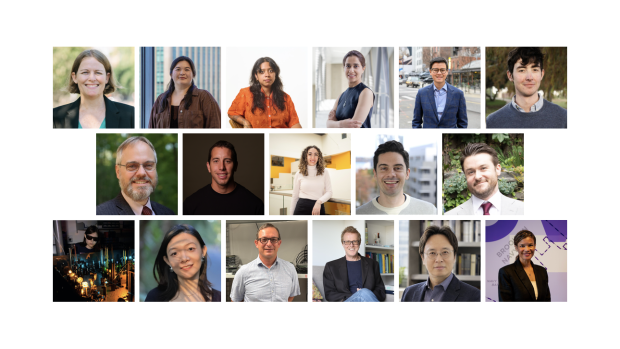
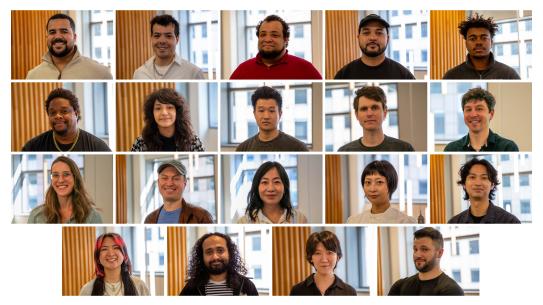
NYU Tandon is welcoming 17 new faculty members to the school this year, with expertises range from oceanography, to quantum science, to autonomous chemistry. Read on to learn more about the new people making an oversized impact on the school.
New Tenure/Tenure-Track Faculty
From Comets to Climate Models, Professor Alistair Adcroft Wants to Bring Ocean Science Down to Earth
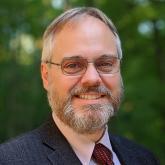
As a child, Alistair Adcroft was fascinated by space. When he began studying physics at Imperial College London, he assumed he was on his way to becoming a cosmologist. Instead, a chance encounter with a numerical methods course sent his career in an entirely different direction.
Adcroft, who is joining NYU Tandon as a professor of Professor of Chemical and Biomolecular Engineering and Earth System Science and Engineering, became interested in the problem of representing the physical world on a computer. At Imperial, he had been working on a project modeling the tail of a comet when he encountered researchers using similar mathematical and computational techniques to study the Earth.
Read more about Alistair Adcroft.
Assistant Professor Aziza Almanakly is Building the Quantum Systems of the Future
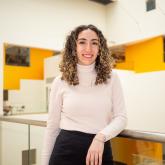
The daughter of Syrian immigrants who had come to the United States in the early 1990s, Aziza Almanakly spoke only Arabic until entering elementary school. Once acclimated, however, she proved to be a stellar student whose love of STEM was sparked by a mathematics teacher at New Jersey’s Morris Hills High School, Michael Bermel, whom she still remembers fondly.
As a sophomore at the Cooper Union, where she studied electrical engineering, Almanakly became fascinated by the idea of quantum computing after reading an article on the topic in the Wall Street Journal — even though she admits she didn’t fully understand the details of the piece. With the encouragement of Jolie Woodson, a career counselor at the school, she applied for and was accepted into a quantum-focused National Science Foundation Research Experience for Undergraduates (REU) being held at Princeton University. “That advice changed my life,” Almanakly recalls.
Read more about Aziza Almanakly.
New Assistant Professor Justin Bui is Pioneering Autonomous Chemical Engineering
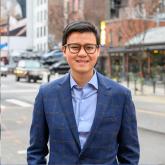
Justin Bui arrives at NYU Tandon as an assistant professor with an unusual combination of interests: electrochemistry, machine learning, robotics, and sustainability. His goal is to use them together to rethink how chemicals are produced and how valuable resources are recovered.
Bui grew up in Fairfax, Virginia, and initially enrolled in Columbia University intending to study physics. But during an undergraduate research experience in chemical engineering professor Dan Esposito’s lab, he began to see the field as a way to combine his interests in mathematics and physics with practical problems.
NYU Professor Nicola Dell Puts People at the Center of Technology Design
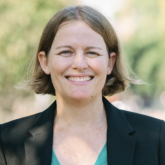
For Nicola Dell, the most interesting technology problems rarely begin with technology itself. They begin with people: community health workers trying to deliver care with limited resources, survivors trying to understand how an abusive partner may be using their devices against them, or frontline workers confronting digital problems they were never trained to solve.
That perspective has shaped Dell’s career in human-centered computing, a field focused on designing technologies around the needs and experiences of the people who actually use them. Now, as an incoming professor at NYU Tandon and NYU Courant, Dell plans to bring that community-engaged approach to a broader network of researchers across computer science, cybersecurity, social work, medicine and other fields.
New Professor Sean Gibbons Explores the Hidden World of the Human Microbiome
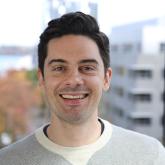
For Sean Gibbons, the path to studying the human microbiome began with a fascination with the hidden forces that shape the natural world. Growing up in small towns across Montana, Gibbons became interested in ecology and the complex relationships that connect seemingly unrelated parts of an ecosystem. He was also drawn to what he calls the “invisible world” of microbes. “I realized science was adult magic,” he says, “and microbes were these invisible entities that were having this enormous impact on the structure of the world.”
That curiosity has taken Gibbons on a winding path from environmental microbiology to mathematical modeling and, ultimately, the human gut microbiome. He is joining NYU Tandon as a professor in the Department of Biomedical Engineering and will also be part of the new Institute for Engineering Health, led by Jeff Hubbell. The institute brings together researchers from across NYU, including Tandon, Langone and Courant, with a focus on precision and personalized medicine.
New Assistant Professor Evan Johnson Takes a Mathematical Approach to Cybersecurity
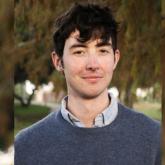
For Evan Johnson, cybersecurity is a field defined by a deceptively simple question: How do you make sure software doesn’t do something?
That question has taken Johnson from hacking competitions as an undergraduate to research on airplane firmware and, eventually, to the study of how computer systems can be mathematically proven to be secure. Now, as an incoming assistant professor at NYU Tandon, he will continue working at the intersection of cybersecurity and programming languages, where he focuses on some of the most security-critical pieces of modern computing systems.
Johnson grew up in Bloomington, Illinois, a small college town about 45 minutes from Urbana-Champaign. He was involved in science clubs in school before enrolling at the University of Illinois Urbana-Champaign to study computer engineering. It was there that he first became interested in cybersecurity through a student club that organized hacking competitions, giving participants simulated security problems to solve.
New Chemical and Biomolecular Engineering Chair LaShanda Korley Bridges Polymer Science with Sustainability
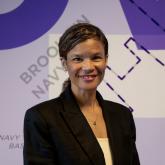
NYU Tandon has named LaShanda Korley, an internationally recognized leader in sustainable materials, plastics waste valorization, and bio-inspired engineering, as the new chair of its Department of Chemical and Biomolecular Engineering. An accomplished polymer scientist whose work addresses pressing challenges in manufacturing, plastics waste, and sustainability, Korley brings a track record of pioneering research, center leadership, and interdisciplinary collaboration.
Korley has built a career at the intersection of chemistry, engineering, and biology, using molecular design to address pressing global engineering challenges. She joins NYU from the University of Delaware, where she leads the Center for Plastics Innovation and has advanced new approaches to designing performance advantages from renewable resources while developing technologies to make plastics more circular and environmentally sustainable.
Read more about LaShanda Korley.
New Professor Onur Mutlu Is Rethinking the Architecture of Computing
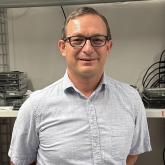
For much of Onur Mutlu’s career, one question has driven his research: What if computers were designed differently from the ground up?
Mutlu, an internationally recognized computer architect, is bringing that question to NYU Tandon School of Engineering, where he joins the faculty with appointments in Electrical and Computer Engineering and Computer Science and Engineering. His arrival also comes with plans for a new center focused on emerging computing technologies and computing systems design, one that he hopes will rethink some of the most basic assumptions underlying modern computer systems and build new, much more efficient and robust ones.
“The goal is to do great research, education, and entrepreneurship,” Mutlu said.
New Assistant Professor Juan Carlos Perdomo Explains Performative Prediction and How it Affects Us All
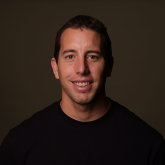
What if a teacher learned that, according to an algorithm, some of their incoming students were likely to fail, based on such factors as race and socioeconomic status? What if the students themselves learned about that prediction? Would it become a self-fulfilling prophecy?
Systems used to make predictions aren’t passive, incoming Assistant Professor of Computer Science and Engineering Juan Carlos Perdomo warns. They can affect the very outcomes they are meant to predict.
Learn more about Juan Carlos Perdomo.
New Associate Professor Mahla Poudineh Brings Autonomous Biomedical Technologies to NYU Tandon
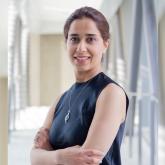
For Mahla Poudineh, engineering has always been a way to connect technology with medicine. Originally from Iran, Poudineh studied electrical engineering at the University of Tehran before moving to Canada in 2012 to pursue a Ph.D. at the University of Toronto. There, working with Shana Kelly and Ted Sargent, she entered the field of biomedical engineering and began developing technologies for the early detection of cancer.
Her early work focused on isolating rare circulating tumor cells from blood as a form of “liquid biopsy.” After completing her Ph.D. in 2017, Poudineh continued her training at the University of Toronto and Stanford, where she began developing microfluidic technologies for continuous monitoring inside the body. At Stanford, she led the development of a platform capable of continuously monitoring insulin in vivo, an experience that drew her increasingly toward diabetes research.
Read more about Mahla Poudineh.
New Professor Andrew Stuart Uses Mathematics to Connect Data, Models and the Real World
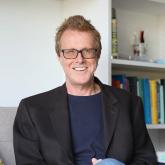
Andrew Stuart has spent much of his career moving between worlds: between the United Kingdom and the United States, between mathematics and engineering, and between abstract theory and problems rooted firmly in the physical world.
Now Stuart is bringing that boundary-crossing approach to NYU, joining the faculty with appointments at the Courant Institute of Mathematical Sciences and NYU Tandon. Trained as a mathematician, he arrives from Caltech after a career that has also included positions at Stanford, MIT, the University of Warwick and the University of Bath.
“I like the abstraction,” Stuart said of what first attracted him to mathematics, “and the way that it links different things together.”
Read more about Andrew Stuart.
New Contract Faculty
New Industry Assistant Professor Aarati Akkapeddi Explores the Human Side of Emerging Technology
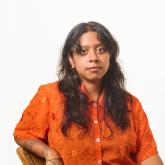
For Aarati Akkapeddi, the boundaries between art, design and technology are less like walls than doorways. They move fluidly among the three, using each to ask questions about the others. As an artist, technologist and educator, Akkapeddi has spent much of their career exploring how emerging technologies can be understood not just as tools but as cultural objects with social, ethical and political consequences.
Now joining NYU Tandon, Akkapeddi brings that interdisciplinary approach to the Integrated Design & Media program, where they will continue developing creative and critical approaches to technology
Read more about Aarati Akkapeddi.
New Industry Assistant Professor Michelle Choi Ausman Helps Students Find Their Place in Engineering
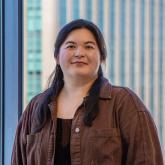
Michelle Choi Ausman’s path to engineering education was anything but linear. Along the way, she studied biomedical engineering, explored computer science and industrial engineering, pursued English and psychology, worked on a factory floor documenting how guitars are made and ultimately earned a PhD studying how students experience engineering.
Now, that winding path has brought her to NYU Tandon, where Ausman is joining the school as an Industry Assistant Professor in General Engineering. Her focus is the first-year engineering experience, where she hopes to help students build not only technical skills, but also the confidence and sense of belonging they need to see themselves as engineers.
Read more about Michelle Choi.
New Industry Professor Yong Sang Kim Brings Water Engineering Experience from Guam to New York
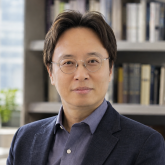
For Yong Sang Kim, water engineering has always been about more than water. It is also about technology, policy, infrastructure and the people responsible for managing the systems that communities depend on.
That broad perspective comes from a career that has taken Kim (who goes by “Barry”) from field research on polluted waterways in Indiana to environmental engineering at Samsung and, eventually, more than eight years as a faculty member at the University of Guam. Now, as a new Industry Professor of Civil and Urban Engineering at NYU Tandon, he is bringing that combination of academic and industry experience to New York
New Industry Assistant Professor Amelia Klein Bringing Quantum Optics Into the Classroom
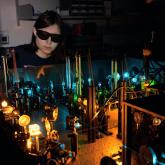
For Amelia Klein, the path to quantum science was less a straight line than a gradual narrowing of interests. Originally from California, Klein spent time growing up around Sacramento and in Arizona before moving to the East Coast for college. At Columbia University, she studied electrical engineering with a minor in applied physics, drawn to the boundary between engineering and physics. For graduate school, she went to the University of Pennsylvania, initially intending to focus on photonics.
Instead, Klein found themselves increasingly interested in quantum systems, particularly the experimental side of the field. Her doctoral research focused on solid-state defects, sometimes called color centers, which can serve as quantum systems embedded within otherwise ordinary crystals. One well-known example she has worked on is the nitrogen-vacancy, or NV, center in diamond. Klein’s recent work has explored europium ions embedded in gallium nitride, investigating whether the useful quantum properties of rare-earth ions can be preserved in a semiconductor material.
New Lecturer Aled Roberts Wants Engineering Students to Think Like Writers
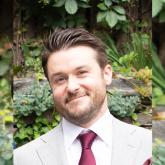
Aled Roberts took an unusual route to engineering education. His academic career began not with circuits, code or calculus, but with medieval literature.
Roberts grew up in Wales. His father was a longtime toolmaker, so engineering was perhaps present in the background, but Roberts ultimately pursued a PhD in medieval literature at Columbia University. His research focused primarily on 14th-century English literature, particularly the idea of patience as a virtue during a period of profound social upheaval, as well as how demons were depicted in 14th- and 15th-century literature.
At Columbia, Roberts taught philosophy, literature and, for several years, a University Writing course called Data and Engineering, later renamed Data and Society. The course examined data, information, bureaucracy and their uses, while introducing students to questions surrounding data engineering and artificial intelligence. Many of his students were first-year engineers and data scientists. Roberts found that he particularly enjoyed working with them.
New Faculty Fellow Jing Zhang is Teaching AI to Make Sense of the Physical World
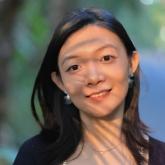
When Jing Zhang talks about artificial intelligence, she does not limit herself to the problems typically associated with robotics or computer vision. Her research has taken her from reconstructing ancient artifacts to building digital versions of New York City that can help robots learn to navigate the real world.
Although these projects may appear very different, they are connected by a common question: how can AI make sense of a physical world that is incomplete, changing, or only partially observed?
That breadth of interests is part of what Zhang brings to NYU Tandon, where she is joining the faculty as a Faculty Fellow in Mechanical and Aerospace Engineering. Her work sits at the intersection of artificial intelligence, computer vision, robotics and simulation, with a particular interest in using AI to help machines understand and interact with complex environments.