
New NYU Professor Nicola Dell Puts People at the Center of Technology Design
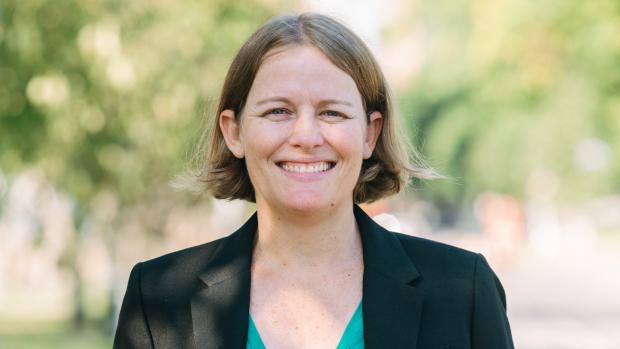
For Nicola Dell, the most interesting technology problems rarely begin with technology itself. They begin with people: community health workers trying to deliver care with limited resources, survivors trying to understand how an abusive partner may be using their devices against them, or frontline workers confronting digital problems they were never trained to solve.
That perspective has shaped Dell’s career in human-centered computing, a field focused on designing technologies around the needs and experiences of the people who actually use them. Now, as an incoming professor at NYU Tandon and NYU Courant, Dell plans to bring that community-engaged approach to a broader network of researchers across computer science, cybersecurity, social work, medicine and other fields.
Dell earned her PhD in computer science and engineering from the University of Washington in 2015. Born and raised in Zimbabwe, she initially focused her research on building camera-based mobile technologies for low-resource communities, particularly tools that could help community health workers in places such as India and Africa.
At the time, smartphones were only beginning to spread widely around the world. Dell and her collaborators were betting that the devices would eventually become inexpensive and powerful enough to serve as practical tools in places where traditional computing infrastructure was scarce.
That early work, Dell said, opened up her interest in “the divide between technological innovation and making it work for real humans in the messy real world.”
After joining Cornell as a faculty member in 2016, Dell expanded her research to include communities in the United States. Over the past decade, much of her work has centered on two areas: home health care and technology-facilitated intimate partner abuse.
What connects those seemingly different topics is that the people involved are often overlooked by mainstream technology design.
“The kinds of communities that I work with are usually those that traditional Silicon Valley type tech companies would not really be focused on,” Dell said.
Her approach is built around long-term partnerships with community organizations. Rather than beginning with a new technology and looking for somewhere to deploy it, Dell works with organizations and frontline workers to understand problems as they encounter them, then develops tools, services and processes in response.
That philosophy helped lead to one of her most prominent projects, the Clinic to End Tech Abuse, or CETA. Dell and her collaborators created the clinic at Cornell Tech after studying how digital technologies were being used in intimate partner violence. They found that survivors often needed technical assistance, while advocates, attorneys and law enforcement officials frequently lacked the expertise to determine how an abuser might be exploiting phones, accounts or other digital systems.
Since 2018, the clinic has connected survivors in New York City with trained technology consultants who can examine devices and accounts, identify possible sources of abuse and help survivors make informed decisions about their digital safety. Over the years, roughly 150 volunteers have participated, with around 20 to 30 active at a given time.
Dell now hopes to expand that model. CETA is being transitioned to Sanctuary for Families, a leading New York service provider serving survivors of domestic violence and human trafficking. The move will allow the clinic to operate within an organization dedicated to survivor services while Dell and her collaborators focus on building broader infrastructure to help people who are experiencing technology-facilitated abuse.
At NYU, Dell hopes to establish a coalition bringing together tech clinics, service providers, community organizations, researchers and other stakeholders to develop and scale different approaches to technology-abuse support.
The move also gives her immediate access to a larger academic ecosystem.
“NYU obviously is a behemoth in the city,” Dell said. “Having strong connections to people in other departments like social work, the medical school, a broad set of computer science colleagues, and others across Tandon and Courant, I think it’s just so vibrant and rich.”
Dell also sees an opportunity to deepen NYU’s work in human-centered computing, complementing existing strengths in cybersecurity and privacy with research grounded in the everyday experiences of communities.