
New Industry Professor Yong Sang Kim Brings Water Engineering Experience from Guam to New York
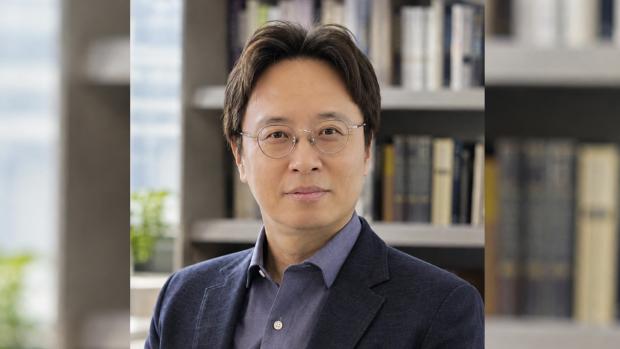
For Yong Sang Kim, water engineering has always been about more than water. It is also about technology, policy, infrastructure and the people responsible for managing the systems that communities depend on.
That broad perspective comes from a career that has taken Kim (who goes by “Barry”) from field research on polluted waterways in Indiana to environmental engineering at Samsung and, eventually, more than eight years as a faculty member at the University of Guam. Now, as a new Industry Professor of Civil and Urban Engineering at NYU Tandon, he is bringing that combination of academic and industry experience to New York.
Kim earned his PhD in civil engineering from Purdue University in 2008. His early research focused on water pollution in rivers and groundwater. As a graduate student, he spent years studying a contaminated site near Chicago, making weekly trips from Purdue to collect field samples.
The site had been contaminated with coal tar, a byproduct of the gasification process that had been dumped into a river decades earlier. The area was eventually designated a Superfund site, giving Kim the opportunity to work with his advisor and environmental consulting firms on understanding the contamination and developing strategies for remediation.
The experience also introduced Kim to a technology that would become an important part of his career. At the time, real-time environmental monitoring was still a relatively new field. He was asked to learn programming and develop systems that could collect environmental data in real time.
“I struggled so many times to learn about this programming and instrument,” Kim recalled. “But finally, I could graduate. I was lucky.”
After completing his postdoctoral work at Purdue, Kim accepted an offer from Samsung, where he found himself working at the intersection of environmental engineering and information technology. The company operated manufacturing facilities around the world, each subject to environmental regulations and equipped with systems for monitoring wastewater and other environmental conditions. Kim worked alongside computer scientists and IT engineers to develop web-based systems for collecting, managing and visualizing environmental data.
His responsibilities eventually expanded. Kim audited Samsung facilities around the world, examining their environmental and water-management systems and identifying problems that ranged from flawed engineering designs to improper wastewater practices. The work took him to facilities in countries including South Korea, the United States, Vietnam and China.
After nearly seven years in industry, Kim returned to academia in 2017, joining the University of Guam. There, his research became closely tied to the distinctive challenges facing small island communities, not only in Guam but also in Saipan and the Federated States of Micronesia within the Pacific region.
More than 90 percent of Guam’s drinking water comes from groundwater, making the resource particularly vulnerable to saltwater intrusion as sea levels rise. Kim studied ways to manage groundwater sustainably while developing alternative sources, preventing pollution and remediating contaminated water. He also investigated the risks posed by wastewater from the island’s widespread septic systems.
Those experiences have led Kim toward a broader focus on resilience. He has become interested not only in the technical aspects of water systems, but also in the gaps between the agencies and communities responsible for managing them.
“Among stakeholders and each agency, there is a huge gap,” he said.
His current work combines engineering data with an analysis of government processes, with plans to bring residents, mayors and representatives from environmental and health agencies together to discuss how their priorities differ and where coordination can improve. He has also received funding from NOAA for this work.
At Tandon, Kim sees an opportunity to connect those interests with the school’s growing strength in water research. He is already exploring collaborations involving machine learning, water resources and groundwater research, including work related to PFAS and resilience.
His industry background will also shape his teaching. This semester, Kim is teaching Fluid Mechanics and Hydraulics, a core course for civil, urban, and environmental engineering sophomores, along with Water Resource Engineering for juniors and associated laboratory sessions. He may eventually teach additional undergraduate or graduate courses in groundwater hydrology, pollution and modeling.
For Kim, the move to New York represents both a professional opportunity and a new chapter for his family. After years on Guam, he sees New York as a place where his wife, a pianist and former professor, can find a larger community and where his son can have a wider range of educational opportunities.
“It’s exciting,” Kim said of the move.
For a water engineer whose career has crossed universities, corporations and communities, the next phase promises another kind of transition: bringing those experiences together in one of the world’s largest and most complex urban environments.