
New Associate Professor Mahla Poudineh Brings Autonomous Biomedical Technologies to NYU Tandon
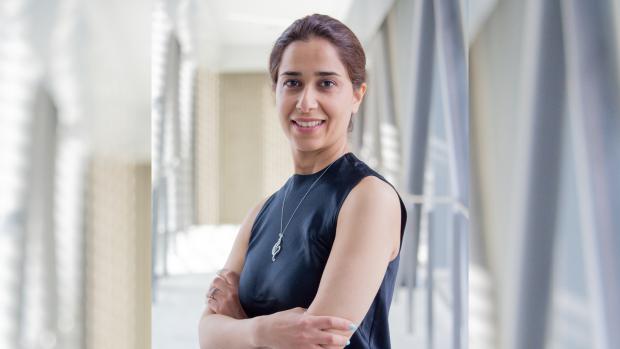
For Mahla Poudineh, engineering has always been a way to connect technology with medicine. Originally from Iran, Poudineh studied electrical engineering at the University of Tehran before moving to Canada in 2012 to pursue a Ph.D. at the University of Toronto. There, working with Shana Kelly and Ted Sargent, she entered the field of biomedical engineering and began developing technologies for the early detection of cancer.
Her early work focused on isolating rare circulating tumor cells from blood as a form of “liquid biopsy.” After completing her Ph.D. in 2017, Poudineh continued her training at the University of Toronto and Stanford, where she began developing microfluidic technologies for continuous monitoring inside the body. At Stanford, she led the development of a platform capable of continuously monitoring insulin in vivo, an experience that drew her increasingly toward diabetes research.
Poudineh went on to establish her independent research program at the University of Waterloo in 2020. There, she began exploring a technology that has become central to her lab: hydrogel microneedles. Less than a millimeter long, the tiny needles can penetrate the skin without causing pain. Made from materials such as hyaluronic acid, they are flexible, skin-compatible and highly biocompatible. While microneedles had previously been used primarily for drug delivery and cosmetic applications, Poudineh's lab began using them as sensing devices.
The approach has allowed her group to develop patches capable of continuously monitoring small molecules including glucose, lactate and ketones. In diabetes research, her lab has been working toward continuous glucose and ketone monitoring, first validating the technology in animal models and then moving into studies with human volunteers. The next stage is to test the technology in people living with type 1 diabetes, with a study scheduled to begin at Stanford in Fall 2026.
Ketones are particularly important for people with type 1 diabetes because elevated levels can lead to diabetic ketoacidosis, a potentially life-threatening complication. Poudineh sees continuous monitoring of ketones as one example of how biomedical sensors could move beyond today's commercially available continuous glucose monitors, giving patients and clinicians a more complete picture of what is happening in the body.
Her lab is also developing technologies to continuously track proteins. In collaboration with McMaster University, Poudineh developed a protein-sensing assay that combines DNA-based probes for signal transduction with antibodies to capture target proteins. The group has demonstrated the platform for continuous monitoring of troponin, a biomarker associated with heart attacks, and is working toward human testing. The same approach could eventually enable continuous insulin monitoring, one of Poudineh's major goals.
That work reflects a larger ambition: to make health care more autonomous. Poudineh envisions systems that continuously measure biomarkers and then respond automatically, creating a closed loop between sensing and treatment. During a 2023 sabbatical in Robert Langer's lab at MIT, She led the development of an insulin lipid-nanoparticle system for incorporation into her microneedles to make stable patches for automatic insulin delivery. Her long-term goal is to combine sensing and drug delivery into a small, painless patch capable of monitoring multiple diabetes-related biomarkers and delivering insulin or other hormones when needed.
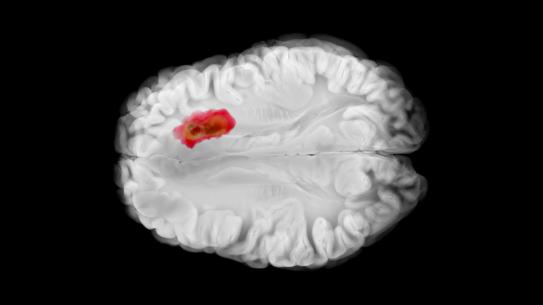
The same philosophy extends beyond diabetes. In a collaboration involving researchers at MIT, Harvard, Brigham and Women's Hospital and the University of Rostock in Germany, Poudineh's team developed a system for continuously monitoring patients in intensive care who are at risk of infection following brain injury. The technology measures glucose, lactate and pH through external ventricular drainage systems. The platform was ultimately tested in 11 ICU patients and reported in Science Translational Medicine.
Now, as an incoming Associate Professor in NYU Tandon's Department of Chemical and Biomolecular Engineering, Poudineh is looking to expand that translational focus. A major attraction of NYU, she says, is its connection to the medical school and the opportunity to work closely with clinicians, particularly on diabetes-related research. She is also excited about potential collaborations with colleagues including Jeff Hubbell, Elisa Riedo, Nathalie Pinkerton, and Rose Faghih.For Poudineh, the goal is not simply to build better sensors. It is to understand disease in greater detail and turn that understanding into technologies that can help patients. In diabetes, she hopes higher-resolution monitoring could shed light on why the disease develops, whether progression from prediabetes to type 2 diabetes can be prevented, and how patients with type 1 diabetes might preserve their remaining insulin-producing cells.
“I believe the technologies that we're developing can help them,” she says.
At NYU Tandon, Poudineh will bring together engineering, sensing, microfluidics and drug delivery in pursuit of that vision: health-care technologies that can observe the body continuously and, ultimately, respond to it automatically.