
New Industry Assistant Professor Michelle Choi Ausman Helps Students Find Their Place in Engineering
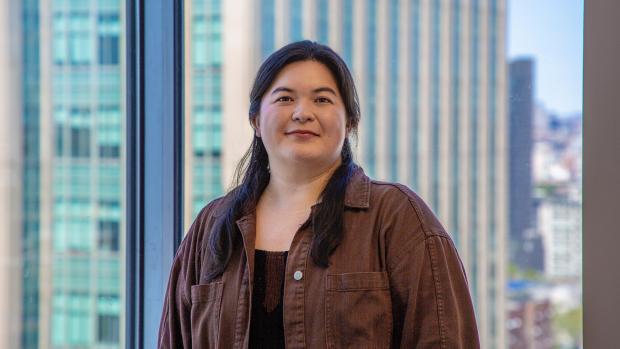
Michelle Choi Ausman’s path to engineering education was anything but linear. Along the way, she studied biomedical engineering, explored computer science and industrial engineering, pursued English and psychology, worked on a factory floor documenting how guitars are made and ultimately earned a PhD studying how students experience engineering.
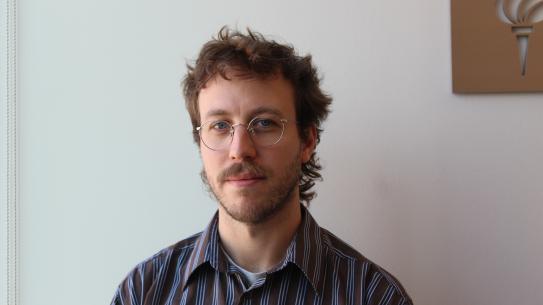
Now, that winding path has brought her to NYU Tandon, where Ausman is joining the school as an Industry Assistant Professor in General Engineering. Her focus is the first-year engineering experience, where she hopes to help students build not only technical skills, but also the confidence and sense of belonging they need to see themselves as engineers.
Ausman began her undergraduate studies at California Polytechnic State University, San Luis Obispo, as a biomedical engineering major. She quickly realized that something was missing.
“I really missed writing and reading,” she says.
She added an English minor, along with a psychology minor, and began taking courses in other areas of engineering. Eventually, she found a way to bring her interests together through a technical writing internship at Ernie Ball Music Man, a California manufacturer of guitars and basses.
Working alongside engineers and factory workers, Ausman documented the knowledge and processes that had accumulated through years of experience on the factory floor. The goal was to preserve that expertise for future workers.
“I got to work on the factory floor with a bunch of the engineers and the factory workers, and basically take all of their knowledge that's up in their brain, and then transfer it and digitize it,” she says.
The experience helped show Ausman that engineering could encompass much more than technical calculations and laboratory work. It also reinforced her interest in the human side of engineering.
She went on to earn a master’s degree in Science and Technology Studies at Rensselaer Polytechnic Institute, where she became increasingly interested in how engineering students navigate their undergraduate education. That interest eventually led her to Virginia Tech, where she earned a PhD in Engineering Education in spring 2026.
Her research has focused on how students experience engineering and how they develop their identities as engineers. At Virginia Tech, she worked on a range of projects, including with the university’s Asian, Pacific Islander, and Desi American + Student Center. The experience gave her a broader view of the many factors that can shape a student’s college experience.
“There’s a lot of different aspects to student life that we don't realize that are really important, specifically for developing students’ identity as engineers,” she says.
That perspective now informs her teaching at Tandon. Ausman first joined the school as an adjunct in January before transitioning into her full-time faculty role. In General Engineering, she will work with students during their first year, helping establish a common foundation for students arriving from different schools, communities and educational systems.
The introductory course covers the engineering design process, teamwork, CAD and basic coding. Students also spend the semester developing a design project, often focused on areas such as sustainability or entrepreneurship. At the end of the semester, they present their work, including a poster and working prototype, in a showcase.
For Ausman, however, the course is about more than teaching technical fundamentals. It is also an opportunity to challenge the idea that struggling in calculus, physics or other foundational courses means a student does not belong in engineering.
“We're gonna...figure out how to get you there, and make sure that you have the skills and the confidence to be able to make it through the program,” she says.
She has seen that philosophy play out when helping students prepare resumes and cover letters. A student who doubts they have enough experience for an internship, for example, might overlook something as significant as participation on a high school robotics team. Ausman’s role is to help students recognize those experiences as evidence of skills they can bring to engineering.
As she begins her first semester as a full-time faculty member, Ausman is especially excited to see what students create. Last semester, she watched teams move from uncertainty about their projects to producing working prototypes.
Ultimately, she hopes her students leave the course with more than a completed design project.
“I’m super excited to see how they turn out this semester,” she says, “but also making sure that they feel like they belong within engineering.”