
New Professor Sean Gibbons Explores the Hidden World of the Human Microbiome
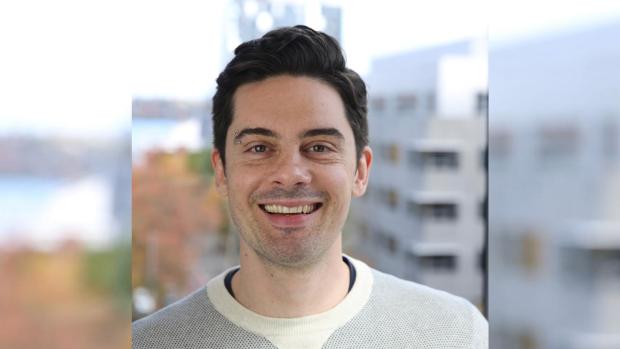
For Sean Gibbons, the path to studying the human microbiome began with a fascination with the hidden forces that shape the natural world. Growing up in small towns across Montana, Gibbons became interested in ecology and the complex relationships that connect seemingly unrelated parts of an ecosystem. He was also drawn to what he calls the “invisible world” of microbes.
“I realized science was adult magic,” he says, “and microbes were these invisible entities that were having this enormous impact on the structure of the world.”
That curiosity has taken Gibbons on a winding path from environmental microbiology to mathematical modeling and, ultimately, the human gut microbiome. He is joining NYU Tandon as a professor in the Department of Biomedical Engineering and will also be part of the new Institute for Engineering Health, led by Jeff Hubbell. The institute brings together researchers from across NYU, including Tandon, Langone and Courant, with a focus on precision and personalized medicine.
Gibbons’ own academic journey was anything but linear. At the University of Montana, he spent six years earning three bachelor’s degrees, in French literature, molecular biology, and microbiology with a minor in chemistry. He considered pursuing graduate study in French literature in Marseille before deciding to remain in Montana and work in a microbiology lab.
That decision led to his first scientific publication and eventually to a Fulbright fellowship in Sweden, where he worked on synthetic biology and genetic engineering, attempting to engineer cyanobacteria to produce hydrogen gas as an alternative energy source. After returning to Montana, he worked at a science-focused ranch, studying everything from microbes to grizzly bears, and learned to analyze data generated by then-emerging high-throughput DNA sequencing technologies.
He carried those skills to the University of Chicago, where he earned a PhD in biophysics while working with advisors in both the physical and biological sciences. His research focused on mathematical modeling and quantitative biology, with applications in microbial ecology. As a lead data analyst of the Earth Microbiome Project, he studied microbial diversity in environments ranging from the Himalayas to the deep ocean, while also beginning to explore interactions between microbes and their hosts.
A postdoctoral position at MIT brought him closer to the clinical applications of the microbiome. Working in Eric Alm’s lab, Gibbons studied evolutionary and ecological questions surrounding the microbiome at a time when fecal microbiota transplants were emerging as a treatment for recurrent Clostridioides difficile infections.
In 2018, he moved to Seattle and established his lab at the Institute for Systems Biology. His research increasingly focused on connecting the composition of microbial communities with their effects on human physiology. His group combines large human cohorts, multi-omic data, machine learning and mechanistic models to understand why people can respond so differently to the same drug, diet or lifestyle intervention.
One of the reasons the microbiome is so fascinating, Gibbons says, is that humans are not entirely human. Over evolutionary time, people have outsourced some of their biological functions to the microbes living in and on their bodies. Gut microbes produce compounds derived from dietary substrates and these compounds interact with all the systems of the body, including the endocrine and nervous systems.
In one study involving about 2,000 people, his team examined the relationship between genetic variation, the microbiome and roughly 1,000 blood metabolites. 44 percent of these metabolites showed significant associations with the gut microbiota, compared with only 12 percent that were associated with human genetic loci.
Gibbons’ lab is also developing computational tools to better understand these complex interactions. In one example, his group showed that DNA from food can pass through the digestive system, allowing researchers to reconstruct aspects of a person’s diet from stool sequencing data. Additionally, the lab builds microbial community-scale metabolic models that simulate interactions among hundreds of microbial species and their host. These models can function as a kind of “digital twin” of the gut microbiome, allowing researchers to test how an individual might respond to different prebiotics, probiotics, or dietary interventions.
At NYU, Gibbons sees an opportunity to expand that work within a rapidly growing research ecosystem, with a focus on human health and precision medicine at the Institute for Engineering Health. He is particularly excited about building strength in microbiome research at NYU and helping to recruit additional faculty in this expanding field.
“I've always been interested in complex adaptive systems,” he says. “I think that's the through-line of my career.”
Even as his scientific interests have evolved, his connection to the arts and humanities has remained. Gibbons’ father is a poet who served as Montana’s Poet Laureate from 2021-2023, and Gibbons’ first published work was a French translation of one of his father’s poetry collections. Gibbons’ partner, Jeff Verlanic, is a filmmaker with an MFA in writing/directing from NYU Tisch. Their partner, Edoardo Andreoni, is a historian and editor at Europa Editions. Gibbons remains an avid reader and writer, with a particular fondness for Camus and absurdist playwrights such as Samuel Beckett.