
A new faculty member explains performative prediction and how it affects us all
Juan Carlos Perdomo, Assistant Professor in the Department of Computer Science and Engineering and at the NYU Center for Data Science
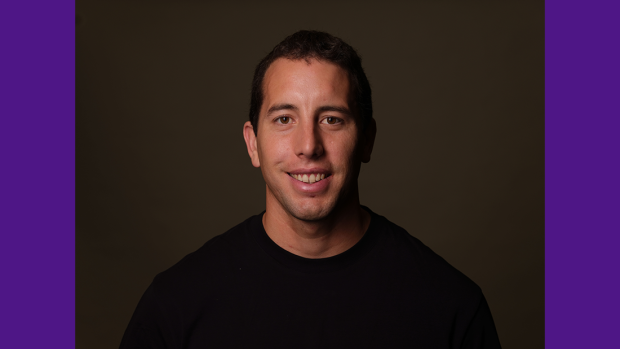
Juan Carlos Perdomo
What if a teacher learned that, according to an algorithm, some of their incoming students were likely to fail, based on such factors as race and socioeconomic status? What if the students themselves learned about that prediction? Would it become a self-fulfilling prophecy?
Systems used to make predictions aren’t passive, incoming Assistant Professor of Computer Science and Engineering Juan Carlos Perdomo warns. They can affect the very outcomes they are meant to predict.
“When algorithmic predictions are used to inform social decision-making, these predictions don’t just forecast the world around it: they actively shape it,” Perdomo, who will also be part of the faculty at NYU’s Center for Data Science, has written. “From online recommender platforms to financial predictions, machine learning systems are in active feedback with the surrounding environment and have the ability to steer the underlying data distributions towards different targets.”
In 2020, Perdomo, then a doctoral candidate at the University of California, Berkeley, developed a risk minimization framework called “performative prediction” to understand these kinds of feedback loops between machine learning algorithms and society. Performativity is the concept that language can shape social realities, rather than just describe them.
Performative prediction applies in a wide range of sectors, including transportation, government, and healthcare. (Consider cases in which a GPS predicts very little traffic on a certain route and so many drivers choose it that a new traffic jam occurs; officials predict how a segment of the population will relate to an issue and target campaign materials accordingly; or medical data is used to encourage people to adopt healthier lifestyles.)
Perdomo’s work also examines the design and broader impact of machine learning algorithms used to allocate scarce resources, such as unemployment assistance or after-school tutoring. His most recent paper in this line of work, “The Value of Prediction in Identifying the Worst-Off”, was recently recognized with an Outstanding Paper honor at the 2025 International Conference on Machine Learning, awarded to the top six papers at the conference out of over 10,000 submitted.
One group of fun facts about Perdomo that would be impossible to predict if you were just looking at his impressive list of publications and research projects: he is a former member of Puerto Rico’s national sailing team; the winner of youth world sailing championships at the under-17, 19, and 21 levels; a participant in the 2015 Pan American Games; and a member of the design team during Emirates Team New Zealand's winning campaign for the 35th America's Cup in Bermuda.
In Brooklyn, he predicts that there will be opportunities to collaborate with colleagues from across the university, including those working in fields like psychology and sociology. “That’s the best way to develop technology that affects our everyday lives,” he says.