
Meet Christopher Clark, the Department of Mechanical and Aerospace Engineering’s New Industry Professor and Director of Experiential Learning
Clark Brings a Multifaceted Background to Those Roles
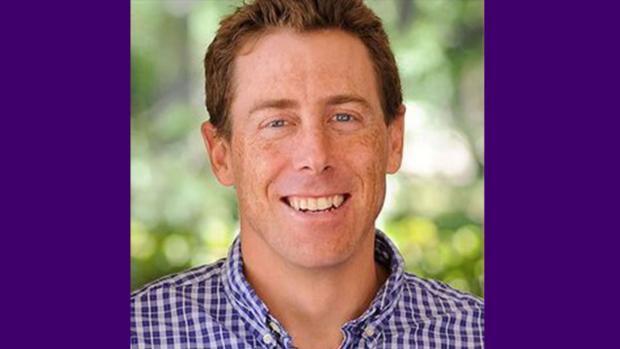
In 2004, Christopher Clark was the first engineering hire at a little-known startup called Kiva Systems. His job? Help Kiva’s three co-founders program robots that could transform warehouse management. The company's multi-robot systems would eventually automate the movement of goods across massive distribution centers, replacing miles of human walking with coordinated fleets of autonomous machines.
Eight years later, Kiva was acquired for $775 million, and today, more than a million of these robots work in Amazon fulfillment centers worldwide.
Clark's journey from startup engineer to faculty member informs his approach to STEM education: he believes students learn by building real things, not just studying them.
From Arctic Waters to Apple's Research Labs
Clark's research background makes for compelling reading. He's deployed autonomous underwater vehicles in Malta's coastal waters to map ancient archaeological sites, sent multi-robot teams to track sharks in the Pacific, and conducted robot navigation experiments in Arctic ice fields. His work spans motion planning, machine learning, state estimation, and control theory — always with an eye toward solving problems in the physical world.
"Robots have crossed boundaries," Clark explained in a presentation at UCLA, describing how autonomous systems have moved from university labs into oceanography, geology, archaeology, and biology. "These aren't just engineering problems — they're interdisciplinary challenges."
After his time at Kiva, Clark held professorships at such schools as the University of Waterloo, Cal Poly San Luis Obispo, and Harvey Mudd College, where he served as Associate Dean of Research and Experiential Learning and now holds emeritus status; he also spent almost a decade at Apple, leading research teams focused on robotics and autonomous systems.
Building the Future at CREO
As a key member of NYU's Center for Robotics and Embodied Intelligence, Clark helps lead one of the region’s most ambitious robotics initiatives. The Center brings together over 70 faculty, Ph.D. students, and postdoctoral researchers at a flagship 6,800-square-foot space at 370 Jay Street in Downtown Brooklyn.
The Center's mission aligns perfectly with Clark's career arc: advancing research, education, and innovation at the intersection of AI and robotics to enhance quality of life through socially beneficial technologies.
The Message to Students: Get Your Hands Dirty
Clark's career trajectory — from Kiva's first engineering hire, through academic positions at elite institutions, to leading Apple's robotics research, and now shaping experiential learning in Tandon’s Department of Mechanical and Aerospace Engineering — demonstrates what becomes possible when theory meets practice.
His courses operate on the principle that engineering students shouldn't just read about robots or watch videos of autonomous systems. They should write the control algorithms. They should debug the sensors. They should watch their code fail, figure out why, and make it work.
The three late days he allows students for lab assignments aren't just about flexibility — they're acknowledgment that real engineering work involves iteration, dead ends, and breakthroughs that don't always happen right on schedule.
For students wondering whether NYU Tandon can provide the kind of hands-on, industry-relevant experience that leads to real careers, Clark's presence offers compelling evidence. After all, he helped build the robots that changed an industry — and now he's helping students build the skills to do the same.
Finding History Beneath the Waves
In 2017, Clark was part of a cohort testing an autonomous underwater vehicle (AUV) that leveraged sonar, photography, and video technology to explore the ocean floor off the coast of Malta, in the Mediterranean Sea. Malta had been an important World War II base for Allied forces, and Axis bombardments meant that several planes and ships had sunk in the area.
Sending human divers to explore involves physical danger and great expense, however, and that’s where Clark’s AUV came in. Deployed by a multi-institution team, the vehicle discovered a British biplane torpedo bomber — a Fairey Swordfish — that had been submerged for more than seven decades.
It was nonetheless in good enough condition for the team to identify it and research its history: it had experienced engine trouble and had been forced to ditch off the coast of Malta, although a passing boat rescued the two-man crew.
The successful identification of the Swordfish validated the AUV's capability to locate and document historically significant wrecks while avoiding the risks and costs of traditional deep-sea exploration
Learning by Doing
At NYU Tandon, Clark's experiential learning philosophy permeates his teaching. His courses don't just cover theory — they require students to build, test, fail, iterate, and succeed.
Robotic Manipulation & Locomotion (ROB-UY 2004) introduces students to sensors, actuators, kinematics, dynamics, and control through weekly labs where they implement concepts on actual robots. The course emphasizes practical experience alongside algorithmic fundamentals, with students working on everything from PID control to Reinforcement Learning.
Robot Localization & Navigation (ROB-GY 6213) takes a similar approach to state estimation. Students explore probability theory, Bayes Filters, Kalman Filters, and Particle Filters — but instead of stopping at equations, they apply these filters to real data collected from autonomous vehicles. The course culminates in a self-designed project where students must gather their own data.
The structure is deliberate: lectures establish theoretical foundations, labs provide hands-on application, and projects demand creative problem-solving. Clark allocates 35% of the final grade to projects, 30-45% to labs, and only 20% to exams — a distribution that reflects his conviction that engineering skill develops through practice.