

Systems Engineering & Complex Decision-Making
Designing, building, and optimizing the intelligent systems of tomorrow
Our research and courses in systems engineering and data-driven decision-making tackle real-world challenges, creating secure and effective solutions for everything from global financial systems and supply chains to digital healthcare, urban transportation, and critical infrastructure.
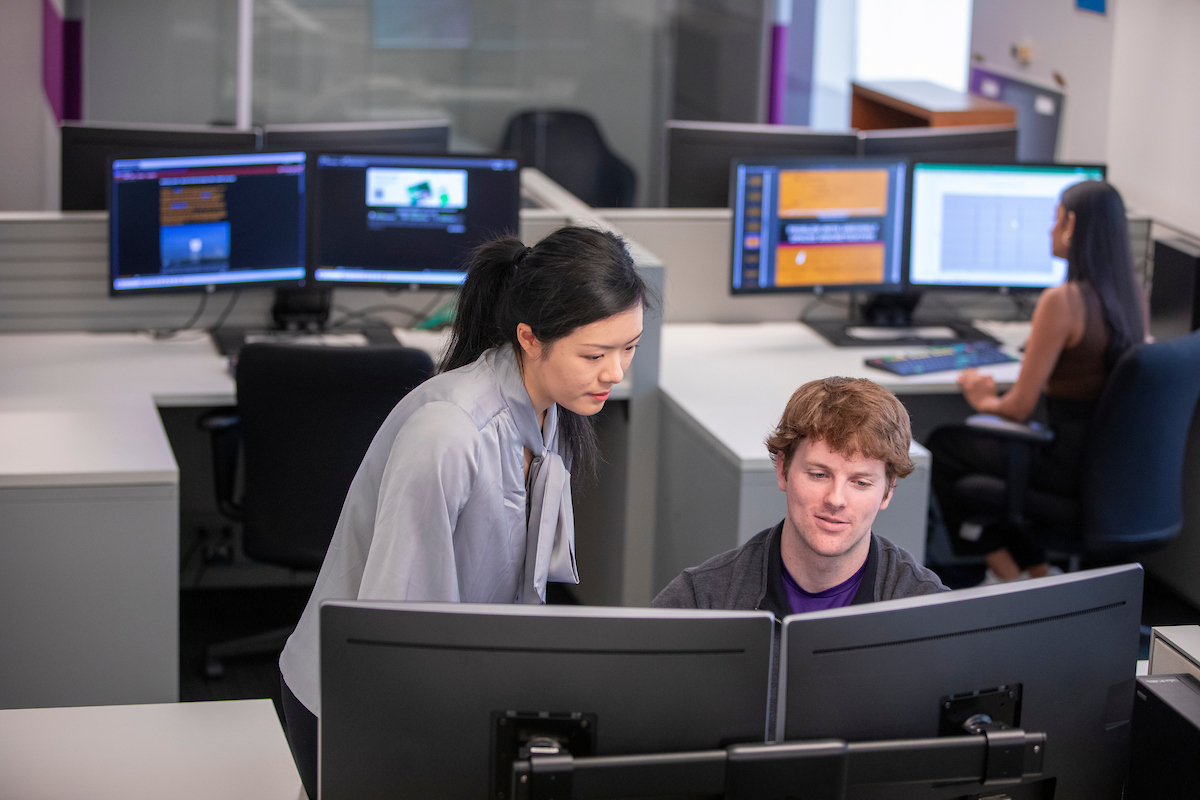
By combining advanced urban data modeling methods and techniques with systems engineering principles and exposure to a variety of practical applications, we're building a new generation of engineers and interconnected systems that are resilient, efficient, and ready for the future.
Our areas of focus include:
- Intelligent digital health infrastructure
- Energy systems
- Complex, dynamical systems
- Decision analytics
- Financial risk
- Industrial engineering
Hands-on Learning: Vertically Integrated Projects
Vertically Integrated Projects (VIP) are multi-year, multidisciplinary projects that emphasize innovative and research-active education.

Construction Management & Engineering

Metaverse for Education (GY)

Urban Remote Sensing (GY)
NYU Holodeck: High-Speed Research Network (GY)
Latest Stories & Events
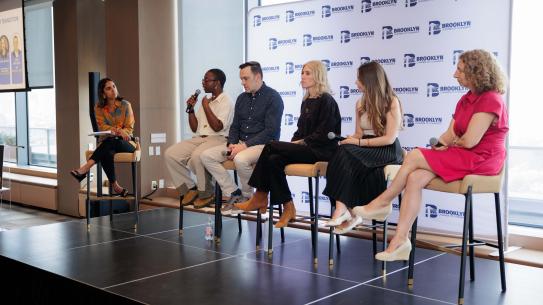


Research Centers and Labs
C2SMART
C2SMART is a solution-oriented research center taking on some of today's most pressing urban mobility challenges.

NYU Center for Cybersecurity (CCS)
An interdisciplinary research institute dedicated to training the next generation of cybersecurity professionals and to shaping the public discourse and policy landscape on issues of technology and security.
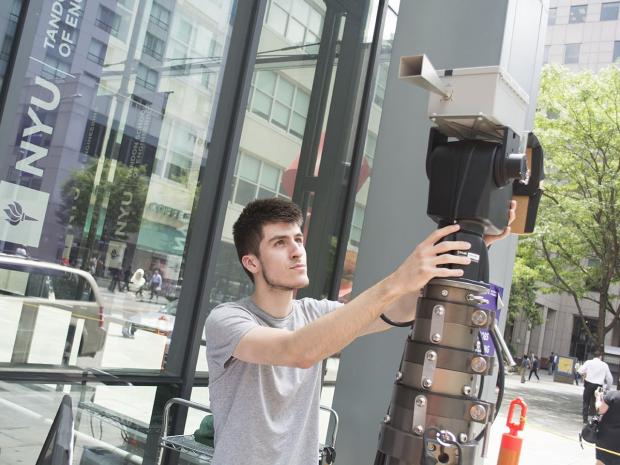
NYU WIRELESS
NYU WIRELESS is an innovative academic research center with a focus on 6G and beyond, and from mmWave to Terahertz

Behavioral Urban Informatics, Logistics, and Transport Laboratory (BUILT)
BUILT @ NYU conducts research in the area of transportation systems design and modeling.
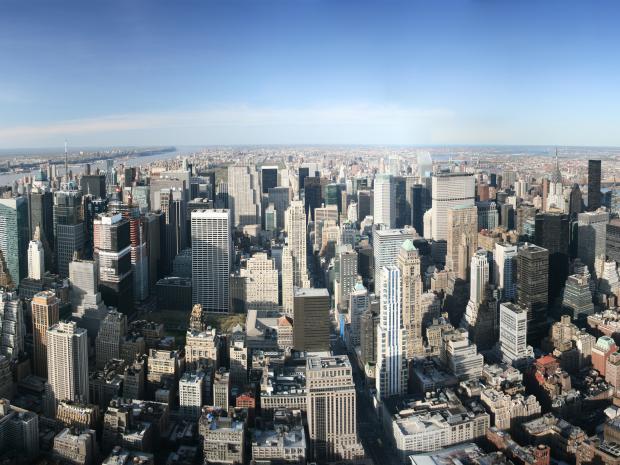
Building Informatics and Visualization Lab (BiLab)
The biLAB focuses on understanding the operational challenges associated with construction and operation of facilities and infrastructure systems in urban settings.
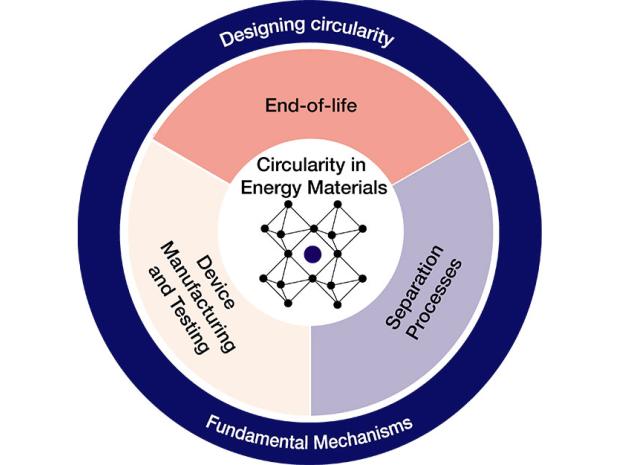
Circularity in Energy Materials (CEM)
Our lab addresses the critical challenge of energy material sustainability by focusing on closing their lifecycle through fundamental research and maintaining zero-waste experimental practices.
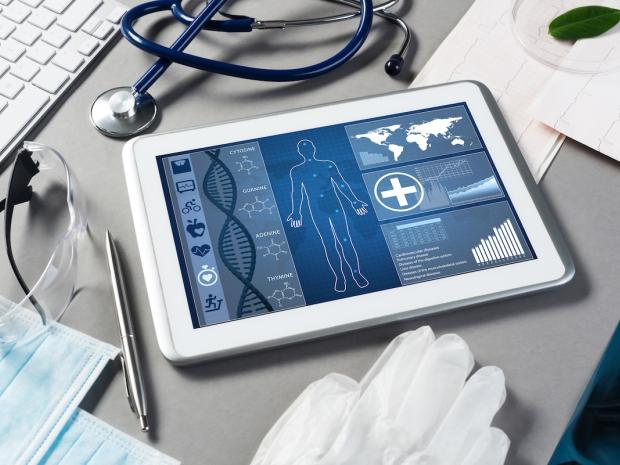
Digital Health Work
The Digital Health Work initiative, directed by Professor Oded Nov, is an interdisciplinary research program at NYU that brings together technological, organizational, and medical innovations toward a healthy and resilient society, and an inclusive healthcare workforce.
Dynamical Systems and Artificial Intelligence Lab (DSAIL)
Dynamical Systems and Artificial Intelligence Lab (DSAIL) uses the financial application domain as a challenging real-world dynamical system environment in which to advance machine learning.
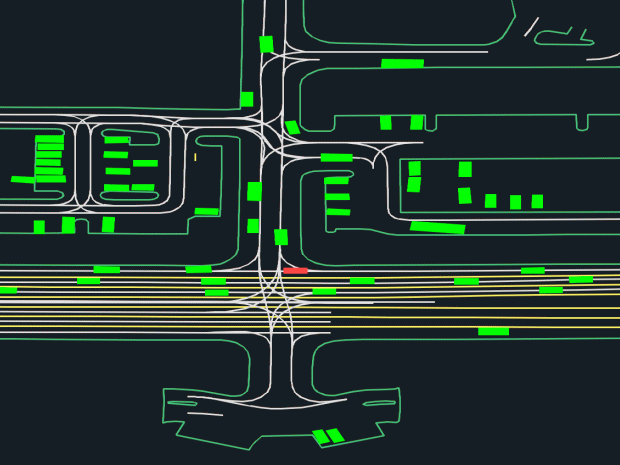
Emerge Lab
The mission of the EMERGE lab is to make it easy and efficient to develop capable, safe, and intelligent multi-agent systems through learning, simulation, and data. We emphasive use-inspired basic research where we draw inspiration as to what research is needed from specific problems in multi-agent autonomy and transportation.
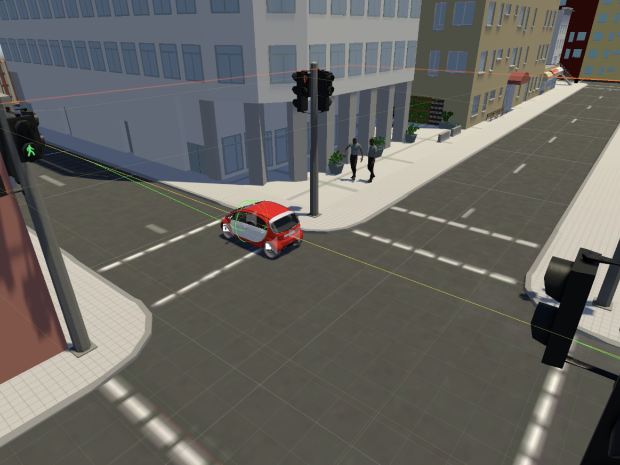
Human FUEL
The Human Factors and Urban Ergonomics Lab (Human FUEL) conducts research primarily on transportation systems focusing on understanding and enhancing human behavior as they interact with complex systems, with the ultimate goal of improving operator safety and reducing injuries and fatalities.

FEATS: Lab For the Economic Analysis of Transportation Systems
Led by Assistant Professor Daniel A. Vignon, the lab aims to inform the design, regulation, and operations of emerging mobility services. Research looks at infrastructure systems, ride-hailing services, and dynamics of transportation systems.

Resilient Urban Networks Lab
The mission of the Resilient Urban Networks (RUN) Lab is to develop computational tools and data-driven models that help us better understand the complex interplay between collective human behavior and the built environment exposed to such drastic changes.

Ruyle Lab
The Ruyle lab examines how human activity, the biosphere, and climate change impact water quality. Our lab uses controlled experiments and environmental measurements to build models describing the severity and impacts of chemical contamination. Our goal is to protect safe water and ensure healthy ecosystems and communities.

Smart Innovations in Built Environment Research (SiBER) Lab
Smart Innovations in Built Environment Research (SiBER) Lab, led by Mohamad Awada, explores the integration of AI, machine learning, and digital technologies to enhance the performance, resilience, and sustainability of civil infrastructure. The lab focuses on digital twins, smart monitoring, and data-driven solutions for structural assessment and urban systems.

Urban Intelligence Lab
We are focused on creating new data-driven methodologies to observe, model, and analyze the urban environment. Our work is grounded in solving real-world problems and providing decision-makers with a comprehensive understanding of the relationships between physical infrastructure systems, natural systems, and human systems.