

Research News



Light pills could transform understanding of how the gut controls the body
Scientists have long struggled with how to study the gut's vast nervous system — often called the body's 'second brain' — without damaging it. Current research methods are invasive and often require complex surgeries that make it difficult to study normal gut function.
"If you look at how we do any study trying to map neural function in the gut, it is all extremely crude," said Khalil Ramadi, a NYU researcher who has developed a new approach to this challenge. "We just don't have good tools for it."
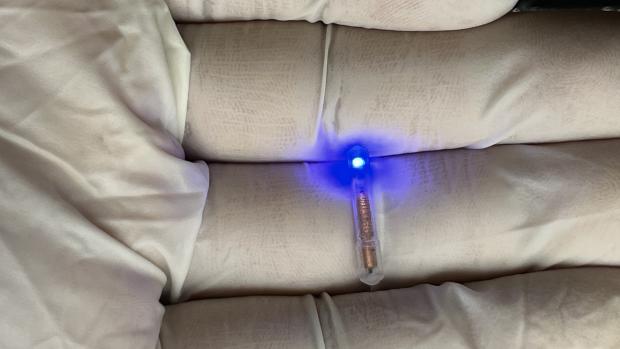
A team led by Ramadi — assistant professor of bioengineering at NYU Tandon School of Engineering and Director of the Laboratory for Advanced Neuroengineering and Translational Medicine at NYU Abu Dhabi (NYUAD) — has created ingestible devices called ICOPS (Ingestible Controlled Optogenetic Stimulation) that deliver targeted light stimulation directly to the gut.
The technology allows researchers to precisely illuminate specific regions of the intestinal tract, activating specific nerve cells. It could be used to observe how those cells control digestion, for example, and reveal new targets for treating conditions like gastroparesis, where the stomach empties too slowly, or metabolic diseases and eating disorders. The approach represents a dramatic improvement over current methods, which typically involve invasive surgical procedures to implant optical fibers .
The device enables optogenetics, a technique that makes specific cells light-sensitive. Scientists first modify target neurons to respond to light stimulation, then the patient swallows the LED-equipped pill.
"You can go in, transfect a certain subset of cells to be light sensitive, and then swallow this light pill whenever you want to activate those cells," Ramadi explained.
In a paper published in Advanced Materials Technologies, the researchers demonstrate how these devices could control the enteric nervous system — the network of neurons that governs gut function — without surgery.
While optogenetics has been used for brain research since the early 2000s, this marks the first non-invasive platform for wireless optical stimulation of the gut, opening new possibilities for mapping neural circuits that were previously inaccessible to researchers.
ICOPS represents the latest in Ramadi's portfolio of ingestible technologies, which includes FLASH, a capsule that uses electrical stimulation to activate gut neurons, and IMAG, a magnetic field-based device for tracking pill location in the gut. While these other devices have shown that neural activation can lead to hormonal changes affecting metabolism, ICOPS adds optogenetic control for greater precision.
A key innovation is that ICOPS operates without a battery, instead receiving power wirelessly through magnetic induction from an external transmitter. This battery-free design was necessary for the device to be small enough for testing in rats.
"What makes this capsule unique is that it was entirely fabricated in-house using 3D printing, without the need for cleanroom facilities,” said Mohamed Elsherif, a Postdoctoral Associate in Ramadi’s lab and the paper’s lead author. “This allowed us to integrate micro-LEDs and custom coils in a scalable way, making it the first rodent-scale ingestible capsule for non-invasive optical stimulation. Crucially, it can operate wirelessly in freely moving animals, enabling studies that were not possible with traditional tethered or invasive approaches."
The implications extend beyond research. The technology could lead to new treatments for gut motility disorders. "We don't really have very good prokinetic or antikinetic agents," Ramadi said, referring to drugs that speed up or slow down gut movement. "We have stuff that overall slows or accelerates motility, but not targeted ones."
Neural activation in specific gut regions can also trigger hormonal changes affecting metabolism, potentially offering new approaches to treating metabolic diseases and eating disorders.
The devices travel through the digestive system naturally over one to two days. Beyond light therapy, the platform could enable electrical stimulation and targeted drug delivery. While clinical applications likely remain a decade away, the research represents a significant step toward understanding the gut's complex neural networks.
In addition to Ramadi and Elsherif, the paper's authors are Rawan Badr El-Din, Zhansaya Makhambetova, Heba Naser, Rahul Singh, Keonghwan Oh, and Revathi Sukesan from NYUAD's Division of Engineering; Maylis Boitet from NYUAD's Core Technology Platforms Operations; and Sohmyung Ha from NYUAD's Division of Engineering and NYU Tandon.
Funding for the ICOPS research came from NYUAD and Tamkeen under the NYUAD Research Institute Award to the Research Center for Translational Medical Devices (CENTMED).
Elsherif, Mohamed, et al. “Wirelessly powered ingestible capsule for optical stimulation of the gastrointestinal tract in rodents.” Advanced Materials Technologies, 20 Aug. 2025

Remote work spurs grassroots environmental action in New York City
Remote and hybrid work arrangements enabled New Yorkers to participate in community environmental action by giving them both the time and the motivation to do so, a new study from NYU finds.
Published in the Proceedings of the ACM on Human-Computer Interaction and presented at the 2025 Aarhus Conference on Critical Computing, the study draws on five years of ethnographic research at a volunteer-run composting and gardening site in Sunnyside, Queens.
It found that flexible schedules and work-from-home routines made it possible for independent and creative workers to engage in hands-on environmental labor during the workday. Many reported being driven not only by availability but by a desire to counter the isolation and screen fatigue associated with remote professional life.
Conducted by Margaret Jack, Industry Assistant Professor in NYU Tandon’s Department of Technology, Culture, and Society, the research focuses on a site known as 45th St Greenspace, established in 2020 on a formerly vacant lot.
Volunteers — many of whom were freelance or hybrid workers in fields like design, academia, or media — organized composting operations, garden plantings, public events, and infrastructure improvements. Most lived nearby and integrated the garden into their daily or weekly routines.
“Working from home didn’t just change where people did their jobs, it changed how they lived in their neighborhoods,” said Jack. “We found that flexible schedules and a need for offline connection drew people into environmental projects, where they could turn screen time into green time.”
The study offers new insight into how technology-mediated work environments shape civic participation and local infrastructure. It contributes to human-centered engineering research by examining how digital platforms like Slack, Zoom, and Signal also alter grassroots environmental systems and collective organizing.
Participants coordinated their work using these platforms, and the project’s governance structure reflected common patterns in digitally enabled work: horizontal decision-making, collaborative workflows, and distributed leadership.
Jack frames the garden itself as a socio-technical system, one whose function and sustainability depended not just on physical tools like compost bins and raised beds, but also on the digital infrastructure and cultural norms imported from participants’ professional lives.
The project reflects how technologies designed for individual productivity are being adapted for civic and ecological collaboration, raising design questions relevant to the development of future civic technologies.
While the project was open to the public and built on values of inclusion and mutual aid, Jack found that sustained participation was shaped by access to time, stability, and professional autonomy. Parents of young children, people with rigid or physically demanding jobs, and those unfamiliar with digital communication tools were often less able to remain actively involved.
Cultural expectations around communication and conflict resolution also revealed differences within the group. Though mediation structures were developed, they often relied on middle-class professional norms, which did not resonate equally across cultural or linguistic backgrounds.
The research employed a combination of ethnographic and autoethnographic methods. Jack, a local resident and volunteer at the garden, conducted participant observation over five years, maintained field notes and reflective journals, and led interviews and a survey with core volunteers.
The project also included contributions from community collaborators and comparative fieldwork in other New York gardens. These methods, often used in the design and evaluation of socio-technical systems, allow engineering researchers to understand not only how tools function, but how they shape behavior, governance, and access.
Though 45th St Greenspace is now preparing to close due to private development, Jack sees the project as emblematic of a wider shift in urban civic engagement. As hybrid and independent work becomes more common, she argues, it reshapes how people interact with both digital platforms and the physical city, bringing new possibilities for environmental infrastructure, but also new forms of exclusion.
Margaret Jack. 2025. In the Dirt: Place-Based Environmental Action and Technology-Mediated Work in New York City. In Proceedings of the sixth decennial Aarhus conference: Computing X Crisis (AAR '25). Association for Computing Machinery, New York, NY, USA, 96–106.

NYU Tandon researcher advocates for uncertainty-aware water risk models to improve flood and drought preparedness
Researchers are calling for a more reliable approach to understanding water-related hazards by explicitly accounting for uncertainty in their predictions, arguing this could improve how communities prepare for the risk of floods, droughts, and river-related erosion.
Omar Wani, a hydrologist at NYU Tandon School of Engineering, and co-authors argue in a recent opinion piece published in PLOS Water that many current hydroclimatic hazard assessments have a major flaw: they only give one answer. These models might predict, for example, that a river will flood to 15 feet, but they don't say how confident scientists are in that prediction or what other outcomes are possible.
Wani, who joined NYU Tandon as an Assistant Professor in the Civil and Urban Engineering Department in 2023, leads the Hydrologic Systems Group, which combines statistical and computational methods to study water dynamics in built and natural environments. His group focuses on understanding hydroclimatic risk and enabling more reliable decision-making under uncertainty.
This uncertainty-focused approach is central to Wani and his PLOS co-authors' argument for models that work more like weather forecasts, giving a range of possibilities with probabilities attached. Rather than saying "the water level in the river will reach 15 feet," these models might say "there's an 80% chance of the water level exceeding 15 feet, a 30% chance of it exceeding 18 feet, and a 10% chance of it breaching the 20 feet mark."
The approach has real-world urgency. Approximately 75% of flood-related fatalities occur when people drive into or walk through floodwaters, while climate change is expected to cause additional capacity deficits in stormwater infrastructure, leading to enormous financial losses. Overwhelmed and damaged drainage structures under roads can cost millions to replace.
In research published in Earth Surface Dynamics, Wani and collaborators demonstrated practical applications of this approach, showing how probabilistic models can generate "geomorphic risk maps" that display the probability of riverbank erosion at different locations over time.
Using satellite data from the rapidly-migrating Ucayali River in Peru's Amazon basin, the researchers showed their novel probabilistic approach consistently outperformed traditional predictions. The method combines mathematical models based on river shape and curves with computer simulations that run thousands of different scenarios to explore possible future outcomes.
Apart from the scientific value of this research in improving our understanding of the river systems, such "risk maps are relatively more informative in avoiding false negatives, which can be both detrimental and costly, in the context of assessing erosional hazards," said Wani. Their results showed that probabilistic forecasts assign appropriate probabilities to regions that might erode, avoiding the overconfident binary classifications of traditional approaches.
The implications extend beyond academic research. Behavioral science research shows that people can exhibit loss aversion and risk aversion when making decisions under uncertainty. However, these psychological preferences can only be utilized when the requisite uncertainty information is available.
"To allow for individuals to use these preferences and risk attitudes during hydroclimatic warning or design decisions, people would need to be aware of the uncertainties in quantitative analysis and forecasts," Wani explained.
His group's current work spans from improving the reliability of flood early warning systems for distributed stormwater infrastructure to testing advanced probabilistic algorithms for satellite-based flood damage classification.
The framework represents a shift from seeking the single "most likely" outcome to embracing the full range of possibilities.
The research has immediate practical applications for infrastructure planning, emergency management, and community resilience. As climate change introduces additional uncertainties into the behavior of streams and rivers globally, the researchers argue that probabilistic approaches become increasingly important. The work reflects growing recognition that uncertainty is not a limitation to overcome, but rather crucial information that enables better decision-making.
In addition to Wani, the PLOS opinion piece's authors are Mason Majszak, who is currently working on a Swiss National Science Foundation project as a Postdoctoral Fellow at NYU Tandon and in the NYU Department of Philosophy, Victor Hertel from the German Aerospace Center, and Christian Geiß from the German Aerospace Center and University of Bonn. Funding for the work was provided by the Swiss National Science Foundation.
The Earth Surface Dynamics paper's authors are, in addition to Wani, Brayden Noh from Caltech, Kieran B. J. Dunne from Caltech and Delft University of Technology, and Michael P. Lamb from Caltech. Funding for the research was provided by the Swiss National Science Foundation and the Resnick Sustainability Institute at Caltech under National Science Foundation awards.

Climate change is altering nitrogen composition in Arctic rivers, study finds
Climate change is starving the Arctic Ocean of essential nutrients, with the region's six largest rivers now delivering far less of the type of nitrogen that marine ecosystems need to survive, according to new research in one of Earth's most vulnerable regions.
The study, led by Bridger J. Ruyle of NYU Tandon School of Engineering, is published in Global Biogeochemical Cycles, where it has been selected as an Editor's Choice. Ruyle completed the research as a Postdoctoral Fellow at the Carnegie Institution for Science.
The study found that warming temperatures and thawing permafrost are fundamentally altering the chemistry of Arctic rivers. The result is that coastal food webs that have sustained Indigenous communities for millennia are being deprived of inorganic nitrogen, an essential nutrient, potentially triggering cascading effects throughout the Arctic Ocean ecosystem.
"This is a red flag for the Arctic," said Ruyle, who joined NYU Tandon in the summer of 2025 as an Assistant Professor in the Civil and Urban Engineering Department. "Rapid changes in river nitrogen chemistry could completely transform how these marine ecosystems function."
The research analyzed 20 years of data from six major Arctic rivers — the Yenisey, Lena, Ob', Mackenzie, Yukon, and Kolyma — which collectively drain two-thirds of the land area flowing into the Arctic Ocean. These rivers transport nitrogen that supports up to 66% of the ecosystem's primary production in coastal Arctic regions.
Between 2003 and 2023, Ruyle and colleagues documented declines in inorganic nitrogen accompanied by simultaneous increases in dissolved organic nitrogen, a far less bioavailable form of the element, in four of the six rivers. The findings reveal that warmer temperatures and increased precipitation caused by climate change are driving the shift in nitrogen composition through their effects on river discharge and permafrost thaw.
Using sophisticated statistical modeling, the researchers identified permafrost loss as the key factor explaining the diverging trends between organic and inorganic nitrogen in these rivers. The study combined 20 years of water chemistry data with environmental variables including temperature, precipitation, land cover, and permafrost extent to pinpoint the climate drivers behind the chemical shifts.
This Arctic rivers research represents Ruyle's broader research mission to understand how human activity, climate change, and natural processes interact to affect water quality globally. Among other areas of focus, his work includes tracking "forever chemicals" and pharmaceuticals in wastewater.
"Whether we're looking at PFAS contamination in drinking water or nitrogen cycling in Arctic rivers, the common thread is understanding how environmental changes propagate through water systems," Ruyle explained. His research explores how human activity, the biosphere, and climate change affect water quality, with particular focus on developing analytical tools to quantify chemical contamination and developing models using remote sensing data to assess climate impacts.
The Arctic findings have implications for ecosystem management and climate adaptation strategies. River transport of nitrogen is estimated to support up to 66% of primary production in Arctic coastal regions, making these compositional changes important for marine food webs and the Indigenous communities that depend on these resources.
The research also highlights the interconnected nature of global environmental challenges. As Ruyle noted in previous work on pharmaceutical contamination, climate-driven water scarcity could exacerbate water quality problems, as there's less dilution of contaminants during drought conditions. The Arctic study similarly shows how temperature and precipitation changes cascade through complex biogeochemical systems, resulting in water quality and ecosystem impacts
"This work demonstrates why we need to think about water quality and climate change as fundamentally linked challenges," Ruyle said. " As climate change intensifies, we must understand these interconnections to protect both human health and ecosystem integrity."
Along with Ruyle, the paper's authors are Julian Merder of the University of Canterbury, New Zealand; Robert G.M. Spencer of Florida State University; James W. McClelland of the Marine Biological Laboratory, Woods Hole; Suzanne E. Tank of the University of Alberta; and Anna M. Michalak of Carnegie Institution for Science.
The study was supported by the National Science Foundation through grants for the Arctic Great Rivers Observatory.
Ruyle, B. J., Merder, J., Spencer, R. G. M., McClelland, J. W., Tank, S. E., & Michalak, A. M. (2025). Changes in the composition of nitrogen yields in large Arctic rivers linked to temperature and precipitation. Global Biogeochemical Cycles, 39, e2025GB008639. https://doi.org/10.1029/2025GB008639

NYU Tandon engineers develop new transparent electrode for infrared cameras
Infrared imaging helps us see things the human eye cannot. The technology — which can make visible body heat, gas leaks or water content, even through smoke or darkness — is used in military surveillance, search and rescue missions, healthcare applications and even in autonomous vehicles.
These capabilities come with an engineering challenge, however. Infrared cameras need electrical contacts to capture and transmit the images they detect. Most materials that can conduct electrical signals also block the majority of infrared radiation from reaching the sensor, creating a fundamental conflict between seeing infrared light and having the electrical connections needed to process that information.
To solve this, researchers at NYU Tandon School of Engineering have developed a transparent electrode made from embedding tiny silver wires, similar in width to human hair, into a transparent plastic matrix that can be simply deposited on top of conventional infrared detectors.
The research, published in the Journal of Materials Chemistry C and recently selected as a HOT article by the journal's editors, tackles a key challenge in infrared detector manufacturing.
"We've developed a material that solves a fundamental problem that has been limiting infrared detector design," said Ayaskanta Sahu, associate professor in the Department of Chemical and Biomolecular Engineering (CBE) at NYU Tandon and the study's senior author. "Our transparent electrode material works well across the infrared spectrum, giving engineers more flexibility in how they build these devices."
The researchers tested their material by building it into infrared cameras that use colloidal quantum dots as the light-responsive material. These are tiny engineered particles that have recently gained attention for their use in quantum dot televisions and their role in earning the 2023 Nobel Prize in Chemistry. For this study, the group specifically used tiny clusters of mercury telluride, a type of quantum dot that responds to various wavelengths of infrared light.
Their new approach represents a significant improvement over existing methods. Traditional infrared photodetectors have relied on expensive materials like indium tin oxide (ITO) or thin metal films, which either lose transparency in longer infrared wavelengths or suffer from poor electrical properties and must be rigid.
Measuring 120 nanometers in diameter and 10-30 micrometers in length, the silver nanowires form conductive networks even at relatively low concentrations. When embedded in the PVA matrix, they form a silvery conductive ink that can be sprayed or spun onto infrared detectors as stable and flexible films that can even be manufactured at the low temperatures needed for quantum dot processing.
"Conventional electrodes in the infrared are like blackout curtains — most of the signal never reaches the sensor," said graduate researcher Shlok J. Paul, a co-author on the study. "Our near-invisible web of silver nanowires lets more infrared photons in while doubling as the wiring that carries the electrical current needed to turn the invisible light into data. While there is more work to be done, the simplicity of this flexible layer could carry IR detection from the lab to commercial applications like for firefighter vision or self-driving cars.”
In addition to Sahu and Paul, the paper's authors are Elisa Riedo, Herman F. Mark Professor in NYU Tandon's CBE Department, and graduate students Håvard Mølnås, Steven L. Farrell, and Nitika Parashar, all from CBE as well.
The work was supported by the Defense Advanced Research Projects Agency, the Office of Naval Research, the US Army Research Office, and the National Science Foundation.
The researchers filed a U.S. patent application covering their method for embedding silver nanowires in a polymer matrix for transparent infrared electrodes.
Paul, Shlok J., et al. “Plenty of room at the top: Exploiting nanowire – polymer synergies in transparent electrodes for infrared imagers.” Journal of Materials Chemistry C, vol. 13, no. 21, 2025, pp. 10592–10601

NYU Tandon researchers develop AI agent that solves cybersecurity challenges autonomously
Artificial intelligence agents — AI systems that can work independently toward specific goals without constant human guidance — have demonstrated strong capabilities in software development and web navigation. Their effectiveness in cybersecurity has remained limited, however.
That may soon change, thanks to a research team from NYU Tandon School of Engineering, NYU Abu Dhabi and other universities that developed an AI agent capable of autonomously solving complex cybersecurity challenges.
The system, called EnIGMA, was presented this month at the International Conference on Machine Learning (ICML) 2025 in Vancouver, Canada.
"EnIGMA is about using Large Language Model agents for cybersecurity applications," said Meet Udeshi, a NYU Tandon Ph.D. student and co-author of the research. Udeshi is advised by Ramesh Karri, Chair of NYU Tandon's Electrical and Computer Engineering Department (ECE) and a faculty member of the NYU Center for Cybersecurity and NYU Center for Advanced Technology in Telecommunications (CATT), and by Farshad Khorrami, ECE professor and CATT faculty member. Both Karri and Khorrami are co-authors on the paper, with Karri serving as a senior author.
To build EnIGMA, the researchers started with an existing framework called SWE-agent, which was originally designed for software engineering tasks. However, cybersecurity challenges required specialized tools that didn't exist in previous AI systems. "We have to restructure those interfaces to feed it into an LLM properly. So we've done that for a couple of cybersecurity tools," Udeshi explained.
The key innovation was developing what they call "Interactive Agent Tools" that convert visual cybersecurity programs into text-based formats the AI can understand. Traditional cybersecurity tools like debuggers and network analyzers use graphical interfaces with clickable buttons, visual displays, and interactive elements that humans can see and manipulate.
"Large language models process text only, but these interactive tools with graphical user interfaces work differently, so we had to restructure those interfaces to work with LLMs," Udeshi said.
The team built their own dataset by collecting and structuring Capture The Flag (CTF) challenges specifically for large language models. These gamified cybersecurity competitions simulate real-world vulnerabilities and have traditionally been used to train human cybersecurity professionals.
"CTFs are like a gamified version of cybersecurity used in academic competitions. They're not true cybersecurity problems that you would face in the real world, but they are very good simulations," Udeshi noted.
Paper co-author Minghao Shao, a NYU Tandon Ph.D. student and Global Ph.D. Fellow at NYU Abu Dhabi who is advised by Karri and Muhammad Shafique, Professor of Computer Engineering at NYU Abu Dhabi and ECE Global Network Professor at NYU Tandon, described the technical architecture: "We built our own CTF benchmark dataset and created a specialized data loading system to feed these challenges into the model." Shafique is also a co-author on the paper.
The framework includes specialized prompts that provide the model with instructions tailored to cybersecurity scenarios.
EnIGMA demonstrated superior performance across multiple benchmarks. The system was tested on 390 CTF challenges across four different benchmarks, achieving state-of-the-art results and solving more than three times as many challenges as previous AI agents.
During the research conducted approximately 12 months ago, "Claude 3.5 Sonnet from Anthropic was the best model, and GPT-4o was second at that time," according to Udeshi.
The research also identified a previously unknown phenomenon called "soliloquizing," where the AI model generates hallucinated observations without actually interacting with the environment, a discovery that could have important consequences for AI safety and reliability.
Beyond this technical finding, the potential applications extend outside of academic competitions. "If you think of an autonomous LLM agent that can solve these CTFs, that agent has substantial cybersecurity skills that you can use for other cybersecurity tasks as well," Udeshi explained. The agent could potentially be applied to real-world vulnerability assessment, with the ability to "try hundreds of different approaches" autonomously.
The researchers acknowledge the dual-use nature of their technology. While EnIGMA could help security professionals identify and patch vulnerabilities more efficiently, it could also potentially be misused for malicious purposes. The team has notified representatives from major AI companies including Meta, Anthropic, and OpenAI about their results.
In addition to Karri, Khorrami, Shafique, Udeshi and Shao, the paper's authors are Talor Abramovich (Tel Aviv University), Kilian Lieret (Princeton University), Haoran Xi (NYU Tandon), Kimberly Milner (NYU Tandon), Sofija Jancheska (NYU Tandon), John Yang (Stanford University), Carlos E. Jimenez (Princeton University), Prashanth Krishnamurthy (NYU Tandon), Brendan Dolan-Gavitt (NYU Tandon), Karthik Narasimhan (Princeton University), and Ofir Press (Princeton University).
Funding for the research came from Open Philanthropy, Oracle, the National Science Foundation, the Army Research Office, the Department of Energy, and NYU Abu Dhabi Center for Cybersecurity and Center for Artificial Intelligence and Robotics.

War's educational toll: NYU Tandon research reveals 78,000 Ukrainian students directly impacted by Russian war
Russia's invasion of Ukraine has displaced approximately 36,500 graduating high school students — 16% of the country's 2022 senior class — while causing an additional 41,500 students to abandon the traditional pathway to higher education entirely, according to a new study published in Nature's Humanities and Social Sciences Communications.
The research, conducted by a multi-disciplinary team based in the United States and Ukraine and led by Julia Stoyanovich — Director of NYU's Center for Responsible AI, Institute Associate Professor of Computer Science and Engineering at NYU Tandon School of Engineering, and Associate Professor of Data Science at the NYU Center for Data Science — shows that at least 78,000 students (34% of all graduating high school seniors) were directly impacted by the war in 2022.
The team completed the study as part of the RAI for Ukraine Research Program, which Stoyanovich founded at NYU Tandon with partners from Ukrainian Catholic University in Lviv, in response to the war's disruption of Ukrainian higher education. The remote program is open to undergraduate and graduate students who live in Ukraine and are enrolled in degree programs in computer science, information systems, and related fields at accredited Ukrainian universities.
These students — RAI Research Fellows — are mentored by academic researchers from U.S. and European universities, and conduct cutting-edge collaborative research on a range of responsible AI topics. Students receive academic credit and competitive stipends.
The Nature study represents the first systematic analysis of student displacement and educational disruption following Russia's 2022 invasion, providing data for policymakers and humanitarian organizations.
"To the best of our knowledge, no information is available about the impact of the war on the internal and external displacement of high school students," said Stoyanovich. "Our analysis has important implications for governmental organizations and human rights organizations working to address the crisis."
Of the 36,500 displaced students identified, 64% migrated abroad, with most heading to Poland (30.7%), Germany (26.9%), and the Czech Republic (8.3%). The remaining 36% were internally displaced within Ukraine, typically moving from front-line regions toward the central and western parts of the country.
The regions most affected were those along the war's front lines: Kherson, Donetsk, Luhansk, Kharkiv, and Mykolaiv oblasts, where between 41% and 100% of students were registered in their home regions but took exams elsewhere.
The analysis also uncovered disparities in how different demographic groups experienced the war's educational impacts. Among displaced students, 84% came from urban areas despite rural students making up 31% of all test-takers.
The most severely affected group was rural male students, who experienced the greatest decrease in exam participation. "The impact of the war on drop-off for rural-males was greater than for either test-takers living in rural areas or males, indicating an intersectional disadvantage," said Stoyanovich.
Beyond displacement, the study documented a 21% decline in students taking Ukraine's standardized higher education entrance exam in 2022 compared to 2021—representing 41,500 fewer students.
Ukraine's response included rapidly digitizing its paper-based exam system into a computer-based National Multi-subject Test. This transition required developing new software and delivering it to hundreds of thousands of students, making the exam available in 32 countries worldwide for the first time.
The study's methodology relied on comparing students' official registration locations with where they physically completed their standardized exams, a novel approach that revealed displacement patterns invisible to traditional surveys. The researchers overcame significant technical challenges to create their analysis, curating "a uniquely comprehensive dataset of standardized exam outcomes used for admissions to higher education institutions in Ukraine—analogous to the Standardized Aptitude Test (SAT) in the United States," according to the researchers. The dataset encompasses approximately 1.5 million graduating students across eight years.
Ukraine's period of decommunization and decentralization between 2016 and 2023 created substantial data consistency challenges. To solve this problem, researchers assigned unique identifiers to each physical location and educational institution, allowing them to track entities consistently despite name changes and territorial redistricting.
The researchers warn that "reversing 'brain drain'—to the extent it is even possible—is no easy feat for any country" and note that "the issue may be time-sensitive: as the war continues, some families become more deeply rooted in their lives abroad."
In addition to Stoyanovich, the paper's authors are Tetiana Zakharchenko and Nazarii Drushchak from Ukrainian Catholic University, Oleksandra Konopatska from both Ukrainian Catholic University and Kyiv School of Economics, Andrew Bell, Ph.D. candidate at NYU Tandon and Falaah Arif Khan, Ph.D. student at the NYU Center for Data Science.
The research was supported in part by a grant from the Simons Foundation.

NYU Tandon researchers create method for precise drug delivery capsule manufacturing
Researchers at NYU Tandon School of Engineering have developed a new method for creating microscopic drug delivery capsules that addresses a fundamental challenge in pharmaceutical manufacturing.
The technique, called Sequential NanoPrecipitation (SNaP), tackles the persistent difficulty of producing uniform, precisely sized drug delivery particles at industrial scales. Current methods either provide excellent control but can only make small batches, or can produce large quantities but with less precision, a trade-off that has limited the development of advanced drug delivery systems.
The research, published in ACS Engineering Au, addresses this challenge and represents a significant advance in Nathalie Pinkerton's ongoing mission to develop universal drug delivery systems. The paper was selected as an ACS Editors' Choice, highlighting articles with potential for broad public interest.
Having previously worked in Pfizer's Oncology Research Unit developing novel nano-medicines for solid tumors, Pinkerton — now an assistant professor in NYU Tandon's Chemical and Biomolecular Engineering (CBE) Department — focuses on creating scalable solutions that can "translate from the lab bench to the patient's bedside."
The new research moves SNaP from a promising proof-of-concept into a predictable manufacturing process by providing the fundamental understanding needed to control particle properties systematically.
"It's like trying to consistently make the perfect cookies," said Pinkerton, the paper's senior author. "You can make a dozen consistent cookies in one small batch in your kitchen, but when you try to make a thousand cookies in one big batch, challenges arise. The dough won't mix right; some cookies burn and others underbake. You need to rethink the process to get the same delicious cookies at a larger scale."
Drug delivery microparticles (capsules about one-thousandth the width of a human hair) are already used in several FDA-approved treatments, including long-acting formulations for opioid addiction, schizophrenia, and heart conditions. These tiny vehicles can encapsulate medications and release them slowly over time, reducing the frequency of injections and improving patient compliance.
The researchers demonstrated precise control over particle sizes ranging from 1.6 to 3.0 micrometers, which they note is ideal for inhalation delivery applications. Size is a key quality attribute that influences how the particles behave in the body and release their medication.
The SNaP process works through carefully orchestrated mixing in millimeter-scale chambers. In the first step, a stream containing dissolved drug and core polymer materials is rapidly mixed with water, causing the materials to precipitate and form tiny cores. In the second step, after a precisely controlled delay time, stabilizing agents are added to stop the growth and lock in the desired size.
"Think of it like using a start-stop timer," said Parker Lewis, the study's lead author and an NYU Tandon PhD candidate. "The first mixer starts particle growth, and the second mixer stops it at a precise size by coating them with a non-stick surface."
By adjusting the delay time between the two mixing steps, measured in milliseconds, the researchers can control how large the particles grow.
What makes SNaP particularly significant is its potential for scalability. Traditional precision methods like microfluidics can only produce small amounts of particles — about 6 grams per hour. Industrial methods like spray drying can produce much larger quantities but with poor size control. SNaP, operating in continuous flow, demonstrated production rates of 144 to 360 grams of microparticles per hour in laboratory conditions, with potential for further scale-up using larger mixing equipment.
The researchers validated their approach by successfully encapsulating itraconazole, an antifungal medication, achieving 83-85% encapsulation efficiency, meaning very little drug was wasted during the process.
The method is particularly valuable for the pharmaceutical industry because it addresses a well-known bottleneck in drug development. Many promising drug delivery concepts fail to reach patients because they cannot be manufactured consistently at commercial scales.
For patients, the ultimate benefit could be more effective medications with fewer side effects, delivered through more convenient treatment schedules. The technology must prove itself in larger-scale testing and eventually in clinical trials, a process that could take several years.
In addition to Pinkerton and Lewis, the paper's authors are Nouha El Amri and Erica E. Burnham from NYU Tandon’s CBE Department, and Natalia Arruz from NYU Tandon’s Department of Mechanical and Aerospace Engineering.
Process and Formulation Parameters Governing Polymeric Microparticle Formation via Sequential NanoPrecipitation (SNaP)
Parker K. Lewis, Nouha El Amri, Erica E. Burnham, Natalia Arruz, and Nathalie M. Pinkerton
ACS Engineering Au 0, 0, pp
DOI: 10.1021/acsengineeringau.5c00035
Electric pulse method yields precisely tuned metallic glass nanoparticles
Researchers at NYU Tandon have developed a new method for synthesizing metallic glass nanoparticles that offers refined control over size, composition, and atomic structure — features long sought in the design of advanced catalytic materials used in chemical reactions key to advancements in sustainability and other fields.
In the paper "Metallic Glass Nanoparticles Synthesized via Flash Joule Heating" published in ACS Nano, a team led by André D. Taylor, Professor of Chemical and Biomolecular Engineering, describes how a technique known as flash Joule heating can rapidly produce amorphous palladium-based nanoparticles with reproducible and tunable features.
Metallic glasses are non-crystalline metals with unique properties, such as enhanced corrosion resistance and catalytic activity. Yet producing them in nanoparticle form with specific characteristics has posed difficulties, especially when it comes to controlling cooling rates during production.
The team’s method involves sending an electrical pulse through a precursor material, heating it rapidly and then allowing it to cool at a controlled rate. This process yields metallic glass nanoparticles with consistent sizes — averaging about 2.33 nanometers — and tailored alloy compositions. Among the nanoparticles produced were Pd-P, Pd-Ni-P, and Pd-Cu-P systems.
“Flash Joule heating gives us a way to fine-tune the synthesis process and isolate the effects of phase and composition,” said Taylor. “This makes it easier to examine the structure-property relationship in metallic glass systems, especially for applications like electrocatalysis.”
To evaluate performance, the researchers tested the amorphous nanoparticles as electrocatalysts for the oxygen evolution reaction (OER) — a critical step in electrochemical water splitting. They found that the metallic glass nanoparticles exhibited significantly lower onset potentials, by around 300 millivolts, compared to their crystalline counterparts. The materials also demonstrated stable catalytic behavior over extended operation times of up to 60 hours.
"Metallic glass has been a focus of research in our lab for many years, and this flash Joule heating methodology represents a significant step forward in our ability to synthesize these materials with precision," said Hang Wang (Ph.D. '24), the paper's lead author and a Ph.D. candidate in Taylor's lab at the time of the research." What's particularly exciting is how this approach could eventually scale beyond laboratory settings. Unlike other nanomaterial synthesis methods that remain confined to small batches, this technique has the potential to bridge the gap between research and real-world implementation in energy applications."
The study provides a new approach to systematically exploring amorphous alloy systems at the nanoscale and may support ongoing efforts in energy storage, catalysis, and electronic materials development. While the work focuses on palladium-based systems, the method could be adapted for other alloy systems that benefit from amorphous structures.
Besides Taylor, other contributors to this paper include Hang Wang, Nathan Makowski, Yuanyuan MaXue Fan, Stephen A. Maclean, Jason Lipton, Juan Meng, Jason A. Röhr, and Mo Li. This research was primarily supported by the U.S. Department of Energy.
Metallic Glass Nanoparticles Synthesized via Flash Joule Heating. Hang Wang, Nathan Makowski, Yuanyuan Ma, Xue Fan, Stephen A. Maclean, Jason Lipton, Juan Meng, Jason A. Röhr, Mo Li, and André D. Taylor; ACS Nano 2025 19 (21), 19806-19817 DOI: 10.1021/acsnano.5c02173

Ad blockers may be showing users more problematic ads, study finds
Ad blockers, the digital shields that nearly one billion internet users deploy to protect themselves from intrusive advertising, may be inadvertently exposing their users to more problematic content, according to a new study from NYU Tandon School of Engineering.
The study, which analyzed over 1,200 advertisements across the United States and Germany, found that users of Adblock Plus's "Acceptable Ads" feature encountered 13.6% more problematic advertisements compared to users browsing without any ad blocking software. The finding challenges the widely held belief that such privacy tools uniformly improve the online experience.
"While programs like Acceptable Ads aim to balance user and advertiser interests by permitting less disruptive ads, their standards often fall short of addressing user concerns comprehensively," said Ritik Roongta, NYU Tandon Computer Science and Engineering (CSE) PhD student and lead author of the study that will be presented at the 25th Privacy Enhancing Technologies Symposium on July 15, 2025. Rachel Greenstadt, CSE professor and faculty member of the NYU Center for Cybersecurity, oversaw the research.
The research team developed an automated system using artificial intelligence to identify problematic advertisements at scale. To define what constitutes "problematic," the researchers created a comprehensive taxonomy drawing from advertising industry policies, regulatory guidelines, and user feedback studies.
Their framework identifies seven categories of concerning content: ads inappropriate for minors (such as alcohol or gambling promotions), offensive or explicit material, deceptive health or financial claims, manipulative design tactics like fake urgency timers, intrusive user experiences, fraudulent schemes, and political content without proper disclosure.
Their AI system, powered by OpenAI's GPT-4o-mini model, matched human experts' judgments 79% of the time when identifying problematic content across these categories.
The study revealed particularly concerning patterns for younger internet users. Nearly 10% of advertisements shown to underage users in the study violated regulations designed to protect minors. This highlights systematic failures in preventing inappropriate advertising from reaching children, the very problem that drives many users to adopt ad blockers in the first place.
Adblock Plus’s Acceptable Ads represents an attempt at compromise in the ongoing battle between advertisers and privacy advocates. The program, used by over 300 million people worldwide, works by maintaining curated lists of approved advertising exchanges (the automated platforms that connect advertisers with websites) and publishers (the websites and apps that display ads). The program allows certain advertisements to bypass ad blockers if they meet "non-intrusive" standards.
However, the NYU Tandon researchers discovered that advertising exchanges behave differently when serving ads to users with ad blockers enabled. While newly added exchanges in the Acceptable Ads program showed fewer problematic advertisements, existing approved exchanges that weren't blocked actually increased their delivery of problematic content to these privacy-conscious users.
"This differential treatment of ad blocker users by ad exchanges raises serious questions," Roongta noted. "Do ad exchanges detect the presence of these privacy-preserving extensions and intentionally target their users with problematic content?"
The implications extend beyond user experience. The researchers warn that this differential treatment could enable a new form of digital fingerprinting, where privacy-conscious users become identifiable precisely because of their attempts to protect themselves. This creates what the study calls a "hidden cost" for privacy-aware users.
The $740 billion digital advertising industry has been locked in an escalating arms race with privacy tools. Publishers lose an estimated $54 billion annually to ad blockers, leading nearly one-third of websites to deploy scripts that detect and respond to ad blocking software.
"The misleading nomenclature of terms like 'acceptable' or 'better' ads creates a perception of enhanced user experience, which is not fully realized," said Greenstadt.
This study extends earlier research by Greenstadt and Roongta, which found that popular privacy-enhancing browser extensions often fail to meet user expectations across key performance and compatibility metrics. The current work reveals another dimension of how privacy technologies may inadvertently harm the users they aim to protect.
In addition to Greenstadt and Roongta, the current paper's authors are Julia Jose, an NYU Tandon CSE PhD candidate, and Hussam Habib, research associate at Greenstadt’s PSAL lab.