
New Mathematical Model Shows How Economic Inequalities Affect Migration Patterns
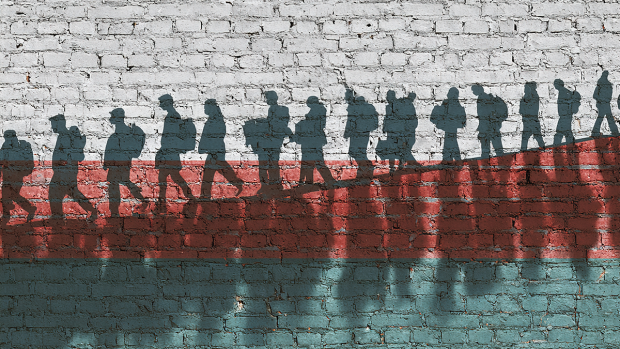
For as long as there have been humans, there have been migrations — some driven by the promise of a better life, others by the desperate need to survive. But while the world has changed dramatically, the mathematical models used to explain how people move have often lagged behind reality. A new study in PNAS Nexus from a team led by Institute Professor Maurizio Porfiri argues that the patterns of human movement can’t be fully understood without reckoning with inequality.
For decades, researchers have relied on models that treat all cities and regions as if they were equal. The “radiation” and “gravity” models, the workhorses of mobility science, describe migration as a function of population size and distance: how many people live in one place, and how far they have to go to reach another. These equations have been useful for predicting broad commuting and migration trends, but they share a blind spot: they assume that opportunities and living conditions are evenly distributed. In a world where climate change, war, and widening economic divides are shaping the way people move, that assumption no longer makes sense.
Porfiri and his colleagues built a new model that explicitly incorporates inequality. It assigns each location a different “opportunity distribution,” a measure of how attractive it is based on social, economic, or environmental conditions. Cities or towns suffering from war, poverty, or environmental disasters are penalized in the model; their residents are more likely to leave, and outsiders are less likely to move in. The result is a mathematical system that behaves more like the real world.
The team tested their model in two settings: South Sudan and the United States—places that could hardly be more different, yet both marked by deep disparities. In South Sudan, years of civil conflict and catastrophic flooding have displaced millions. The researchers assembled a new dataset that tracked these internal movements across the country’s counties between 2020 and 2021. When they compared their inequality-aware model to the traditional one, the difference was stark. The new approach captured how people fled not just from areas of violence but also from those hit hardest by floods, revealing the powerful influence of environmental stress on migration. In fact, flooding alone explained more of the observed migration patterns than conflict did.
In the United States, the researchers turned their attention to a more familiar form of movement: the daily commute. Using data from the American Community Survey, they explored how factors like income inequality, poverty, and housing costs shape commuting flows between counties. Once again, inequality mattered. The model showed that places where rent consumed a larger share of income, or where poverty was more widespread, had distinctive commuting patterns — ones that standard models could not explain.
What the study suggests is that mobility is as much a story of inequality as it is of geography. People do not simply move because of distance or population pressure; they move because some places have become unlivable, unaffordable, or unsafe. “Mobility reflects human aspiration, but also human constraint,” said Porfiri, who serves as Director of the Director of Center for Urban Science + Progress, Interim Chair of the Department of Civil and Urban Engineering, as well as Director of NYU’s Urban Institute. “Understanding both sides of that equation is crucial if we want to plan for the future.”
The implications are far-reaching. As climate change intensifies floods, droughts, and heat waves, and as economic gaps widen within and between nations, migration pressures are likely to grow. Models like this one could help policymakers anticipate where displaced people will go, and what stresses those movements might place on cities and infrastructure. They could also inform strategies to reduce inequality itself — by identifying which regions are most vulnerable to losing their populations, and which are absorbing more than they can sustain.
Alongside Porfiri, contributing authors include Alain Boldini of the New York Institute of Technology, Manuel Heitor of Instituto Superior Técnico, Lisbon, Salvatore Imperatore and Pietro De Lellis of the University of Naples, Rishita Das of the Indian Institute of Science, and Luis Ceferino of the University of California Berkeley. This study was funded in part by the National Science Foundation.
Alain Boldini, Pietro De Lellis, Salvatore Imperatore, Rishita Das, Luis Ceferino, Manuel Heitor, Maurizio Porfiri, Predicting the role of inequalities on human mobility patterns, PNAS Nexus, Volume 5, Issue 1, January 2026, pgaf407, https://doi.org/10.1093/pnasnexus/pgaf407