

Research News



Spatiotemporal Decoupling of Water Electrolysis for Dual-Use Grid Energy Storage and Hydrogen Generation
This research is led by Miguel Modestino, assistant professor of chemical and biomolecular engineering and Yury Dvorkin, assistant professor of electrical and computer engineering.
Increased efforts to curb global warming have led to a drastic surge in the deployment of renewable electricity sources, such as wind and solar power. However, as these sources form a larger fraction of the energy in the grid, their intermittency has started to cause supply instability and large fluctuations in energy prices.
To mediate this challenge, electrochemical energy storage devices such as lithium ion batteries have started to enter the utility scale market. Also gaining traction are redox flow batteries (RFB) because of their long cycle life and power and energy capacity. Despite their promising performance RFB costs remain high due to low energy density of redox energy carriers, which results in large operational costs.
An alternative energy storage method is the production of energy-dense electrofuels, such as hydrogen (H2). H2 has gained significant attention as a promising energy vector for a renewable-rich energy future, given its high gravimetric energy density that makes it desirable for both stationary and mobile applications.
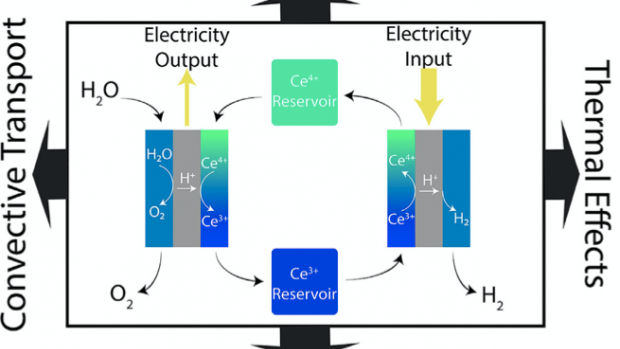
To make electrochemical hydrogen production more competitive, renewable energy sources need to be used with new strategies for electrochemical hydrogen production. The researchers, including Ph.D. students Daniel Frey (lead author) and Jip Kim, show a cerium-mediated decoupled electrolysis system that produces hydrogen and stores energy in the redox couples. They present electrochemical studies to observe the effects of diffusive transport, convective transport, and thermal effects. Following this, the team performed a techno-economic analysis, focusing on the optimization of the system operation and the identification of target operation parameters to achieve hydrogen production at a competitive price.
Leukemia-on-a-chip: Dissecting the chemoresistance mechanisms in B cell acute lymphoblastic leukemia bone marrow niche
Weiqiang Chen, associate professor of biomedical and mechanical and aerospace engineering led this research.
B cell acute lymphoblastic leukemia (B-ALL) hijacks the bone marrow (BM) microenvironment to form leukemic BM “niches,” facilitating chemoresistance and, ultimately, disease relapse. The key to developing more effective, targeted therapies depends on researchers' ability to isolate and examine with these evolving, heterogeneous interactions among distinct B-ALL subtypes and their varying BM niches. Current in vivo methods limit that ability.
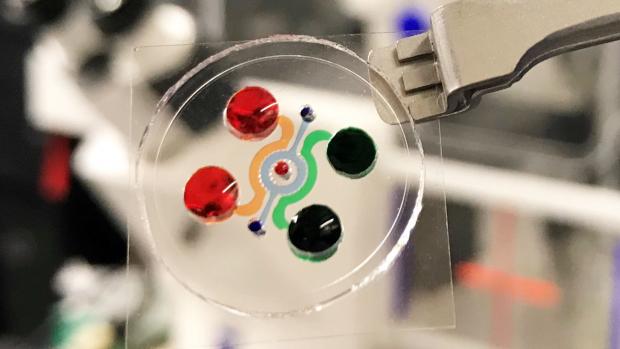
A team including researchers from the NYU Tandon School of Engineering's departments of Mechanical and Aerospace, and Biomedical Engineering, and from NYU Langone's Perlmutter Cancer Center and Department of Pathology demonstrated an in vitro organotypic “leukemia-on-a-chip” model to emulate the in vivo B-ALL BM pathology and comparatively studied the spatial and genetic heterogeneity of the BM niche in regulating B-ALL chemotherapy resistance.
In the study "Leukemia-on-a-chip: Dissecting the chemoresistance mechanisms in B cell acute lymphoblastic leukemia bone marrow niche," published in ScienceAdvances, the team used their system to describe the heterogeneous chemoresistance mechanisms across various B-ALL cell lines and patient-derived samples, showing that the leukemic perivascular, endosteal, and hematopoietic niche-derived factors maintain B-ALL survival and quiescence. Furthermore, they demonstrated the preclinical use of their lab-on-a-chip model to test niche-cotargeting regimens, which may translate to patient-specific therapy screening and response prediction.
This work was supported by the National Science Foundation, the U.S. National Institutes of Health, the Leukemia & Lymphoma Society, the New York State Department of Health (NYSTEM Program), and the St. Baldrick’s Cancer Research Foundation (I.A).
Good for the Many or Best for the Few? A Dilemma in the Design of Algorithmic Advice
Oded Nov, professor of Technology Management and Innovation led this research.
Applications in a range of domains, including route planning and well-being, offer advice based on the social information available in prior users' aggregated activity.
A team of collaborators, including Graham Dove, a research assistant professor at NYU CUSP; Martina Balestra, a post-doc at NYU CUSP; and Devin Mann of NYU Grossman School of Medicine, considered a dilemma in the design of AI-based advice applications. Using an experiment, they studied whether, when designing these applications, it is better to offer:
• Goal-Directed advice: advice that is more likely to result in users who adhere to it achieving their goal, but which users are less likely to adopt and adhere to, or
• Adoption-Directed advice: advice that is more likely to be adopted and adhered to by a greater number of users, but which is less likely to result in a user fully achieving their goal
To explore this question the collaborators conducted an online experiment undertaken in four advice domains (financial investment, making healthier lifestyle choices, route planning, training for a 5k run), with three user types, and across two levels of uncertainty. Their findings suggest a preference for advice favoring individual goal attainment over higher user adoption rates, albeit with significant variation across advice domains; and discuss their design implications. The research is published in the Proceedings of the ACM on Human-Computer Interaction.
AI-powered and Robot-assisted Manufacturing for Modular Construction
Semiha Ergan, assistant professor in the Departments of Civil and Urban Engineering, and Computer Science and Engineering and Chen Feng, assistant professor in the departments of Civil and Urban and Mechanical and Aerospace Engineering will lead this project.
Modular construction, with an established record of accelerating projects and reducing costs, is a revolutionary way to transform the construction industry. However, new construction capabilities are needed to perform modular construction at scale, where, as is the case in factories, the industry suffers from the dependency on skilled labor. Among the challenges this project aims to address:
- Every project is unique and requires efficiency and accuracy in recognition and handling workpieces
- Design and production-line changes are common, and require design standardization and optimization of modules, and
- Production lines are complex in space and time, and necessitate the guidance of workers while processing design and installation information accurately
To focus on these challenges while exploring modular construction within the context of Future Manufacturing (FM), this project exploits opportunities at the intersection of AI/robotics/building information modeling and manufacturing, with the potential to increase the scalability of modular construction.
The research will pioneer initial formulations to enable (a) high throughput in manufacturing through the definition and evaluation of processes that embrace real-time workpiece semantic grounding and in-situ AR-robotic assistance, (b) feasibility studies of optimizing and standardizing the design of modules, and utilization of a cyber-infrastructure for their standardization, (c) prototyping cyber-infrastructures as both novel ways of forming academia and industry partnerships, and data infrastructures to accelerate data-driven adaption in FM for modular construction, and (d) synergistic activities with a two-year institution to train and educate FM workforce for the potential of FM and technologies evaluated.
The team argues that, while the evaluations of technologies will focus on the modular construction, the proposed technologies could make manufacturing industries more competitive, particularly heavy manufacturing industries that share similar challenges such as agricultural, mining, and ship building. The project will therefore enhance U.S. competitiveness in production, bolster economic growth, educate students, and influence workforce behavior towards efficiency and accuracy with the skills required for leadership in FM.
Tandon Team Leads NYC Future Manufacturing Collective
Nikhil Gupta, professor of mechanical and aerospace engineering is principal investigator on this project with Kurt Becker professor of applied physics and Vice Dean of Research Innovation, and Entrepreneurship; and Justin Hendrix, executive director of the NYC Media Lab at NYU Tandon.
Extensive use of sensors, computers and software tools in product design and manufacturing requires traditional manufacturing education to evolve for the new generation of cyber-manufacturing systems. However, with a widening gap between today's education and training curricula and the actual skills required by industry, innovative solutions are needed to prepare the workforce for the evolution of manufacturing.
The New York City Future Manufacturing Collective (NYC-FMC) will develop a network of multidisciplinary researchers, educators, and stakeholders in New York City to explore future cyber manufacturing research through the lens of the worker's relationship to an increasingly complex and technologically driven environment and set of processes. The NYC-FMC will:
- advance related technologies as well as the underlying systems, processes, and organizational conditions to which these interfaces are connected, to change and drive the roles of people in manufacturing.
- organize a variety of activities, including an internship program for students to obtain exposure to industrial environments by engaging major manufacturing based corporations, a newsletter to define the state-of-the-art in manufacturing technologies and the new manufacturing ecosystem, and two manufacturing-focused symposia each year.
- build a coalition of multidisciplinary faculty from NYC universities, industry executives and technologists, investors, entrepreneurs, public sector and other relevant manufacturing ecosystem participants.
The network will rely on faculty leadership at NYU and Columbia University, as well as a broad network of researchers from other NYC institutions, in the areas of manufacturing, computer vision, robotics, machine learning, virtual and augmented reality, human behavior and cognition, economics and other relevant areas. Executives and technologists from industry, including large manufacturing concerns with a connection to the greater NYC region and beyond and startup companies in the Brooklyn Navy Yard's New Lab, will provide stimulus from the private sector and help create conditions to advance education and research goals. This coalition will build a novel education and workforce training program framework to create a learning and feedback loop between researchers, industry partners, and the workforce focused on the future cyber-manufacturing systems.
The project, supported by a $500,000 Future Manufacturing grant from the National Science Foundation.
Dissecting the immunosuppressive tumor microenvironments in Glioblastoma-on-a-Chip for optimized PD-1 immunotherapy
Weiqiang Chen, associate professor of biomedical and mechanical and aerospace engineering led this research.
Glioblastoma (GBM) is the most common and aggressive primary brain tumor among adults, with an average survival of less than 14 months despite aggressive surgery, chemotherapy, and radiotherapy. One of the most promising therapies has been the inhibition of programmed cell death protein-1 (PD-1), which can turn the immune system against the tumors in order to destroy it. However, that approach has been difficult due to the genetic difference between blastomas and the environments they form in.
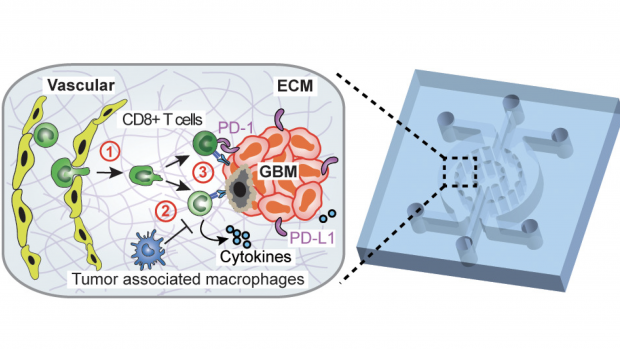
Improving the clinical use of anti-PD-1 immunotherapy in GBM patients requires a comprehensive understanding of tumor genetics and microenvironment as well as the ability to dissect the dynamic interactions among GBM and immune suppressor cells. Now, a team of researchers led by NTU Tandon’s Weiqiang Chen have integrated critical markers of these microenvironments in a microfluidics-based ex vivo microphysiological system termed ‘GBM-on-a-Chip.’
Modeling the human immune environment in the current animal-based cancer models is challenging. Compared to chemotherapy, it is difficult to preclinically validate and study immunotherapy. Discrepancies between preclinical and clinical results have raised concerns about how the findings from the current models can be translated to patients. The engineered tumor model on chips can be an alternative to the current animal models and patient studies, and even achieve a so-called "clinical trial on chips" for a pre-screening of patients suitable for immunotherapy, and screening personalized therapy for each patient. These chips are patient-specific, allowing longitudinal analysis of cells to understand how the environment around a tumor changes the way that PD-1 cells act.
The team – including researchers from NYU Tandon, NYU Langone Health and NYU School of Medicine, with funding from the National Science Foundation and National Institutes of Health – were able to use the results of this longitudinal study to show that molecularly distinct GBM subtypes have distinct epigenetic and immune signatures that may lead to different immunosuppressive mechanisms. They could see which cells were elevated past their healthy amounts, and which were not responding as they should. This allowed them to administer a specialized treatment for the specific environment, supressing some cells like tumor-associated macrophages while boosting the effectiveness of specific T-cells. Thus, they showed that these patient-specific chips could lead to personalized immunotherapy screening, potentially improving therapeutic outcomes in GBM patients.
The research was conducted with investigators from NYU Tandon, NYU Langone Health, and the NYU School of Medicine.
Enabling Remote Whole-Body Control with 5G Edge Computing
Huaijiang Zhu, a Ph.D. student in electrical and computer engineering was lead author.
There are many real-world — and, someday, off-world — applications for light-weight, energy-efficient, fully autonomous robots. Yet the more autonomous a robot is, the greater its computational requirements. Onboarding the components to handle this computational function adds weight, cost and reduces potential for applications in hostile environments.
It might thus be desirable to offload intensive computation--not only sensing and planning, but also low-level whole-body control--to remote servers in order to reduce on-board computational needs. Fifth Generation (5G) wireless cellular technology, with its low latency and high bandwidth capabilities, has the potential to unlock cloud-based high performance control of complex robots. However, state-of-the-art control algorithms for legged robots can only tolerate very low control delays, which even ultra-low latency 5G edge computing can sometimes fail to achieve.
In this work, the investigators, led by Ludovic Righetti, associate professor of electrical and computer engineering and mechanical and aerospace engineering, and a member of NYU WIRELESS, investigate the problem of cloud-based whole-body control of legged robots over a 5G link. Their novel approach consists of a standard optimization-based controller on the network edge and a local linear, approximately optimal controller that significantly reduces on-board computational needs while increasing robustness to delay and possible loss of communication. Simulation experiments on humanoid balancing and walking tasks that includes a realistic 5G communication model demonstrate significant improvement of the reliability of robot locomotion under jitter and delays likely to experienced in 5G wireless links.
The team included Kai Pfeiffer, a postdoctoral researcher, and Manali Sharma, a master's student in the Department of Electrical and Computer Engineering; Sundeep Rangan, professor of electrical and computer engineering and associate director of NYU WIRELESS; and Marco Mezzavilla, a research scientist at NYU WIRELESS.
The project, funded in part by the National Science Foundation National Robotics Initiative and OPPO Mobile Telecommunications, will be presented at the IEEE/RSJ International Conference on Intelligent Robots and Systems in October, 2020.
Scalable, Highly Conductive, and Micropatternable MXene Films for Enhanced Electromagnetic Interference Shielding
Jason Lipton, a Ph.D. candidate under the guidance of Taylor, was lead author. Elisa Riedo (chemical and biomolecular engineering) and researchers from Drexel University and the Brookhaven National Laboratory also participated.
The proliferation and miniaturization of electronics in devices, wearables medical implants and other applications has made technologies for blocking electromagnetic interference (EMI) especially important, while making their implementation more challenging. While EMI can cause disruptions in communication in critical applications, resulting in potentially disastrous consequences, traditional EMI shields require large thicknesses to be effective, hampering design flexibility.
One solution resides in MXenes, a family of 2D transition metal carbides, nitrides, and carbonitrides with potential for blocking EMI demonstrate high conductivity and excellent EMI shielding properties. The key to the commercialization of these materials is industry-scale manufacturing.
A multi-institution research team led by Andre ́ D. Taylor, professor of chemical and biomolecular engineering at the NYU Tandon School of Engineering demonstrated a novel approach to MXene fabrication that could lead to methods for at-scale production of MXene freestanding films: drop-casting onto pre-patterned hydrophobic substrates. Their method led to a 38% enhancement of EMI shielding efficiency over conventional methods. The work suggests that micropatterned MXene films, prepared using a method that is scalable and allows for high throughput, can be readily used in EMI shielding, energy storage, and optoelectronics applications.
The team cast aqueous dispersions of MXene nanosheets (with the formula Ti3C2Tx) on hydrophobic polystyrene substrates and dried them. After drying, the resulting free-standing films could be easily peeled off, a method demonstrating a variety of advantages over the conventional vacuum-assisted filtration method with regards to time efficiency, operation simplicity, and surface smoothness.
The drop-casting method allows for modulation of micrometer-scale 3D patterns on the film surface by utilizing pre-patterned substrates (such as a vinyl record, retroreflective packaging, and retroreflective tape).
The research, “Scalable, Highly Conductive, and Micropatternable MXene Films for Enhanced Electromagnetic Interference Shielding,” is published in the first-anniversary issue of the Cell Press publication Matter.
Perovskite Solar Cells with Enhanced Fill Factors Using Polymer-Capped Solvent Annealing
Perovskite solar cells have seen massive improvements over the last few years. But despite big increases in power conversion efficiency, fill factors – one of the important characteristics in need of optimization – have still hovered around 80 percent, limiting the capacity for solar energy.
Thanks to a team led by Associate Professor André D. Taylor, that fill factor has been pushed up to 85 percent. Using a polymer-capped solvent-annealing process, they enhanced open-circuit voltage without sacrificing short-circuit current, creating better perovskite cells with improved output and a longer lifespan than current models.
The research team included NYU Tandon Postdoctoral Research Associates Jaemin Kong and Jason A. Röhr, along with colleagues from Yale University, Brown University, Brookhaven National Laboratory and the Korea Research Institute of Chemical Technology, and received funding from several groups including the National Science Foundation and the Office for Naval Research.
They found that during the solvent-annealing, the perovskite surface flattens and the perovskite grains agglomerate into micrometer-sized clusters having enlarged α-phase crystallites, while the δ-phase simultaneously disappears. The optimized structure enhances efficiency from 18.2 percent to 19.8 percent reliably, creating more stable and better solar cells.
Telemedicine and Healthcare Disparities: A cohort study in a large healthcare system in New York City during COVID-19
Rumi Chunara, an assistant professor in the Department of Computer Science and Engineering at NYU Tandon, and in the Department of Biostatistics at NYU School of Global Public Health, was corresponding author.
Through the COVID-19 pandemic, telemedicine has become a necessary entry point into the process of diagnosis, triage and treatment. Racial and ethnic disparities in health care have been well documented in COVID-19 with respect to risk of infection and in-hospital outcomes once admitted. The researchers assessed disparities in those who access healthcare via telemedicine for COVID-19.
The researchers used electronic health record data of patients at New York University Langone Health between March 19th and April 30, 2020 to conduct descriptive and multilevel regression analyses with respect to visit type (telemedicine or in-person), suspected COVID diagnosis and COVID test results.
The collaborators included Yuan Zhao of the NYU School of Global Public Health; Ji Chen of the NYU Grossman School of Medicine; Katharine Lawrence, Paul A. Testa and Devin M. Mann of NYU Langone Health; and Oded Nov, professor in the Department of Technology Management and Innovation at NYU Tandon.
Controlling for individual and community-level attributes, the researchers found that Black patients had 0.6 times the adjusted odds of accessing care through telemedicine compared to white patients, though they are increasingly accessing telemedicine for urgent care, driven by a younger and female population. COVID diagnoses were significantly more likely for Black versus white telemedicine patients (while they were more likely for white patients when considering in-person and telemedicine visits).
While the study reports that Black patients are not accessing care through telemedicine (versus by in-person visits to emergency department and physician’s offices) at the same rate as white patients, it notes increased uptake by young, female Black patients. Mean income and decreased mean household size of patients' home zip code were also significantly related to telemedicine use.
The team reports that telemedicine access disparities reflect those in in-person healthcare access. Roots of disparate use are complex and reflect individual, community, and structural factors, including their intersection; many of which are due to systemic racism. Evidence regarding disparities that manifest through telemedicine can be used to inform tool design and systemic efforts to promote digital health equity.
The research, which was supported by a generous grant from the National Science Foundation,