

Computer Science, B.S.
Computer science focuses on designing, building, and using the computers and systems that we interact with every day — from iPhones to the complex databases in banks and hospitals.
On Campus
The collaboration between these fields is generating world-changing technologies.
We’re making enormous inroads in the growing fields of AI and robotics, creating drones controlled with a simple gaze, making it easier for surgeons to perform delicate operations, developing algorithms that make financial investing more secure, and other such improvements.
Our AI experts and roboticists are working in concert with our data scientists, who are discovering new ways to analyze, visualize, and use the 2.5 quintillion bytes of data the world generates each and every day in the form of GPS signals, shopping transactions, taxi rides, social media posts, online videos, and digital photos, among other sources. It’s a collaborative ecosystem with a single goal: to harness the collective power of data, machine learning techniques, and autonomous systems to address the issues facing the world. More on Robotics
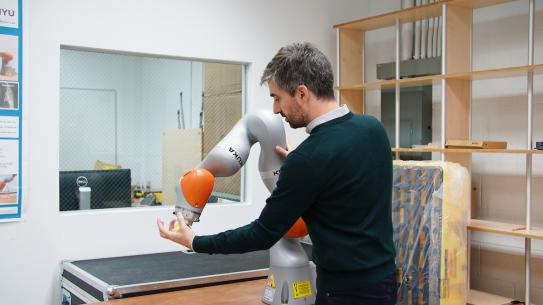

The AI4CE Lab aims to advance Robotics and AI in areas such as localization, mapping, navigation, mobile manipulation, and scene understanding to address infrastructure challenges on Earth and beyond, including construction robotics, manufacturing automation, and autonomous vehicles.
The Algorithms and Foundations Group at NYU's Tandon School of Engineering is composed of researchers interested in applying mathematical and theoretical tools to a variety of disciplines in computer science. We study problems in machine learning, geometry, computational biology, computational mathematics, and beyond.
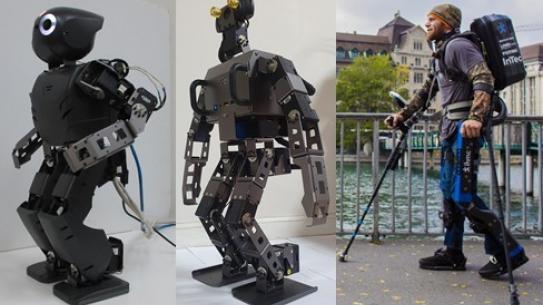
We aim to establish mathematical models, quantitative criteria, and algorithmic/computational foundations toward their implementations in robotics (for design and control), biomechanical systems (for prediction and analysis), and their intersections such as lower-body wearable robots.

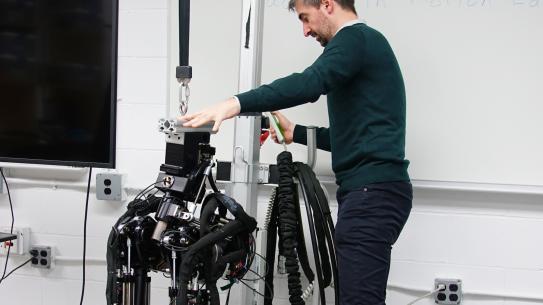
Research focuses on innovative robotic technologies to assist people in areas like walking, surgery, and rehabilitation. Sample projects include a reinforcement learning-powered exoskeleton that reduces human energy use, a versatile catheter robot for safer surgeries, and MRI-guided robots to improve prostate cancer biopsies.
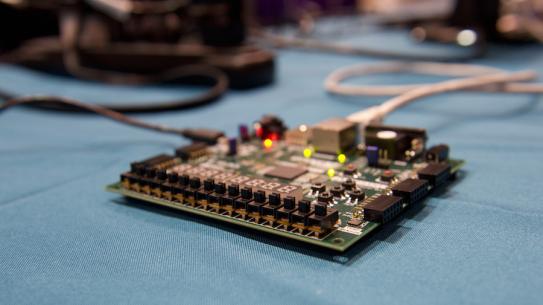
Led by Prof. Brandon Reagen, our research group specializes in computer hardware design, with a primary goal of making privacy-preserving computation practical.
We also focus on optimizing machine learning systems for private computation. With a strong emphasis on energy-efficiency and security, our work aims to accelerate secure computation and enable privacy-preserving machine learning.

The biLAB focuses on understanding the operational challenges associated with construction and operation of facilities and infrastructure systems in urban settings.

Our goal is to build a future in which responsible AI is synonymous with AI. Our work centers around interdisciplinary research, technology policy, and education and training for AI practitioners, decision makers, and the public at large.
What is responsible AI? We use this term to refer to making the design, development and use of AI socially sustainable: using technology for good while controlling the risks. Responsible AI is about respecting human values, ensuring fairness, maintaining transparency, and upholding accountability. It’s about taking hype and magical thinking out of the conversation about AI. And about giving people the ability to understand, control and take responsibility for AI-assisted decisions.

The Center for Urban Science and Progress (CUSP) is an interdisciplinary research center dedicated to the application of science, technology, engineering, and mathematics in the service of urban communities across the globe. Using New York City as our laboratory and classroom, we strive to develop novel data- and technology-driven solutions for complex urban problems.
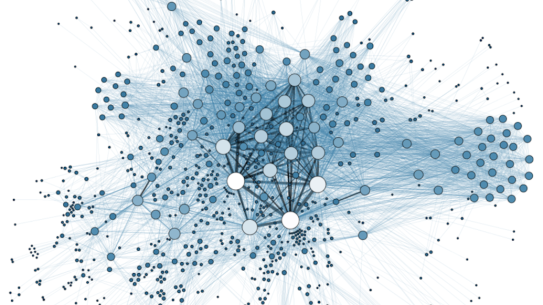
The overarching goal of our research is to develop the principles needed to incorporate unstructured, Internet and mobile data into a better understanding of population-level health. We primarily develop computational methods across data mining, natural language processing, and machine learning to generate features for spatio-temporal population-level public health models.

Professor Rose Faghih group develops biomedical signal processing and control algorithms for human-technology interactions and monitoring. These state-of-the-art tools are employed for prognosis, diagnosis, and treatment of pathological conditions related to neuro-endocrine and neuro-psychiatric disorders.
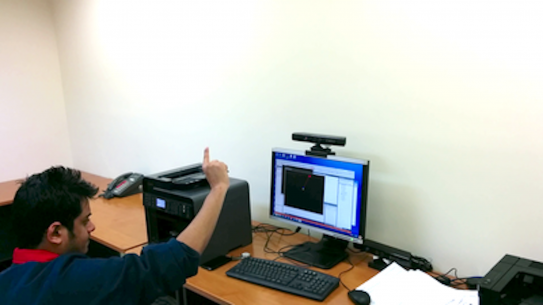
The CAN Lab, led by Professor Zhong-Ping Jiang, develops fundamental principles and tools for the stability analysis and control of nonlinear dynamical networks, with applications to information, mechanical, and biological systems.
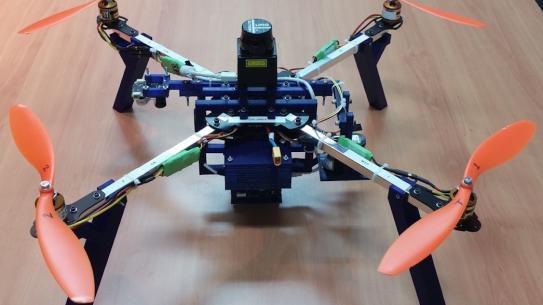
CCRL conducts research projects on unmanned vehicles, autonomy and navigation, control systems, cyber-security, and machine learning.

Cybersecurity for Democracy is a research-based, nonpartisan, and independent effort to expose online threats to our social fabric — and recommend how to counter them. We are part of the Center for Cybersecurity at the NYU Tandon School of Engineering.
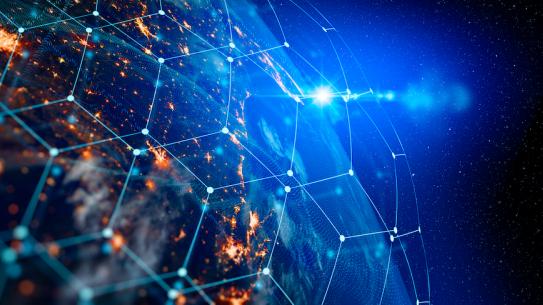
The Data, Intelligence and Computation in Engineering (DICE) Lab is led by Assistant Professor Chinmay Hegde and focuses on theoretical and applied aspects deep learning and machine learning.

Dynamical Systems and Artificial Intelligence Lab (DSAIL) uses the financial application domain as a challenging real-world dynamical system environment in which to advance machine learning.
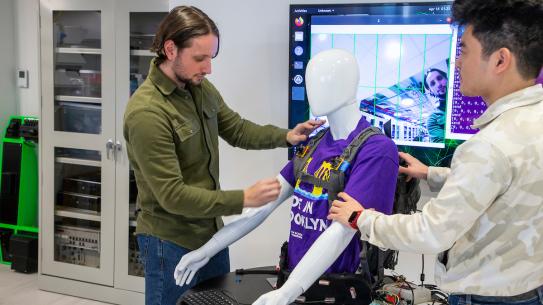
Professor Maurizio Porfiri’s group conducts multidisciplinary research in the theory and application of dynamical systems, motivated by the objectives of advancing engineering science and improving society. Their theoretical expertise is in controls, networks, nonlinear dynamics, and time-series, while our application domain is in modeling and analysis of physical, social, and technical systems.
The Hartman Research Laboratory investigates the kinetics of chemical reactions and the design of the reactors in which they take place. Catalysis and reaction engineering is at the heart of virtually every process or system in which a chemical transformation occurs.
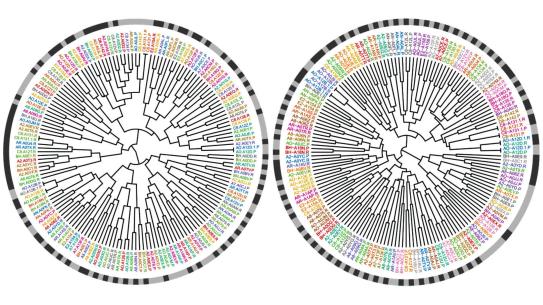
Professor Ruggles’ laboratory focuses on understanding human health and biology using data science, data visualization, and predictive modeling. A primary goal of this research is to analyze and integrate diverse data modalities, including bulk and single-cell sequencing, phospho- and global- proteomics, metagenomics, flow cytometry, imaging, and clinical data. These multi-omic methods are used to better understand cancer, heart diseases, and other disorders.
The ML4G Lab, directed by Professor Daniel Neill, is focused on developing novel machine learning methods for addressing critical urban problems. By creating, deploying, and evaluating new methods in collaboration with public sector partners, the lab hopes to advance the state of the art in machine learning and to improve the quality of public health, safety, and security.
We try to understand the fundamental principles for robot locomotion and manipulation that will endow robots with the robustness and adaptability necessary to efficiently and autonomously act in an unknown and changing environment.
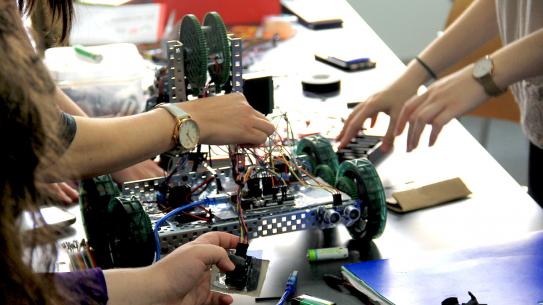
The lab provides undergraduate and graduate students a real-world, hands-on experience in modern DSP- and PC- based data acquisition and real-time control.
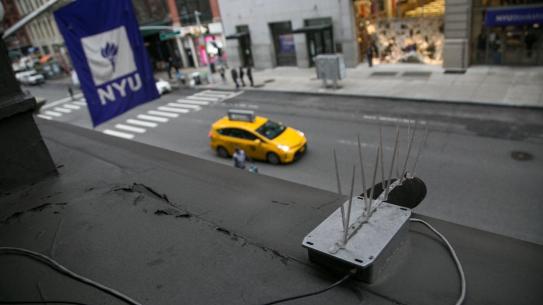
MARL, directed by Professor Juan Pablo Bello, is an interdisciplinary center at the intersection of science, technology, music, and sound, with research connecting a wide range of fields ranging from computing and artificial intelligence, immersive and interactive technologies, to the latest advances in neuroimaging of the human brain.
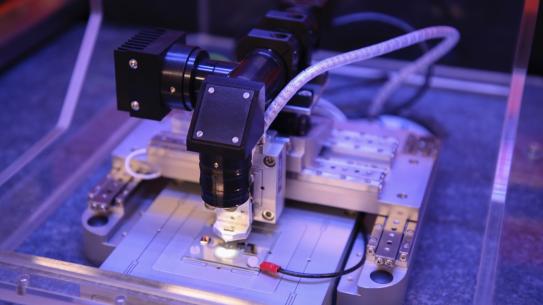
The NanoBioX initiative at NYU stimulates fundamental research and technological innovation at the intersection of nanotechnology, biomedical research, and data science.
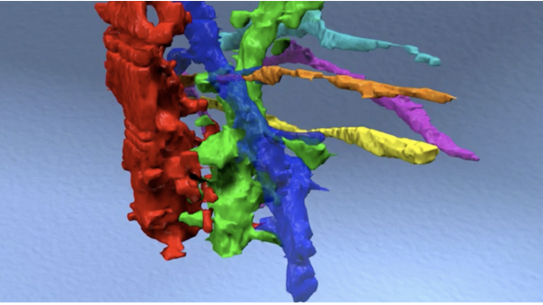
The aim of Dr. Chklovskii’s research is to understand how the brain analyzes large and complex datasets streamed by sensory organs. Informed by anatomical and physiological neuroscience data, his group develops algorithms that model brain computation and solve machine learning tasks. The overarching goal it to build artificial neural systems and treating mental illness.
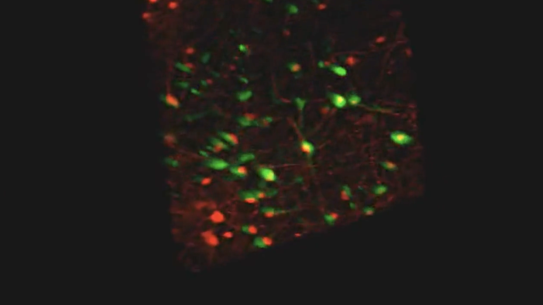
We develop computational models and signal processing tools to decode brain connectivity and function using genomics and imaging. We are particularly interested in constructing a bridge between genetics and behavior through interpretable models that operate on multi-modal neural data at molecular, circuit and whole-brain resolutions.
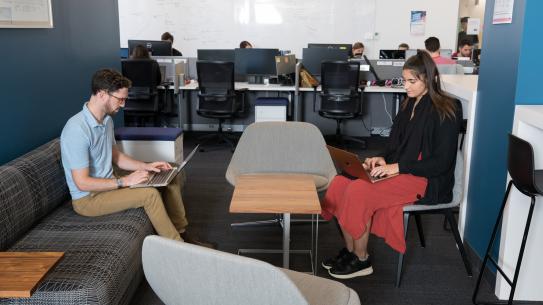
The NYU Tandon Future Labs are the first public-private partnership with New York City tasked with creating a sustainable incubation program focused on increasing the success rate of new ventures and generating positive economic impact.

Our group is dedicated to “Practical Soft Matter Physics,” meaning we focus on research problems that are inspired by — and directly applicable to — industrial applications. Our methodology is a combination of mathematical theory and modeling, molecular simulations, and machine learning or artificial intelligence, tailored to the application at hand.

Smart Innovations in Built Environment Research (SiBER) Lab, led by Mohamad Awada, explores the integration of AI, machine learning, and digital technologies to enhance the performance, resilience, and sustainability of civil infrastructure. The lab focuses on digital twins, smart monitoring, and data-driven solutions for structural assessment and urban systems.
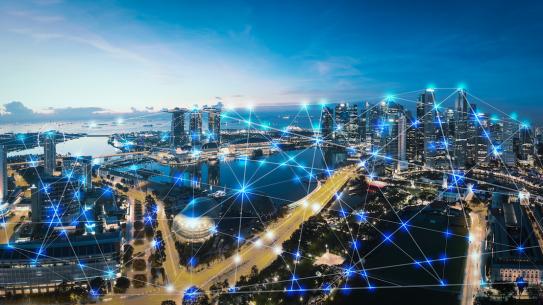
Urban Complexity Lab is unfolding complexity of urban systems for research, innovation and applications. We leverage big urban data and cutting-edge machine learning and network analysis techniques to make our cities more smart, efficient, sustainable, and resilient – better places to live in.
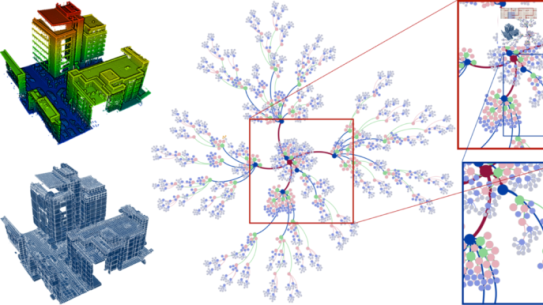
The mission of the Urban Modeling Lab is to transform urban engineering by bridging the gap between civil engineering and computer science. Directed by Professor Debra Laefer, the Lab focuses on developing tools to better understand the urbanbuilt environment through pioneering new methods to optimize and synthesize multi-modal data collection, storage, and processing.
ViDA consists of computer scientists who work closely with domain experts to apply the latest advances in computing to problems of critical societal importance, and simultaneously generate hypotheses and methods that new data demands.