


Overview
As a Ph.D. student in Mechanical Engineering at NYU Tandon, you will engage in advanced, high-impact research at the leading edge of physical systems, design, and intelligent autonomy. You will formulate original solutions and engineer advanced technologies across robotics, mechatronics, fluid mechanics, smart materials, dynamical systems, biomechanics, and thermal-fluid sciences. Through direct faculty mentorship and intensive laboratory experimentation, you will develop the rigorous theoretical depth, computational skills, and analytical mastery needed to lead discovery across academia, national research laboratories, and forward-looking industries such as nanotechnology, software development, financial engineering, astronautics, and beyond.
Prerequisites & Academic Background:
- M.S. in Mechanical or Aerospace Engineering or other closely related engineering field or applied science
- Minimum 3.5 GPA in your M.S. degree
- In select cases, applicants with degrees in disciplines outside mechanical or aerospace engineering may be admitted, but will be advised to supplement background knowledge based on the requirements for Tandon's M.S. in Mechanical Engineering.
Application Requirements
- Official transcripts from all attended post-secondary institutions
- Statement of purpose
- Résumé or curriculum vitae (CV)
- 2 Letters of recommendation
- Proof of English Language Proficiency (where applicable)
Additional application requirements may vary by program. The online application process will guide you through the specific requirements. Contact Graduate Admissions with any questions.
Find out more about Admission Requirements.
Tuition varies based on your program, term admitted and credit hours.
We are committed to keeping graduate studies affordable for all of our students. You'll have access to on-campus employment programs that include teaching and research assistantships, as well as financial aid, scholarships, grants, and loans.
Explore our Tuition, Financial Aid, and Scholarships page to learn more about these opportunities.
Prospective Students
For questions about the application process, application status, or to talk to an admissions counselor:
Office of Graduate Enrollment and Admissions
NYU Tandon School of Engineering
engineering.gradinfo@nyu.edu
Phone: 646-997-3812
Accepted and Enrolled Students
For general program inquiries, advisement, and curriculum details:
Department of Mechanical and Aerospace Engineering
NYU Tandon School of Engineering
6 MetroTech Center
Brooklyn, NY 11201
engineering.phd@nyu.edu
646-997-3550
At a Glance
#42
Best Engineering School in the Nation
(U.S. News & World Report)
#64
Best Mechanical Engineering Program
(U.S. News & World Report)
Urban Science
Optional specialized Urban Science Doctoral Track available through the Center for Urban Science + Progress
Market Outlook
NYC Advantage
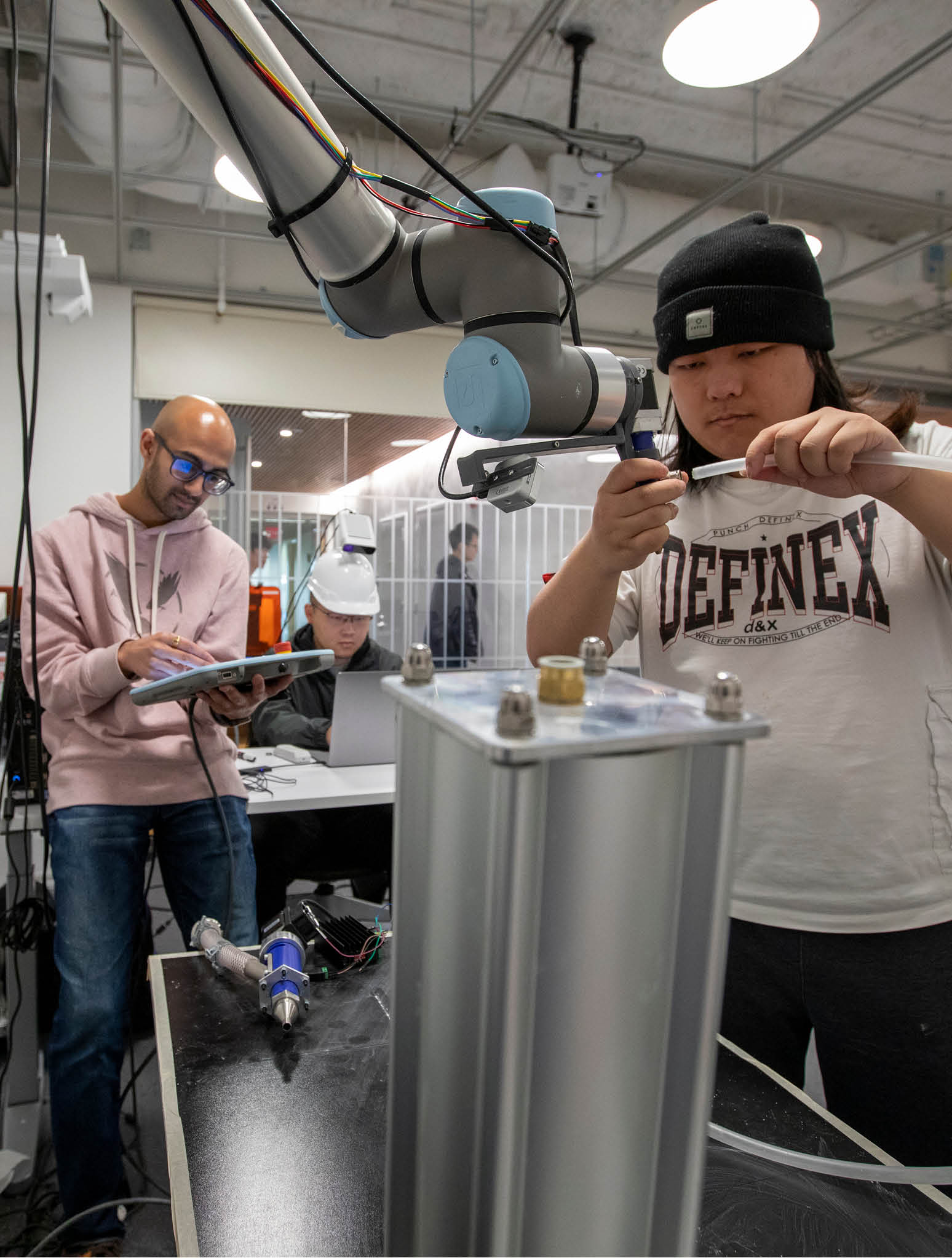
NYU Tandon’s Brooklyn campus places Mechanical Engineering Ph.D. candidates directly within New York City’s thriving landscape of technical innovation, industrial testbeds, and advanced manufacturing initiatives. Doctoral students collaborate with regional research laboratories, aerospace and marine organizations, urban infrastructure developers, and dynamic hardware and robotics incubators across Brooklyn and the greater metropolitan area. This urban ecosystem offers a living laboratory to validate autonomous mobile systems, conduct fluid-thermal field experiments, instrument sensor arrays, and translate complex mechanical prototypes into real-world applications.

Curriculum
We offer students the freedom to choose from five distinct areas of specialization:
- Aerospace Engineering
- Controls and Dynamic Systems
- Fluid Dynamics and Thermal Systems
- Materials Engineering
- Mechanics and Structural Systems
| Requirement Area | Credits |
|---|---|
| Transfer from M.S. degree | 30 |
| Approved Coursework beyond the M.S. Degree | Minimum of 18 |
| Ph.D. Dissertation | Minimum of 21 |
| Approved Electives | Up to 6 |
| Minimum Total Credits Required | 75 |
The qualifying exam (QE) is a written and oral exam required to proceed to dissertation research. Students are expected to take the QE within the first two times it is offered. The QE must be taken and passed no later than 2 academic years after the student begins their PhD studies. The academic year starts at the beginning of the fall semester and concludes at the end of the spring semester.
Applicants to this degree program may be eligible to participate in the Abu Dhabi Global Fellow Program.
Your studies must also be completed five years after the M.S. degree or the date of admission, whichever is later, unless a formal leave of absence is approved before the period for which the studies are interrupted.
In addition, you must take a written and oral departmental qualifying examination within the first 2 times it is offered after the date you join the doctoral program. Upon passing, you must then form a Ph.D. Guidance Committee and begin your dissertation. To do so, you will need to register for at least 3 credits of ME 9999 each fall and spring semester. Actual registration should reflect the pace of the work and your activity.
An exception to the minimum registration requirement may be made in the last semester of registration if that semester is devoted primarily to complete the work and dissertation. A dissertation grade of U for 2 consecutive terms affects whether or not you will be allowed to continue doctoral work. You must present progress on your dissertation to your guidance committee at least once a year. You can find additional details on degree requirements in the departmental pamphlet available at the department's main office.
NYU Center for Robotics and Embodied Intelligence
The NYU Center for Robotics and Embodied Intelligence is a new group organized to advance research, education, and innovation at the intersection of AI and robotics to enhance everyone’s quality of life. The new center brings together over 70 NYU faculty, Ph.D. students and post-doctoral researchers to collaborate in 10,000 square feet of shared robotics research facilities, including the Center’s new 6,800-square-foot flagship facility on the ground floor of 370 Jay Street in Downtown Brooklyn.
Meet our Faculty and Alumni
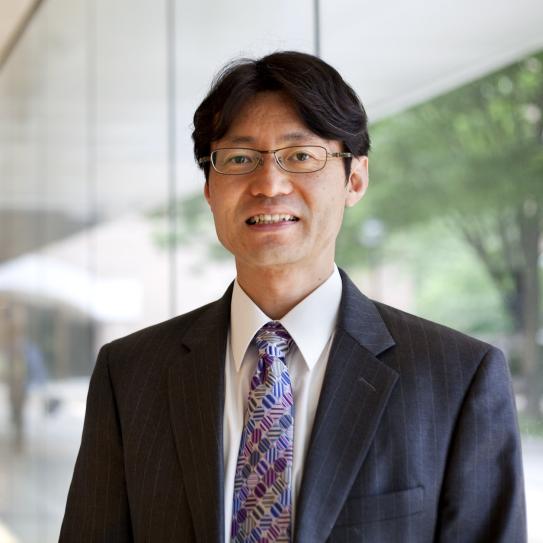
Meet Katsuo Kurabayashi
Determined to change the field’s image with an ambitious plan for the future


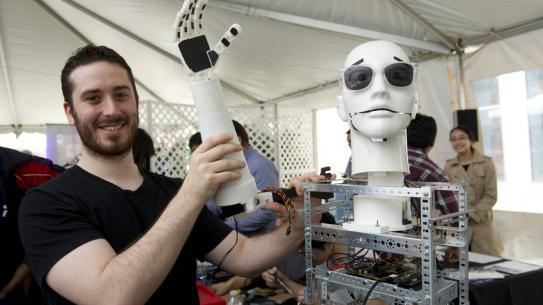

MakerSpace
Innovate, collaborate, iterate, create: the NYU Tandon MakerSpace is 10,000 square feet of opportunity.

Ph.D. Hub


Urban Science: Sensing, Complexity, & Informatics, Doctoral Track

Electrical and Computer Engineering, Ph.D.

Computer Science, Ph.D.
A minimum of 75 graduate credits beyond the bachelor's degree is required to earn a Ph.D. in Mechanical Engineering.
The Mechanical Engineering Ph.D. is offered as a full-time, on-campus doctoral program at NYU Tandon’s Brooklyn campus. This format provides doctoral candidates with continuous physical access to research laboratories, hardware testing machinery, maker facilities, and direct faculty mentorship.
December 1: All Ph.D. applications and supporting documentation must be submitted by this date for Fall semester admission.
Ph.D. applications are not accepted for the Spring semester.
Applicants must submit:
- Official transcripts from all attended post-secondary institutions
- Statement of purpose
- Résumé or curriculum vitae (CV)
- 2 Letters of recommendation
- Proof of English Language Proficiency (where applicable)
Additional application requirements may vary by program. The online application process will guide you through the specific requirements. Contact Graduate Admissions with any questions.
Ph.D. candidates have access to specialized research centers and laboratories across NYU Tandon, including the NYU Center for Robotics and Embodied Intelligence, Dynamical Systems Laboratory, the Mechatronics, Controls, and Robotics Laboratory, fluid dynamics and wind tunnel facilities, additive manufacturing and materials testing suites, the NYU MakerSpace, and research facilities at 370 Jay Street and MetroTech Center.
Fully admitted doctoral researchers at NYU Tandon are typically supported through university fellowships, graduate research assistantships, or graduate teaching assistantships. Funding packages generally include a competitive living stipend, full tuition remission, and health insurance coverage.
Doctoral candidates can choose from five distinct areas of specialization:
- Aerospace Engineering
- Controls and Dynamic Systems
- Fluid Dynamics and Thermal Systems
- Materials Engineering
- Mechanics and Structural Systems
Our graduates pursue diverse career trajectories across high-tech, industrial, and executive sectors. Many enter fields such as:
- Computer engineering and software development
- Nanotechnology
- Financial engineering
- Bioengineering
- Manufacturing
- Astronautics and aerospace systems
- Systems engineering
- Corporate management
- Law
As an applicant to this degree program, you may be eligible to participate in the Abu Dhabi Global Fellow Program. This initiative leverages NYU’s extensive international footprint, offering select scholars the opportunity to conduct advanced research and collaborate directly with faculty, specialized labs, and multidisciplinary centers at NYU’s portal campus in Abu Dhabi.
As a Ph.D. student at NYU Tandon, you have the opportunity to specialize your studies in mechanical engineering with a focus on urban science through the doctoral track offered in partnership with the Center for Urban Science + Progress (CUSP).
Learn more about the Urban Science: Sensing, Complexity, & Informatics Doctoral Track.
To earn a Doctor of Philosophy (Ph.D.) in Mechanical Engineering from the NYU Tandon School of Engineering, you must complete a minimum of 75 total credits beyond the bachelor's degree, maintain active research progress, and satisfy departmental examination milestones:
Credit Distribution (75 Credits Minimum)
- Transfer from M.S. Degree: 30 credits
- Approved Coursework Beyond the M.S.: 18 credits minimum
- Ph.D. Dissertation Research: 21 credits minimum Approved Electives: Up to 6 credits
Note: These requirements build upon the foundation of an M.S. degree and exceed undergraduate B.S. requirements. Your doctoral studies must be completed within 5 years after earning the M.S. degree or from the date of admission (whichever is later), unless an official leave of absence is approved in advance.
Policies
Refer to the NYU Bulletin for Academic Policies.