


Overview
NYU Tandon mechatronics and robotics engineers learn to manage complexity, uncertainty, and communication in modern autonomous systems to transform theory into cutting-edge technology. In the M.S. in Mechatronics and Robotics program, you will gain a rigorous interdisciplinary foundation that springboards you into specialized fields where you can design assistive technologies, develop mobile robotics, and build micro-robotic systems. Through hands-on coursework, experimental labs, and entrepreneurship integration, you will learn to model physics-based systems, program embedded microcontrollers, and lead product development in an innovation-driven economy.
Prerequisites
Students must have a Bachelor’s degree with a strong academic record from an accredited institution in mechanical engineering, electrical engineering, or electronics engineering. Applicants with degrees in other STEM fields may be admitted, but may be required to complete prerequisite studies or foundational coursework to achieve a comparable background.
Application Requirements
- Online application
- Official transcripts
- Resume
- Statement of purpose
- 1-minute video
- 2 Letters of recommendation
- English Language Proficiency testing (where applicable)
- $90 Application fee
Find out more about Admission Requirements.
Tuition varies based on your program, term admitted, and credit hours.
We are committed to keeping graduate studies affordable for all of our students. You'll have access to on-campus employment programs that include teaching and research assistantships, as well as financial aid, scholarships, grants, and loans.
Explore our Tuition, Financial Aid, and Scholarships page to learn more about these opportunities.
Prospective Students
For questions about the application process, application status, or to talk to an admissions counselor:
Office of Graduate Enrollment and Admissions
NYU Tandon School of Engineering
engineering.gradinfo@nyu.edu
646-997-3182
Alternatively, you can contact the department directly at Tandon-MAE-Grad-Admissions@nyu.edu
Accepted and Enrolled Students
For questions about the curriculum or courses:
Department of Mechanical and Aerospace Engineering
NYU Tandon School of Engineering
6 MetroTech Center
Brooklyn, NY 11201
engineering.mae@nyu.edu
646-997-3060
For advising questions:
Professor Rakesh Behera
MS Program Faculty Advisor
rakesh.behera@nyu.edu
646-997-3825
Professor Katsuo Kurabayashi
Department Chair
kk5165@nyu.edu
646-997-3060
At a Glance
#42
Top Engineering Graduate Schools
(U.S. News & World Report)
#5
Best Schools for Mechatronics, Robotics, & Automation Engineering in the United States
(College Factual)
10,000 sq ft
Prototyping space at the NYU Tandon MakerSpace
Market Outlook
NYC Advantage
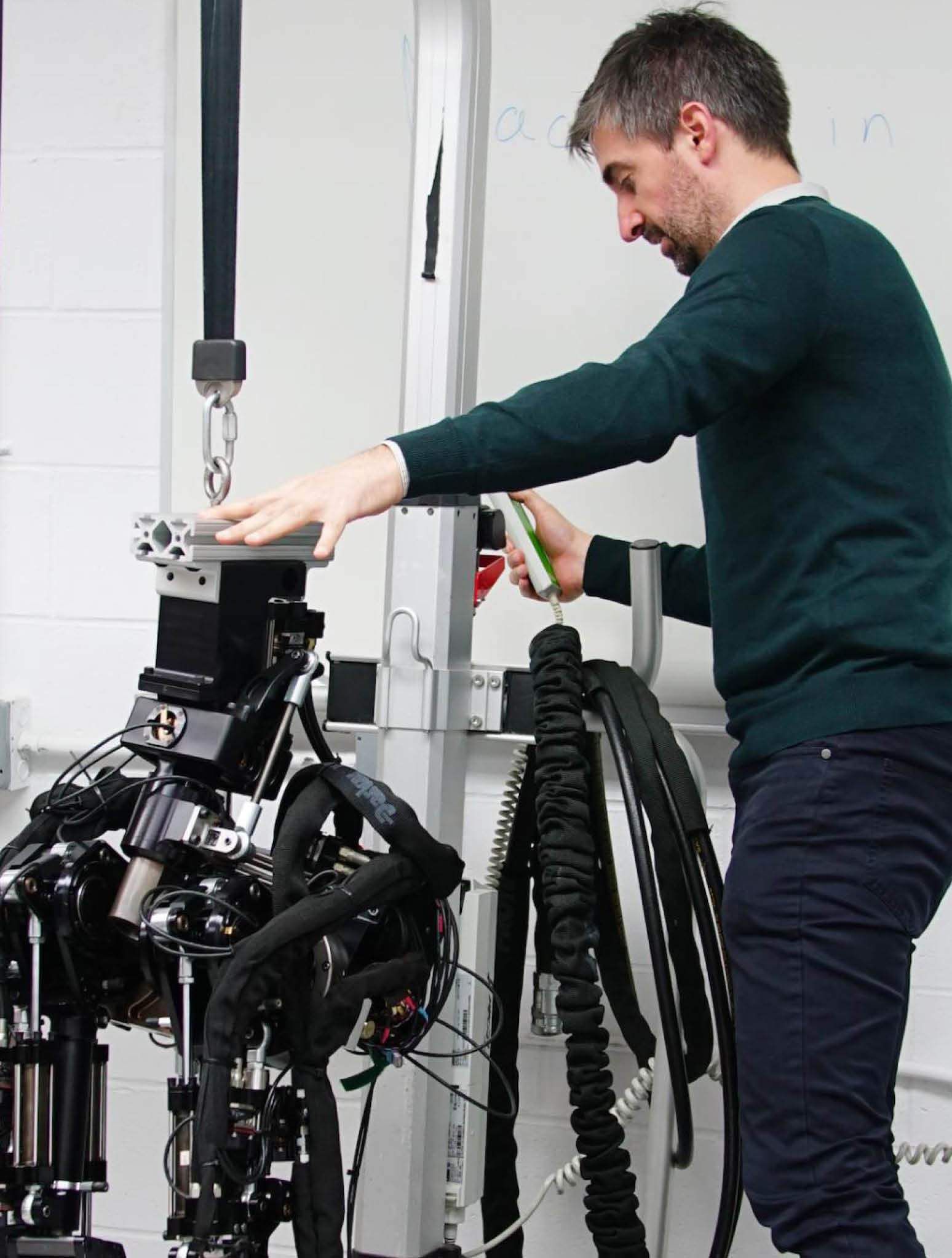
NYU Tandon mechatronics and robotics students have a unique advantage: studying at the heart of New York City’s rapidly growing tech and hardware innovation ecosystem. Located in Downtown Brooklyn, the Department of Mechanical and Aerospace Engineering connects you directly to state-of-the-art research labs, startup incubators, and industry leaders across automated systems, biomedical devices, and urban technology. With NYC’s vast network of engineering firms and research institutions right in your backyard, there is no better place to earn your M.S. in Mechatronics and Robotics.
Curriculum
The Master's degree in Mechatronics and Robotics provides an interdisciplinary education to students through coursework, experiential learning, and project (or thesis) work. Students learn fundamental theory, modeling methods, hardware components, interfacing requirements, simulation and programming tools, and practical applications of mechatronics and robotics.
| Requirement Area | Credits |
|---|---|
| Core Courses | 15 |
| Specialty Courses | 6 |
| Project Courses | 6 |
| Free Elective | 3 |
| Total Credits | 30 |
Assistive Mechatronic and Robotic Technologies
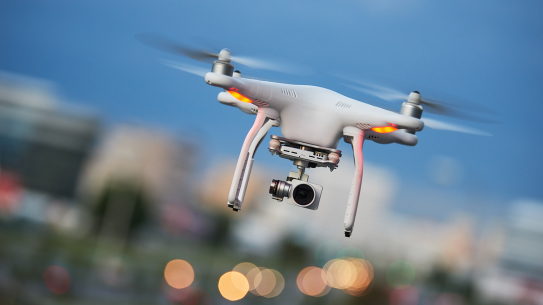
Mobile Robotics
In addition to mechanical aspects, students learn about building-blocks of mechatronics and robotics, i.e., sensing, actuation, computing technologies, and algorithms, thus being introduced to real-world tools used by practicing professionals. Having learned the fundamental theory, modeling, hardware, and programming tools through core courses, students can specialize in one of three areas — assistive mechatronic and robotic technologies; mobile robotics; or microrobotics. All students also acquire fundamentals of entrepreneurship through formal course work, as well as project (or thesis) work. Students engage in hands-on learning and explorations that will provide a comprehensive experience in systems integration and product development.
Meet our Faculty

Meet Katsuo Kurabayashi
Determined to change the field’s image with an ambitious plan for the future


Experiential Learning Center

Mechanical Engineering, M.S.

Electrical Engineering, M.S.
Emerging Technologies, M.S.
To earn a Master of Science in Mechatronics and Robotics, students must complete 30 credits of graduate coursework to qualify for graduation.
The M.S. in Mechatronics and Robotics is offered on-campus as a full-time or flexible part-time program designed to accommodate both traditional students and working professionals.
- Fall Semester:
- December 1: M.S. priority consideration
- February 15: M.S. general consideration
- Spring Semester:
- November 1: M.S. full-time and part-time consideration
A Bachelor’s degree and a good academic record in mechanical, electrical, or electronics engineering from a reputable college or university are generally required for admission to this program. Applicants with degrees from other fields may be admitted but may have to complete additional studies to achieve a comparable background. Courses required to achieve this status are specified as part of the admission evaluation. Undergraduate courses specified for this purpose cannot count toward credits for the graduate degree. Graduate programs are subject to prior approval of a graduate adviser designated by the department.
Application requirements include:
- Online application
- Official transcripts
- Resume
- Statement of purpose
- 1-minute video submission
- 2 Letters of recommendation
- English Language Proficiency testing (if applicable)
- $90 Application fee
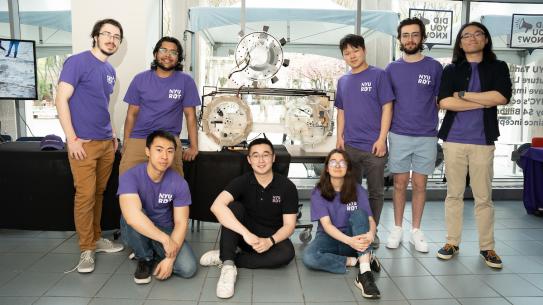
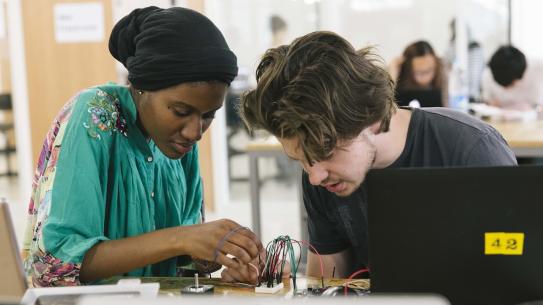
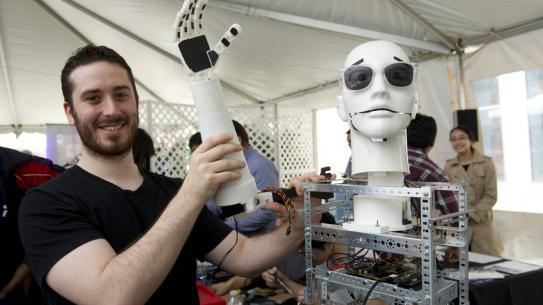
Students have hands-on access to advanced facilities including the 10,000-square-foot NYU Tandon MakerSpace (featuring 3D printers, laser cutters, CNC milling, and PCB fabrication electronics), the Center for Robotics and Embodied Intelligence (CREO), the Mechatronics, Controls, and Robotics Lab, the Machines in Motion Laboratory, and specialized microrobotics and control facilities.
The M.S. in Mechatronics and Robotics curriculum delivers an interdisciplinary education combining theoretical coursework, hands-on experiential learning, and a culminating project or thesis.
Key elements of the curriculum include:
- Core Technical Foundations: Students master physics-based system modeling, mechanical design, hardware components, interfacing requirements, and simulation tools using real-world systems.
- Essential Building Blocks: Coursework covers the fundamental components of autonomous systems, including sensing, actuation, computing technologies, and algorithms.
- Entrepreneurship & Product Development: All students complete formal coursework in entrepreneurship to gain an appreciation of the pathway from education to commercial careers.
- Systems Integration Experience: All courses, project work, and thesis options engage students in hands-on learning focused on complete systems integration and product development.
After mastering core foundational coursework in theory, system modeling, hardware components, and programming tools, students can tailor their degree by choosing one of 3 specialized areas of concentration:
- Assistive Mechatronic and Robotic Technologies
- Mobile Robotics
- Microrobotics