

Research News





Self-assembling proteins can be used for higher performance, more sustainable skincare products
If you have a meticulous skincare routine, you know that personal skincare products (PSCPs) are a big business. The PSCP industry will reach $74.12 billion USD by 2027, with an annual growth rate of 8.64%. With such competition, companies are always looking to engineer themselves an edge, producing products that perform better without the downsides of current offerings.
In a new study published in ACS Applied Polymer Materials from the lab of Professor of Chemical and Biomolecular Engineering Jin Kim Montclare, researchers have created a novel protein-based gel as a potential ingredient in sustainable and high-performance PSCPs. This protein-based material, named Q5, could transform the rheological — or flow-related — properties of PSCPs, making them more stable under the slightly acidic conditions of human skin. This innovation could also streamline the creation of more eco-friendly skincare products, offering increased efficacy and durability while addressing market demands for ethically sourced ingredients.
Personal skincare products, ranging from beauty cosmetics to medical creams, rely on sophisticated “chassis” formulations — often emulsions or gels — to effectively deliver active ingredients. The performance of these products depends heavily on the stability and responsiveness of their chassis under various environmental conditions, particularly pH.
Current formulations often rely on ingredients such as polysaccharides or synthetic polymers to achieve the desired texture, stability, and compatibility with skin's natural pH, which is mildly acidic (most human skin has a pH of between 5.4–5.9). However, these traditional rheological modifiers have raised environmental concerns regarding sourcing and sustainability.
To take on this challenge, Montclare and her colleagues fabricated a self-assembling coiled-coil protein they call Q5. In the study, Q5 demonstrated impressive pH stability. The protein's unique structure enables it to form strong gels that do not degrade easily under acidic conditions, enhancing the longevity and performance of skincare products.This resilience marks a significant improvement over earlier protein-based gels, which typically disassemble in lower pH environments.
Notably, the research suggests that Q5 could be produced sustainably via bacterial or yeast fermentation, circumventing the ethical and ecological issues associated with animal-derived proteins or synthetic polymers. The protein’s natural amphiphilicity — its ability to attract and retain moisture — also enables it to bind various molecules, adding versatility as a moisturizer or binding agent in skincare products.
The research suggests that these protein-based rheological modifiers like Q5 could soon become a valuable component in the next generation of high-performance skincare products, helping brands meet consumer demand for sustainable beauty solutions without compromising on quality or functionality.
Britton, D., Sun, J., Faizi, H. A., Yin, L., Gao, W., & Montclare, J. K. (2024). Recombinant fibrous protein gels as rheological modifiers in skin ointments. ACS Applied Polymer Materials, 6(20), 12832–12841. https://doi.org/10.1021/acsapm.4c02468

New study tracks leptin pulse patterns, a potential clue to understanding obesity
Obesity has become a global epidemic, and the need for treatment and monitoring for people with obesity is growing. Researchers aiming to understand relevant biomarkers for the condition have fixed their gaze on leptin, a hormone that regulates energy intake and induces feelings of fullness, to eventually help improve treatments for obesity. Understanding the patterns of leptin secretion from fat cells throughout the body could help scientists identify hidden health issues in patients with obesity, monitor health development after treatment, and test drug effectiveness.
Now, in a new study in the Journal of the Endocrine Society, NYU Tandon Associate Professor of Biomedical Engineering Rose Faghih and her PhD students Qing Xiang and Revanth Reddy have utilized a probabilistic physiological modeling approach to investigate the pulse events underlying leptin secretion.
“Instead of only relying on visual inspection of leptin by statistical modeling of leptin secretion events, we quantify the underlying pulsatile physiological signaling to enable extending investigations of leptin signaling in health and disease and in response to medications,” said Faghih.
Leptin, produced primarily by fat cells, typically signals the brain when enough food has been consumed, helping to regulate energy and appetite. But in some individuals with obesity, this signaling system seems to malfunction — a condition known as leptin resistance, where high levels of leptin fail to curb hunger. Why this resistance develops remains unclear, but recent findings on leptin’s high-frequency, wave-like release patterns offer intriguing possibilities for future research.
Hormones like cortisol and insulin, which manage stress and blood sugar, are known to follow rhythmic release patterns, adapting to daily cycles. Leptin follows a similar — but unknown
— rhythm. Faghih’s lab set out to analyze leptin’s pulses, examining how often these leptin pulses occur and their relative strength. By breaking down the pulses into their timings and amplitudes, researchers could better understand these patterns, which could lead to breakthroughs in treating leptin resistance and, by extension, obesity.
The researchers applied statistical models with different complexities to fit the data and compared the performance of these distribution models for each subject using pre-established metrics. They aimed to find the best model for these distributions which would be important in monitoring leptin secretion and detecting deviations from a normal secretion pattern.
The results show that each of these models can capture the general shape of the distribution alone for each subject despite the complex process of leptin secretion which can be affected by various factors. These distribution models suggest several possible features of leptin secretion such as the rarity of extremely small or large pulses.
They also allow researchers to see the effects of drugs by identifying changes in the model parameters before and after treatment. They compared leptin behavior before and after treatment with bromocriptine, a medication that affects neuroendocrine signaling. After treatment, subtle shifts in one model of leptin’s pulse timings (the diffusion model) suggested that it might be possible to influence these patterns with medication. Such findings open the door to exploring hormonal treatments for obesity that work by reestablishing leptin’s natural rhythms.
The research is a key first step in reliable long term leptin monitoring that could help doctors and patients fight obesity.
This work was supported by the National Institutes of Health (NIH) under grant R35GM151353: MESH: Multimodal Estimators for Sensing Health.
Qing Xiang, Revanth Reddy, Rose T Faghih, Marked Point Process Secretory Events Statistically Characterize Leptin Pulsatile Dynamics, Journal of the Endocrine Society, Volume 8, Issue 10, October 2024, bvae149, https://doi.org/10.1210/jendso/bvae149
NYC's ride-hailing fee failed to ease Manhattan traffic, new NYU Tandon study reveals
New York City's 2019 ride-hailing surcharge cut overall taxi and ride-share trips by 11 percent in Manhattan but failed to reduce traffic congestion, a key goal of the policy, according to a new NYU Tandon School of Engineering study published in Transportation Research Part A.
“While this surcharge differs from the MTA's proposed congestion pricing plan, the study's findings can contribute to the current discourse,” said Daniel Vignon — assistant professor of Civil and Urban Engineering (CUE) and member of C2SMARTER, a U.S. Department of Transportation Tier 1 University Transportation Center — who led the research with CUE PhD student Yanchao Li. “Indeed, the research reveals how pricing policies can disproportionately affect different communities and emphasizes that accessible transit alternatives play a crucial role in shaping how such policies impact travel behavior.”
Using a Difference-in-Differences framework — a statistical method that compares changes in outcomes between locations subject to a policy and those that are not — researchers isolated the impact of the $2.50 to $2.75 fee imposed below 96th Street by analyzing patterns both inside and outside the surcharge zone, while also comparing the same areas before and after the policy took effect.
"We were not necessarily surprised by the findings," explained Vignon. "The City claims that Uber, Lyft and taxis increase congestion, but we would say that they are not the major contributors," noting that research from other cities has also found ride-hailing services don't significantly contribute to traffic congestion. “In general, most cities experience a reduction in travel speed between 2% to 8% following the entry of Uber/Lyft.”
While traffic speeds remained virtually unchanged after the surcharge, Lyft experienced a 17 percent decrease in trips, and Uber and yellow cabs saw drops of 9 percent and 8 percent respectively, the research showed.
The policy's impact varied based on available transportation alternatives. Areas without subway or Citi Bike access saw only a 1.6 percent reduction in rides, while neighborhoods with both options experienced a 7.4 percent decrease. Areas with Citi Bike alone showed a 6.8 percent reduction.
The study revealed a complex relationship between income and transit access. Higher-income neighborhoods, despite typically having better transit options, showed minimal reduction in ride-hailing use. In contrast, lower-income areas saw sharp declines even though they often had fewer transit alternatives.
"When policymakers plan for any type of congestion pricing, it's critical they account for the alternative transportation options available at a granular level. A policy that works well in one neighborhood may impose a very high cost in areas where people live with far fewer resources and choices," said Vignon, noting that the street-hailing industry saw an 8 percent decrease in revenue after implementation. “It seems that this policy resulted in a net welfare loss for the city, at least in the shorter term, when considering all factors, such as abandoned rides and the decrease in driver revenues. In the longer term, to determine whether the policy is a net positive, one would have to account for how the collected fees are spent.”
This study is part of Vignon’s body of work examining how regulatory policies affect transportation systems. His research interests span ride-hailing regulations, autonomous vehicles, and infrastructure investment, analyzing how agencies can improve system performance while considering that users and transportation service providers will adapt their behavior based on policy changes.
The research also contributes to the portfolio of C2SMARTER, a consortium of seven universities led by NYU Tandon that is pursuing an ambitious research, education, training, and technology transfer program agenda to address the U.S. DOT priority area of Congestion Reduction. It received its most recent Tier 1 UTC designation in early 2023, providing it $15 million in funding for five years and extending its first such designation that came in 2016.
In this study, Vignon and Li analyzed over 300,000 ride-hailing records from NYC's Taxi and Limousine Commission, along with nearly 1 million traffic speed measurements from Uber Movement, incorporating data from Citi Bike, subway locations, household income statistics, and weather patterns.
Yanchao Li, Daniel Vignon, Do ride-hailing congestion fees in NYC work?, Transportation Research Part A: Policy and Practice,
Volume 190, 2024, 104274,
ISSN 0965-8564 https://doi.org/10.1016/j.tra.2024.104274.

NYU Tandon researchers uncover security flaw in miniature medical labs
NYU researchers have identified a new material-level security risk in an emerging medical technology known as labs-on-chips, miniature devices that perform multiple laboratory tests on tiny fluid samples like blood droplets.
A team led by NYU Abu Dhabi and the NYU Center for Cybersecurity (CCS) found that in one type of these devices, called flow-based microfluidic biochips (FMBs), the crucial microscopic valves responsible for controlling the fluid flow could be subtly altered at the material level by doping reactive chemicals or stealthily altering the chemical composition during manufacturing. These microvalves are critical for the integrated microfluidic circuitry, as they precisely manipulate fluids for a bio-protocol via deforming under pneumatic pressure.
The researchers found that stealthy tampering can be achieved by introducing harmful chemicals or by altering the associated chemical composition, which significantly changes the energetics of the microvalve deformation. The tampered valves look normal under a microscope but can be triggered to rupture when exposed to deliberate low-frequency pneumatic actuations.
In a study published in Scientific Reports, the researchers name these bad valves "BioTrojans.”
"Material-level cyber-physical attacks on biochips remain understudied, posing significant future security risks,” said Navajit Singh Baban, a CCS postdoctoral associate and the study's lead author. “In this study, we've shown that by simply changing the ratio of ingredients used to make certain valves, we can create a ticking time bomb within the device. These BioTrojans look identical to normal valves but behave very differently under stress."
The researchers demonstrated that valves made with altered ratios of a common polymer called polydimethylsiloxane (PDMS) could rupture within seconds when subjected to pneumatic actuations. In contrast, properly manufactured valves withstood the same conditions for days without failure.
The implications of such vulnerabilities are significant. Microfluidic biochips are increasingly used in critical applications such as disease diagnosis, DNA analysis, drug discovery, and biomedical research. A compromised valve could lead to contamination, inaccurate test results, or complete device failure, potentially endangering patients or derailing important research.
"This isn't just about a malfunctioning medical device," said Ramesh Karri, the senior author of the study. Karri is a professor and chair of NYU Tandon School of Engineering’s Electrical and Computer Engineering Department and a member of CCS, which he co-founded in 2009. "It's about the potential for malicious actors to intentionally sabotage these critical tools in ways that are very difficult to detect.”
The research team’s proposed solutions include design modifications to make valves more resilient and a novel authentication method using fluorescent dyes to detect tampered components.
"We're entering an age where the line between the digital and biological worlds is blurring," Baban said. "As these miniaturized labs become more prevalent in healthcare settings, ensuring their security will be crucial to maintaining trust in these potentially life-saving technologies. We hope this work will spur further investigation into the cybersecurity aspects of biomedical devices and lead to more robust safeguards in their design and manufacture.”
In addition to Baban and Karri, the paper's authors are Jiarui Zhou, Kamil Elkhoury, Yong-Ak Song and Sanjairaj Vijayavenkataraman, all from the Division of Engineering at NYU Abu Dhabi; Nikhil Gupta, professor in NYU Tandon’s Department of Mechanical and Aerospace Engineering and member of CCS; Sukanta Bhattacharjee from the Department of Computer Science and Engineering at Indian Institute of Technology Guwahati; and Krishnendu Chakrabarty from the School of Electrical, Computer and Energy Engineering at Arizona State University.
Baban, N.S., Zhou, J., Elkhoury, K. et al. BioTrojans: viscoelastic microvalve-based attacks in flow-based microfluidic biochips and their countermeasures. Sci Rep 14, 19806 (2024). https://doi.org/10.1038/s41598-024-70703-0
Revolutionizing cartilage repair: The role of macrophages and hyaluronic acid in healing injuries
Injuries of the knee resulting in damage to cartilage affect approximately 900,000 Americans annually, resulting in more than 200,000 surgical procedures. These injuries are frequently associated with pain, diminished joint functionality, and reduced life quality. In addition, these traumatic joint injuries lead to the early onset of post traumatic osteoarthritis, requiring eventual joint replacement. Joint replacement, especially at relatively young age, results in significant limitations to lifestyle and potential complications, including the limited lifespan of the implants.
Now, a new study from Professors of Biomedical Engineering and Orthopaedic Surgery Mary Cowman and Thorsten Kirsch is promising a novel solution to the issue of inflammation in such injuries, in order to promote healthy healing and prevent the need for more invasive procedures and treatments.
A key factor in the complex repair process is the body’s immune response, particularly the role of macrophages, which are immune cells that play a crucial role in inflammation following joint injury. After injury, these cells can adopt different states — pro-inflammatory and anti-inflammatory — that need to be in balance for proper repair.
Pro-inflammatory macrophages drive inflammation by releasing pro-inflammatory cytokines, which can inhibit the proliferation and viability of mesenchymal stem cells (MSCs)—cells essential for cartilage regeneration. This not only limits MSC function but also hampers their ability to modulate the immune environment and differentiate into chondrocytes, the cells responsible for cartilage formation. This can lead to chronic inflammation and the onset of post-traumatic osteoarthritis. The challenge is rebalancing these macrophages to support the anti-inflammatory varieties.
Recent research has uncovered a pivotal role for hyaluronic acid (aka hyaluronan, HA), a glycosaminoglycan found in the extracellular matrix of tissues like cartilage, in this immune modulation. While HA plays a critical role in normal cartilage tissue structure and function, and is widely used to alleviate pain in osteoarthritis, it can be degraded in inflamed tissues. Degraded HA interacts with a protein receptor known as RHAMM (Receptor for Hyaluronan-Mediated Motility), which is minimally expressed in healthy adult tissues but becomes highly upregulated following injury. While RHAMM interactions with HA are essential for processes like cell migration and tissue repair, they also contribute to inflammation and fibrosis in various pathological conditions.
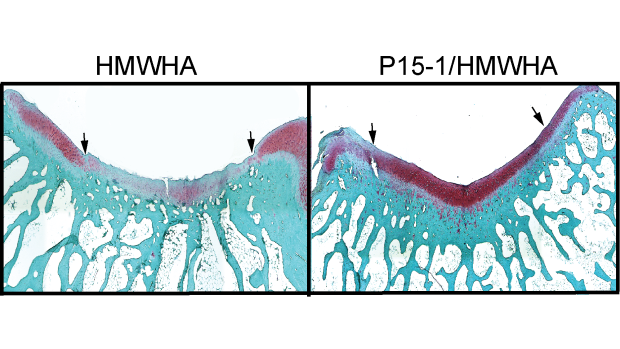
Cowman and Kirsch’s new study tested the effects of disrupting these interactions, by using a synthetic peptide known as P15-1, which mimics RHAMM and competes with it for HA binding, in combination with natural high molecular weight HA. In a rabbit model for cartilage defect repair, the therapeutic formulation effectively shifts the balance of macrophages to the anti-inflammatory state, and improves healing while limiting damage.
These findings could hold promise for improving cartilage repair outcomes, offering a way to break the cycle of inflammation and promote more effective healing. As the field of regenerative medicine continues to evolve, targeting immune pathways like HA-RHAMM interactions may open new avenues for treating joint injuries and preventing the long-term consequences of post-traumatic osteoarthritis.
This work was supported by the NIH and by a grant from The Ines Mandl Research Foundation. The Ines Mandl Research Foundation (IMRF) is dedicated to providing research funding in the fight against connective tissue disease. It is the legacy of Dr. Ines Mandl (TANDON ’47, ’49), who was the first woman to graduate from the Polytechnic Institute of Brooklyn—today’s NYU Tandon School of Engineering—with a PhD in chemistry in 1949.
Bianchini, E. Sin, Y.J.A., Lee, Y.J., Lin, C., Anil, U., Hamill, C., Cowman, M.K., Kirsch, T. (2024) “The Role of Hyaluronan/RHAMM Interactions in the Modulation of Macrophage Polarization and Cartilage Repair” Am.J.Pathology 194, 1047-1061, https://doi.org/10.1016/j.ajpath.2024.01.020

New tool helps analyze pilot performance and mental workload in augmented reality
In the high-stakes world of aviation, a pilot's ability to perform under stress can mean the difference between a safe flight and disaster. Comprehensive and precise training is crucial to equip pilots with the skills needed to handle these challenging situations.
Pilot trainers rely on augmented reality (AR) systems for teaching, by guiding pilots through various scenarios so they learn appropriate actions. But those systems work best when they are tailored to the mental states of the individual subject.
Enter HuBar, a novel visual analytics tool designed to summarize and compare task performance sessions in AR — such as AR-guided simulated flights — through the analysis of performer behavior and cognitive workload.
By providing deep insights into pilot behavior and mental states, HuBar enables researchers and trainers to identify patterns, pinpoint areas of difficulty, and optimize AR-assisted training programs for improved learning outcomes and real-world performance.
HuBar was developed by a research team from NYU Tandon School of Engineering that will present it at the 2024 IEEE Visualization and Visual Analytics Conference on October 17, 2024.
“While pilot training is one potential use case, HuBar isn't just for aviation,” explained Claudio Silva, NYU Tandon Institute Professor in the Computer Science and Engineering (CSE) Department, who led the research with collaboration from Northrop Grumman Corporation (NGC). “HuBar visualizes diverse data from AR-assisted tasks, and this comprehensive analysis leads to improved performance and learning outcomes across various complex scenarios.”
“HuBar could help improve training in surgery, military operations and industrial tasks,” said Silva, who is also the co-director of the Visualization and Data Analytics Research Center (VIDA) at NYU.
The team introduced HuBar in a paper that demonstrates its capabilities using aviation as a case study, analyzing data from multiple helicopter co-pilots in an AR flying simulation. The team also produced a video about the system.
Focusing on two pilot subjects, the system revealed striking differences: one subject maintained mostly optimal attention states with few errors, while the other experienced underload states and made frequent mistakes.
HuBar's detailed analysis, including video footage, showed the underperforming copilot often consulted a manual, indicating less task familiarity. Ultimately, HuBar can enable trainers to pinpoint specific areas where copilots struggle and understand why, providing insights to improve AR-assisted training programs.
What makes HuBar unique is its ability to analyze non-linear tasks where different step sequences can lead to success, while integrating and visualizing multiple streams of complex data simultaneously.
This includes brain activity (fNIRS), body movements (IMU), gaze tracking, task procedures, errors, and mental workload classifications. HuBar's comprehensive approach allows for a holistic analysis of performer behavior in AR-assisted tasks, enabling researchers and trainers to identify correlations between cognitive states, physical actions, and task performance across various task completion paths.
HuBar's interactive visualization system also facilitates comparison across different sessions and performers, making it possible to discern patterns and anomalies in complex, non-sequential procedures that might otherwise go unnoticed in traditional analysis methods.
"We can now see exactly when and why a person might become mentally overloaded or dangerously underloaded during a task," said Sonia Castelo, VIDA Research Engineer, Ph.D. student in VIDA, and the HuBar paper’s lead author. "This kind of detailed analysis has never been possible before across such a wide range of applications. It's like having X-ray vision into a person's mind and body during a task, delivering information to tailor AR assistance systems to meet the needs of an individual user.”
As AR systems – including headsets like Microsoft Hololens, Meta Quest and Apple Vision Pro – become more sophisticated and ubiquitous, tools like HuBar will be crucial for understanding how these technologies affect human performance and cognitive load.
"The next generation of AR training systems might adapt in real-time based on a user's mental state," said Joao Rulff, a Ph.D. student in VIDA who worked on the project. "HuBar is helping us understand exactly how that could work across diverse applications and complex task structures."
HuBar is part of the research Silva is pursuing under the Defense Advanced Research Projects Agency (DARPA) Perceptually-enabled Task Guidance (PTG) program. With the support of a $5 million DARPA contract, the NYU group aims to develop AI technologies to help people perform complex tasks while making these users more versatile by expanding their skillset — and more proficient by reducing their errors. The pilot data in this study came from NGC as part of the DARPA PTG
In addition to Silva, Castelo and Rulff, the paper’s authors are: Erin McGowan, PhD Researcher, VIDA; Guande Wu, Ph.D. student, VIDA; Iran R. Roman, Post-Doctoral Researcher, NYU Steinhardt; Roque López, Research Engineer, VIDA; Bea Steers, Research Engineer, NYU Steinhardt; Qi Sun, Assistant Professor of CSE, NYU; Juan Bello, Professor, NYU Tandon and NYU Steinhardt; Bradley Feest, Lead Data Scientist, Northrop Grumman Corporation; Michael Middleton, Applied AI Software Engineer and Researcher, Northrop Grumman Corporation, and PhD student, NYU Tandon; Ryan McKendrick, Applied Cognitive Scientist, Northrop Grumman Corporation.
arXiv:2407.12260 [cs.HC]

NYU Tandon study maps pedestrian crosswalks across entire cities, helping improve road safety and increase walkability
As pedestrian fatalities in the United States reach a 40-year high, a novel approach to measuring crosswalk lengths across entire cities could provide urban planners with crucial data to improve safety interventions.
NYU Tandon School of Engineering researchers Marcel Moran and Debra F. Laefer published the first comprehensive, city-wide analysis of crosswalk distances in the Journal of the American Planning Association. Moran is an Urban Science Faculty Fellow at the Center for Urban Science + Progress (CUSP), and Laefer is a Professor of Civil and Urban Engineering and CUSP faculty member.
"In general, lots of important data related to cities’ pedestrian realm is analog (so it exists only in old diagrams and is not machine readable), is not comprehensive, or both," said lead author Moran, highlighting the gap this study fills. "We know that longer crosswalks pose increased safety risks to pedestrians, but rarely are cities sitting on up-to-date, comprehensive data about their own crosswalks. So even answering the question,‘what are the 100 longest crossings in our city?' is not easy. We want to change that.”
This study's unique contribution lies in its scale and methodology, potentially providing a powerful new tool for city planners to identify and address high-risk areas.
The team analyzed nearly 49,000 crossings in three diverse cities: a European city (Paris), a dense American city (San Francisco), and a less-dense, more car-centric American city (Irvine). To accomplish this, they employed a combination of data sources and techniques.
"We combined crosswalk distance measurements from two different datasets," Laefer said. "The first is from OpenStreetMap, which comes from a community of users who have crowdsourced and built a map of the world."
However, OpenStreetMap data alone wasn't comprehensive enough. "If we had only used OpenStreetMap, we would have been left with a lot of crosswalks missing," Laefer explained. "So we also used satellite imagery tools to measure the remaining crosswalk distances."
Their technique revealed distinct patterns in each urban environment. According to the published paper, the average crosswalk lengths were approximately 26 feet in Paris (.03% at 70 feet or longer), about 43 feet in San Francisco (4.4% at 70 feet or longer), and about 58 feet in Irvine (with about 20% at 70 feet or longer). Crossings over 50 to 60 feet start to show a higher concentration of pedestrian collisions, according to Moran.
The study confirmed a significant correlation between crosswalk length and pedestrian safety in all three cities examined. Longer crosswalks were associated with higher probabilities of pedestrian-vehicle collisions, with each additional foot increasing collision likelihood by 0.8% to 2.11%. Crossings where recent collisions occurred were 15% to 43% longer than city averages.
Moran sees this research as a powerful tool for city planners and policymakers. "The three cities we have mapped now have these datasets, and can evaluate different investments and make informed decisions in pedestrian infrastructure," he explained.
The potential for this research to inform public policy extends beyond these three cities. Moran and his team are planning to scale up their approach to the 100 largest cities in the United States, potentially creating a public resource for exploring crosswalk distances.

According to Moran, simple measures could significantly improve pedestrian safety on crosswalks. "Small low-tech ways to improve the pedestrian environment can really lead to safety benefits. These can include extending the sidewalks out from each side and putting pedestrian refuge islands in the middle," Moran noted.
This study is part of Moran's broader effort to improve urban transportation. He explains, "I'm trying to make urban transportation safer, more sustainable and more equitable. I use a variety of methods like mining data, satellite imagery and field collection to understand our streets, how they can change, and how those changes can lead to these improved outcomes."
Moran, M. E., & Laefer, D. F. (2024). Multiscale Analysis of Pedestrian Crossing Distance. Journal of the American Planning Association, 1–15. https://doi.org/10.1080/01944363.2024.2394610

Large Language Models fall short in detecting propaganda
In an era of rampant misinformation, detecting propaganda in news articles is more crucial than ever. A new study, however, suggests that even the most advanced artificial intelligence systems struggle with this task, with some propaganda techniques proving particularly elusive.
In a paper presented at the 5th International Workshop on Cyber Social Threats, part of the 18th International AAAI Conference on Web and Social Media in June 2024, Rachel Greenstadt — professor in the Computer Science and Engineering Department and a member of NYU Center for Cybersecurity — and her Ph.D. advisee Julia Jose evaluated several large language models (LLMs), including OpenAI's GPT-3.5 and GPT-4, and Anthropic's Claude 3 Opus, on their ability to identify six common propaganda techniques in online news articles:
- Name-calling: Labeling a person or idea negatively to discredit it without evidence.
- Loaded language: Using words with strong emotional implications to influence an audience.
- Doubt: Questioning the credibility of someone or something without justification.
- Appeal to fear: Instilling anxiety or panic to promote a specific idea or action.
- Flag-waving: Exploiting strong patriotic feelings to justify or promote an action or idea.
- Exaggeration or minimization: Representing something as excessively better or worse than it really is.
The study found that while these AI models showed some promise, they consistently underperformed compared to more specialized systems designed for propaganda detection.
“LLMs tend to perform relatively well on some of the more common techniques such as name-calling and loaded language,” said Greenstadt. “Their accuracy declines as the complexity increases, particularly with ‘appeal to fear’ and ‘flag-waving’ techniques.”
The baseline model, built on a technology called RoBERTa-CRF, significantly outperformed the LLMs across all six propaganda techniques examined. The researchers noted, however, that GPT-4 did show improvements over its predecessor, GPT-3.5, and outperformed a simpler baseline model in detecting certain techniques like name-calling, appeal to fear, and flag-waving.
These findings highlight the ongoing challenges in developing AI systems capable of nuanced language understanding, particularly when it comes to detecting subtle forms of manipulation in text.
"Propaganda often relies on emotional appeals and logical fallacies that can be difficult even for humans to consistently identify," Greenstadt said. "Our results suggest that we still have a long way to go before AI can reliably assist in this critical task, especially with more nuanced techniques. They also serve as a reminder that, for now, human discernment remains crucial in identifying and countering propaganda in news media.”
The study, which was supported by the National Science Foundation under grant number 1940713, adds to Greenstadt's body of work centering on developing intelligent systems that are not only autonomous but also reliable and ethical. Her research aims to create AI that can be entrusted with crucial information and decision-making processes.

Harnessing the power of eye tracking in brain-machine interfaces
In recent years, eye tracking technology has advanced rapidly, suggesting that our eyes deserve greater attention within the evolving brain-machine interface (BMI) landscape. One particularly intriguing area is the connection between eye movements and internal brain states—a link that is becoming increasingly difficult to ignore. Eye tracking systems can function in a completely contactless manner, integrated into devices like screens, laptops, tablets, and smartphones. In contrast, wearable-based systems utilize wearable technology to monitor and even influence brain states, presenting a more hands-on approach to BMI development.
However, a promising alternative lies in the development of a framework that decodes hidden brain states, such as interoceptive awareness, directly from eye tracking data. This advance could help create safer, more efficient closed-loop systems that monitor and modulate the brain-body connection. That is the findings of a new study from the lab of Rose Faghih, Associate Professor of Biomedical Engineering at NYU Tandon.
Decoding the Brain’s Hidden Signals
Interoceptive awareness represents the brain’s ability to interpret bodily sensations—signals that arise in response to internal or external stimuli. However, these states are difficult to observe and must be decoded through physiological indicators. Tracking and understanding these internal brain states is critical for optimizing the brain-body connection, yet the challenge lies in how to access them.
One potential solution is to study interoception in the context of fear conditioning, a process where heightened arousal correlates with heightened interoception. In Pavlovian fear conditioning, subjects learn to anticipate aversive events—such as a mild electric shock—creating an ideal model for observing interoceptive signals. In a recent experiment, participants underwent fear conditioning and extinction, with mild electric shocks used as the aversive stimulus. Given the strong association between arousal and interoceptive awareness, researchers anticipated synchronized responses between these two states.
In this study, the research team decoded interoceptive awareness by analyzing neural activity linked to eye tracking data—specifically, measurements from pupillometry and eye gaze patterns. In parallel, they decoded arousal states from skin conductance data. While it was expected that the two states would show similar responses to the electric shock, the interoceptive awareness state, as inferred from eye tracking data, showed greater sensitivity to the mild shocks than the arousal state decoded from skin conductance.
This finding underscores the potential of eye tracking technology as a powerful psychophysiological tool for decoding interoceptive awareness, a signal that could offer significant insight into brain-body interactions.
Towards Future Closed-Loop Systems: The Dawn of ‘MINDCAM’
The discovery that eye tracking signals can serve as sensitive indicators of interoceptive awareness opens up exciting possibilities. These findings could pave the way for new therapeutic approaches to treating neuropsychiatric and neurodegenerative disorders. By decoding interoceptive awareness, future closed-loop systems may be able to restore and enhance the brain-body connection, offering safer, more personalized interventions.
One particularly promising application is the development of ‘MINDCAM’—a system that integrates eye-tracking-enabled cameras into devices like smartphones, tablets, and monitors. This technology could potentially monitor a user’s interoceptive awareness in real time, helping individuals regulate their mood and cognitive performance. However, while this research represents an exciting first step, much more work is needed to develop safe and effective closed-loop systems that can reliably decode and modulate interoceptive states.
Faghih’s previous research on wearables includes the development of ‘MINDWATCH,’ which uses information collected from electrical charges in skin to assess brain states. MINDCAM could be used to complement that technology to provide even better data on how the brain reacts to stress.
The integration of eye tracking technology into brain-machine interfaces may hold the key to unlocking deeper insights into the mind, offering new hope for improving mental health and cognitive function in the years to come.
This research was supported in part by National Institutes of Health (NIH) grant R35GM151353 - Maximizing Investigators' Research Award (MIRA) for Early Stage Investigators (ESI): MESH: Multimodal Estimators for Sensing Health and in part by National Science Foundation (NSF) under Grant 2226123 - Faculty Early Career Development Program (CAREER): MINDWATCH: Multimodal Intelligent Noninvasive brain state Decoder for Wearable AdapTive Closed-loop arcHitectures.
Saman Khazaei, Rose T Faghih, Eye tracking is more sensitive than skin conductance response in detecting mild environmental stimuli, PNAS Nexus, Volume 3, Issue 9, September 2024, page 370
Researchers harnessing exosomes and hydrogels for advanced diabetic wound healing
Diabetes, a widespread condition affecting approximately 13% of American adults, is often accompanied by complications such as impaired wound healing. If left unchecked, this can lead to severe outcomes, including the need for amputation. The challenge of finding effective treatments for diabetic wounds has grown increasingly urgent. Such wounds are marked by prolonged inflammation, lack of oxygen, and disrupted blood vessel formation, which all contribute to delayed recovery. However, a new frontier in biomedical research is pointing toward exosomes as a potential solution.
A team from NYU Langone and NYU Tandon including Jin Kim Montclare has began to explore exosomes, tiny membrane-bound vesicles, as promising tools for healing. These nanovesicles carry various biological materials — nucleic acids, proteins, and lipids — allowing them to mediate intercellular communication and influence processes such as tissue repair.
Specifically, exosomes derived from mesenchymal stem cells (MSCs), including those from adipose tissue, have demonstrated significant potential in promoting wound healing in animal models. Their therapeutic effects appear to stem from their ability to reduce inflammation and promote a healing-friendly environment by enhancing blood vessel formation and encouraging the activity of cells like fibroblasts and endothelial cells, which are essential for tissue repair.
One major advantage of exosomes is their ability to bypass some of the risks associated with traditional stem cell therapies, such as uncontrolled cell growth or immune rejection. However, despite their promise, exosomes typically require repeated administration—either through subcutaneous or intravenous injections—which poses a challenge for long-term wound management.
Montclare’s team have been exploring innovative ways to enhance the therapeutic potential of exosomes, one of which involves combining them with hydrogels. Hydrogels, composed of networks of cross-linked polymers, can encapsulate exosomes within their structure. This encapsulation enables a more sustained and localized release of exosomes directly at the wound site, without the need for invasive injections.
Hydrogels are already recognized for their biocompatibility and ability to hydrate wounds, making them useful as wound dressings on their own. When combined with exosomes, their therapeutic effectiveness increases significantly, especially for diabetic wounds.
Recent studies have shown that hydrogel-exosome combinations consistently lead to faster wound closure than either hydrogels or exosomes used alone. These hydrogel systems are not protein-based, but recent advances in protein-based hydrogel technology have opened new possibilities for improving wound healing.
Montclare has developed a protein-based hydrogel, referred to as "Q," which forms a gel at low temperatures through a process called upper critical solution temperature (UCST) gelation. This protein-based hydrogel self-assembles into nanofibers, forming a physically cross-linked network that provides mechanical strength. By fine-tuning the protein sequence using advanced computational tools, such as the Rosetta score and Poisson-Boltzmann electrostatic potential calculations, they have been able to improve the gel’s mechanical properties, stability, and speed of formation — key factors in creating an ideal wound dressing.
To push this approach further, they designed a variant of the Q hydrogel, dubbed Q5, using automated selection methods to optimize its stability. They encapsulated exosomes within Q5 to create a new hydrogel-exosome system, called Q5Exo. This system offers a topical, noninvasive wound dressing that holds promise for treating diabetic wounds more effectively than traditional methods, which rely on injections.
In studies using diabetic mouse models, Q5Exo demonstrated a significant reduction in healing time when applied topically compared to exosomes administered via injection. This suggests that protein-based hydrogels, with their tunable properties, could become a powerful platform for enhancing wound healing outcomes in diabetes. As research continues, such hydrogels could pave the way for a new generation of biocompatible, efficient wound dressings that harness the therapeutic power of exosomes.
Exosome Loaded Protein Hydrogel for Enhanced Gelation Kinetics and Wound Healing; Dustin Britton, Dianny Almanzar, Yingxin Xiao, Hao-Wei Shih, Jakub Legocki, Piul Rabbani, and Jin Kim Montclare; ACS Applied Bio Materials; 2024 7 (9), 5992-6000