
Theodore Rappaport Elected to American Academy of Arts and Sciences
The wireless trailblazer joins an esteemed group of NYU Tandon scholars in one of the nation’s oldest learned societies
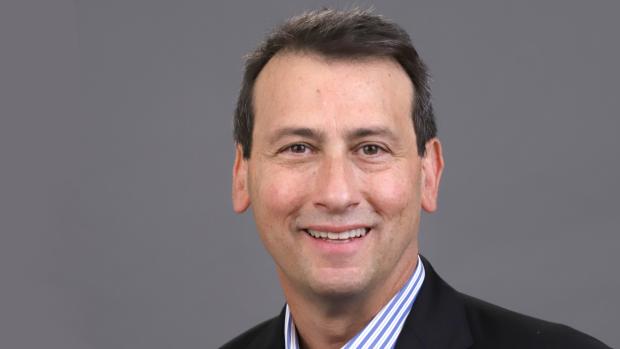
Theodore (Ted) S. Rappaport, the David Lee/Ernst Weber Professor of Electrical and Computer Engineering at the NYU Tandon School of Engineering and founding director of NYU WIRELESS, has been elected to the American Academy of Arts and Sciences, one of the country’s oldest and most distinguished honorary societies.
Rappaport is being recognized for a body of work that has shaped nearly every generation of modern wireless communications, from the early technical foundations behind Wi-Fi and digital cellular service to the millimeter-wave research that underpins 5G and the spectrum studies now guiding 6G.
Founded in 1780 by John Adams, John Hancock, and other scholar-patriots, the Academy elects leaders from the academic, business, and government sectors who address the major challenges facing society. Membership has historically included Benjamin Franklin, Albert Einstein, Margaret Mead, and Martin Luther King, Jr. The 2026 class — which also includes Nicole R. Fleetwood of NYU Steinhardt and Vlad Vicol of Courant — is being inducted in Cambridge, Massachusetts, in October.
A Career that Built the Wireless Era
Rappaport is perhaps best known for demonstrating, more than a decade ago, that millimeter-wave frequencies once dismissed as unusable for mobile communications could in fact carry the high-capacity signals that 5G now depends on. His landmark 2013 paper, “Millimeter Wave Mobile Communications for 5G Cellular: It Will Work!,” has been called a founding document of the technology. But his contributions stretch well beyond that single breakthrough.
Earlier in his career, he and his students helped lay the technical groundwork for Wi-Fi, the first digital cellular standards used in the United States, and the E-911 location systems that today allow emergency responders to find callers from any mobile phone. He has since developed widely used methods for designing wireless networks inside buildings, a probability distribution that models modern wireless channels, and — most recently — a unifying mathematical framework, called Waste Factor, for evaluating energy efficiency and sustainability in any communications link.
Rappaport founded NYU WIRELESS in 2012 as one of the first U.S. academic centers to bring together engineering, computer science, and medicine, and he holds appointments in NYU Tandon’s Department of Electrical and Computer Engineering, Courant’s Department of Computer Science, and the Department of Radiology at the NYU Grossman School of Medicine. He is the author or co-author of more than 400 papers and 20 books, including the most widely cited textbooks on wireless communications, smart antennas, communication systems simulation, and millimeter-wave communications, which together have been translated into eight languages.
His election to the American Academy follows an extraordinary recent run of recognition. In January, Rappaport was named a Life Fellow of the IEEE and a Fellow of the Association for Computing Machinery, marking him as one of the rare scholars honored at the highest level by the world’s leading societies in both electrical engineering and computer science. He is also a member of the U.S. National Academy of Engineering and a Fellow of the National Academy of Inventors, and he was the first career academic inducted into the Wireless Hall of Fame.
Joining a Select Tandon Company
With his election, Rappaport joins a group of current and former NYU Tandon faculty who have been named Members of the American Academy of Arts and Sciences over the past half-century — a roster that reflects the breadth of the school’s research, from pure mathematics and fluid dynamics to bioengineering, neuroscience, and soft-matter physics:
- Katepalli R. Sreenivasan, NYU Tandon Dean Emeritus, Eugene Kleiner Professor of Innovation in Mechanical Engineering, and a leading scholar of turbulence and complex fluid flows.
- Juan de Pablo, Anne and Joel Ehrenkranz Executive Vice President for Global Science and Technology at NYU, Executive Dean of NYU Tandon, and a chemical engineer whose research spans soft materials, polymers, and computational molecular science.
- Dora E. Angelaki, Director of NYU’s Center for Neural Science, whose work lies at the intersection of perception, cognition, and engineering.
- David Pine, Silver Professor of Physics and Mathematics and a pioneer in the design of colloidal materials and self-assembling structures whose research has helped define the modern field of soft-matter physics.
- Jeffrey A. Hubbell, VP of Bioengineering Strategy, head of the Initiative to Advance Engineering and Health, and a leader in immunoengineering and regenerative medicine.
That a single school of engineering can claim Members whose work ranges across several decades is itself a measure of NYU Tandon’s long history of consequential research.
"Ted's work has quite literally shaped how the modern world communicates,” said de Pablo, who has, himself, been a Member since 2011. “His election to the American Academy of Arts and Sciences is a fitting recognition of a career defined by both rigor and reach, and we are enormously proud to count him among our faculty."