

Research News


A wearable dataset for predicting in-class exam performance
Stress has a negative impact on physical health, reduces work productivity, and results in significant annual costs for industries and healthcare. While high stress is known to raise the risk of cardiovascular disease and have negative effects on mental health, It also has key effects on the ability of one to complete tasks by both excessively high or excessively low stress. There has been growing research interest on understanding how real-world stress impacts our body and performance, at work and across life activities
Unfortunately, attempts to simulate their impact in the laboratory or elsewhere are less useful than datasets gathered in real-world circumstances. As a result, researchers have access to fewer real-world stress datasets. Even rarer indeed are such datasets used in longitudinal investigations on the same subjects over time.
Real-world situations are also unrestricted environments. Research-grade equipment is frequently inaccessible, and motion artifact contamination is pervasive. These continue to be some of the biggest barriers to automated emotion decoders outside of the research labs in daily life.
To address the above-mentioned gap, Rose Faghih and her former PhD students Md. Rafiul Amin and Dilranjan Wickramasuriya performed an experiment, in which a set of students' physiological data was gathered over the course of three exams. They used a smartwatch-like wearable device and collected multimodal physiological data. The use of the smartwatch-like wearable device was to provide a seamless data collection experience for the students participating in the experiment.
The investigation shows that it is possible to link the variations in the physiological signals to the exam performance. More details about this study can be found in the corresponding publication titled "A Wearable Exam Stress Dataset for Predicting Grades using Physiological Signals."
To enable other researchers, use this dataset for additional investigations, the research team has made the de-identified data publicly available on the PhysioNet platform. A Wearable Exam Stress Dataset for Predicting Cognitive Performance in Real-World Settings is available at: physionet.org/content/wearable-exam-stress
Ultimately, the researchers believe it would be extremely beneficial to consider how exam performance and the stress that goes along with it interact. It will allow for a wide range of potential applications with the aim of enhancing personal performance. This may, for instance, assist scientists in developing effective interventions to improve each person's performance and increase productivity within a company. Additionally, the knowledge may be used in online and remote learning contexts to connect with students effectively and improve learning outcomes.
EyeScore: Predicting stroke reoccurrence through retinal scans
One in six deaths from cardiovascular disease is due to stroke. Caused by a blood clot in the brain, a stroke can have severe consequences, even minutes after initially occurring. That is what makes prevention so important.
Now, thanks to NYU researchers, including a collaborative effort between NYU Assistant Professor S. Farokh Atashzar, and NYUAD Assistant Professor Farah Shamout, early monitoring may soon be available at an unlikely location: your eye doctor.
Their project, called EyeScore, is developing a technology that uses non-invasive scans of the retina to predict the recurrence of stroke in patients. They use optical coherence tomography — a scan of the back of the retina — and track changes over time. The retina, attached directly to the brain through the optic nerve, can be used as an indicator for changes in the brain itself.
Atashzar and Shamout are currently formulating their hybrid AI model, pinpointing the exact changes that can predict a stroke and recurrence of strokes. The outcome will be able to analyze these images and flag potentially troublesome developments. And since the scans are already in use in optometrist offices, this life-saving technology could be in the hands of medical professionals sooner than expected.
Conspiracy Brokers: Understanding the Monetization of YouTube Conspiracy Theories
In a first-of-its-kind study, Center for Cybersecurity researchers led by Damon McCoy have found that YouTube channels with conspiracy content are fertile ground for predatory advertisers — with conspiracy channels having nearly 11 times the prevalence of likely predatory or deceptive ads when compared to mainstream YouTube channels and being twice as likely to feature non-advertising ways to monetize content, such as donation links for Patreon, GoFundMe and PayPal.
Researchers also discovered that:
- Certain scams were more common. Self-improvement ads, many of them get-rich-quick schemes, were seen more frequently vs. mainstream content. So were lifestyle, health and insurance ads — including two advertisers unique to conspiracy channels that were generating leads for insurance scammers. Ads promoting questionable products were also common, such as a supplement that claimed to cure Type 2 diabetes.
- Affiliate marketing was a constant. Among those marketing low-quality products, for example, almost 95 percent used some form of affiliate marketing.
- Videos with ads got far more views. In the conspiracy channels, monetized videos had almost four times as many views as demonetized ones. Since YouTube’s business model relies on advertising, this may be because its recommender algorithm prioritizes videos that contain ads.
- Content pointed to alternative social media sites. Sites like Gab, Parler and Telegram were mentioned more commonly in conspiracy channels than in mainstream ones; Facebook and Twitter were also frequently referenced.
The study was conducted with support from the National Science Foundation.
Comprehensive study reviews best ways to monitor defects in additive manufacturing
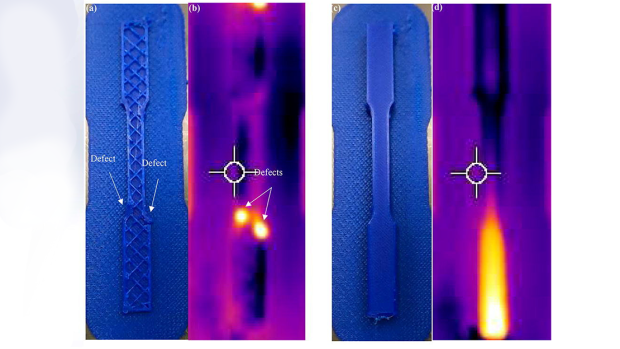
Additive Manufacturing (AM) — commonly known as 3D printing — involves manufacturing processes that depend on a user-defined set of optimized parameters. Monitoring and control of these processes in real-time can help achieve operational stability and repeatability to produce high-quality parts. By applying in-situ monitoring methods to AM procedures, defects in the printed parts can be detected.
In a new review in the Elsevier journal Materials & Design, Nikhil Gupta, professor of mechanical and aerospace engineering and director of the Composite Materials and Mechanics Laboratory at NYU Tandon, and Youssef AbouelNour, a doctoral student under Gupta’s guidance, examine the application of both imaging and acoustic methods for the detection of sub-surface and internal defects.
The imaging methods consist of visual and thermal monitoring techniques, such as optical cameras, infrared (IR) cameras, and X-ray imaging. The data is abundant as numerous studies have been conducted proving the reliability of imaging methods in monitoring the printing process and build area, as well as detecting defects.
Acoustic methods rely on acoustic sensing technologies and signal processing methods to acquire and analyze acoustic signals, respectively. Raw acoustic emission signals can correlate to particular defect mechanisms using methods of feature extraction. In their review, Gupta and AbouelNour discuss processing, representation and analysis of the acquired in-situ data from both imaging and acoustic methods. They also introduce ex-situ testing techniques as methods for verification of results gained from in-situ monitoring data.
Among their revelations:
- In-situ process monitoring methods can create a closed-loop AM process capable of defect correction and control, to ensure process stability and repeatability
- Integration of monitoring methods and machine learning in the AM process can help in continuously evaluating the quality of material deposition and developing intervention methods for correcting the defects in-situ
- And using x-ray Computed Tomography can lead to an in-depth evaluation of defects, as well as an assessment of the quality of in-situ monitoring methods.
- Integration of quality monitoring methods with the manufacturing methods eliminates the requirement to conduct the quality assessment separately, which can save a significant amount of time.
Separately, Gupta this year was honored as a Fellow of ASM International, a global organization of more than 20,000 members. The organization recognized Gupta for “pioneering contributions to the science and technology of lightweight polymer and metal matrix composites” and exceptional dedication to educating the public about scientific discoveries.
The work was supported by the Texas A&M Engineering Experiment Station and the National Science Foundation.
Correlating wavelength dependence in LiMn2O4 cathode photo-accelerated fast charging with deformations in local structure
Electric vehicles are one of the best tools we currently have to combat the effects of climate change. There is one outstanding problem though: it takes a significant amount of time to charge a vehicle. Even fasting-charging units take much longer to “fill up” an EV than do gas pumps to fill a tank. This may seem like a mere annoyance, but for people pressed for time this is no small acceptance hurdle between internal combustion and EVs.
There have been numerous efforts at the material-level to improve charging rates through engineered electrode coatings and nanostructuring of active materials, which limit energy density in the battery pack. Additionally, the study of light interaction with energy storage materials has gained interest for use in photo-rechargeable batteries, and integrated solar energy storage systems, though there have been few studies specifically investigating light interaction with commercially-relevant battery materials. Facilitation of electron movement in a battery material is a key for lowering the resistance to flow of charge. Administration of light to induce light-matter interactions is a possibility to locally alter the electronic nature of the material. In particular, Spinel LiMn2O4 (LMO), a cathode material, was shown to dramatically increase the charging current when exposed to white light during a voltage hold.
Now, a team of researchers led by André D. Taylor, professor of Chemical and Biomolecular Engineering and member of the Sustainable Engineering Initiative, as well as graduated PhD student Jason Lipton and Christopher Johnson of the Argonne National Laboratory, have discovered how different wavelengths of light can change the current in LMO cathodes. The team showed that illuminating with red light results in a higher charging rate compared to both ultraviolet illumination of equal optical power and dark conditions.
The team analyzed the effect of red light in the context of the electronic structure and possible excitations, and showed that Mn d-d electronic transitions occurring under red light illumination are largely responsible for the increased charging rate. They further demonstrated through X-ray absorption spectroscopy methods that LMO Mn-Mn bond distances shorten after d-electron excitation. The shrinkage in the crystal volume beneficially contributes to delithiation kinetics by lowering the resistance to lithium-ion conduction.
The results provide a roadmap for rapid discovery of candidate materials for photo-accelerated fast charging, through the review of calculated density of states data. Besides LMO, there is a wealth of materials to investigate with strong potential for photo-electrochemically induced activity. Once photo-acceleration is optimized for a given materials system, it is possible to envision using a small amount of the source current from a fast-charging station to power thin, flexible LEDs built into the spiral wound 18650 cells in a battery pack, enhancing the fast-charging capabilities in next-generation EVs while minimizing impact to energy density.
Engineered Multivalent Self-Assembled Binder Protein Against SARS-CoV-2 RBD
Since it appeared in 2019, COVID-19 has claimed over 6 million lives and upended society across the globe. The condition, caused by the SARS-CoV-2 virus, attacks cells in the lungs, heart and brain, among other organs. Researchers soon realized that the disease affected these organs so dramatically because its distinctive spikes binded to the angiotensin-converting enzyme 2, or ACE2 receptor. The protein - common in those organs - provides the entry point for the coronavirus to hook into and infect cells.
ACE2 receptors were thus the obvious choice when testing for or treating COVID-19. By recreating the ACE2 and introducing it to an infected body, the virus would bind to the protein, revealing itself in a test or occupying itself with a ‘fake’ receptor. But relying on the ACE2 protein alone may not provide sufficient binding to find and fight the virus.
Now, researchers from across NYU and led by Jin Kim Montclare, Professor of Chemical and Biomolecular Engineering at NYU Tandon, have created a new protein that has an increased ability to bind to viruses, creating a more efficient tool in the fight against COVID-19. The secret is creating a version of ACE2 that mimics a multivalent assembled protein (MAP). Multivalent assembled proteins are like naturally occurring antibodies. Their bodies have multiple sites that can link and bind to the viruses they are trying to attack, making them far more effective at hooking into their targets.
The ACE-MAP the team designed utilizes a coil-shaped cartilage oligomeric matrix protein, a nanomaterial that Montclare’s lab has used before in different applications. When fused with part of ACE2 across the coils surface, they found that the new materials greatly increased the valency compared to ACE2 alone, potentially binding to multiple virus bodies at a time rather than a single one.
This new material has potential uses in both detection and treatment. Because the biomaterial is so much more effective at attaching themselves to viral bodies, it would require fewer of them compared to the natural antibodies currently used in tests and therapeutics. This technology has possible uses in testing for and treating other diseases with known receptors and a similar structure, such as HIV. Ongoing research will confirm the effectiveness of ACE-MAP in other models, and may be a key component of the fight against COVID-19 in the future.
This work was supported by the National Science Foundation and the Army Research Office.
Spiropyran-functionalized photochromic nylon webbings for long-term ultraviolet light sensing
This research was performed under the direction of Maurizio Porfiri, Institute Professor of Mechanical and Aerospace Engineering, Biomedical Engineering, Civil and Urban Engineering and incoming Director of the NYU Center for Urban Science and Progress (CUSP) at NYU Tandon. Collaborators were Peng Zhang, former researcher in Porfiri’s group and now faculty member at Tennessee Tech, and John Ohanian, research scientist at Luna Innovations.
Webbing structures — from chin straps and parachute material, to space habitats — are extensively employed in engineering systems as load-bearing components. They are frequently subjected to extended ultraviolet (UV) light irradiation, which can affect their integrity and reduce their mechanical strength. Despite technological advancements in structural health monitoring, long-term UV sensing techniques for webbings remain under-developed.
In the study, "Spiropyran-functionalized photochromic nylon webbings for long-term ultraviolet light sensing," published as the lead research (and featured cover) in the Journal of Applied Physics, the investigators explored an enticing solution: a photochromic nylon webbing that, because it comprises spiropyran (SP) functionalized polymers, demonstrates color variation in response to extended UV exposure with controlled, color variation over multiple time scales that is conducive to UV sensing.
The team developed a mathematical model grounded in photochemistry to interpret experimental observations, unveiling the photochromic phenomenon as a multi-step, multi-timescale photochemical process involving several chemical species offering the basis for the inference of the webbing’s color
In their research, the team found that the decay rate of the webbings’ color demonstrated a dependence on the initial concentration of the SP dye. Webbings with the lowest dye concentration maintained sensitivity for four weeks, whereas at the highest dye concentration, they exhibited sensing capability after eight weeks. Thus dye concentration could be customized to meet the lifetime of the targeted applications.
The proposed photochromic webbing and the photochemistry-based mathematical model could inform future designs of UV-sensitive structures that maintain sensitivity under weeks of continuous sunlight UV exposure.
Closed-loop tracking and regulation of emotional valence state from facial electromyogram measurements
Emotions directly influence the way we think and interact with others in different situations. Additionally, when it interferes with rationality in our decision-making or perception, emotions play an undeniable role.
From another perspective, studies from different fields indicate that human emotions could be impacted by any changes in the environment. Thus, having a solid understanding of the dynamics of emotions could benefit individuals in multiple ways: from the enhancement of therapeutic solutions and maintaining well-being to the prevention of unpleasant emotions and inducing favorable ones. Decoding emotions has been an ongoing research among researchers, dictating joint efforts from behavioral, physiological, and computational angles.
According to Russell's circumplex model, emotions are defined in a two-dimensional arousal-valence circular space. Compared to the arousal index, which designates the severity of the emotional state, internal valence levels determine the quality of emotions. In a high arousal mood, feeling excited or happy is opposed to nervousness and feeling stressed. On the flip side and in low arousal conditions, staying calm stands on the opposite side of feeling bored. Hence, feeling pleasant, which refers to the positive valence, is one of the key factors in one’s health condition and could result in a better quality of life.
In a new piece of research, a team led by Rose Faghih, Associate Professor of Biomedical Engineering, follows the goal of establishing a mechanism to track an individual's emotional valence level and regulate it in a closed-loop framework. Since the emotional valence state is hidden and cannot be measured directly, the authors need to measure it indirectly.
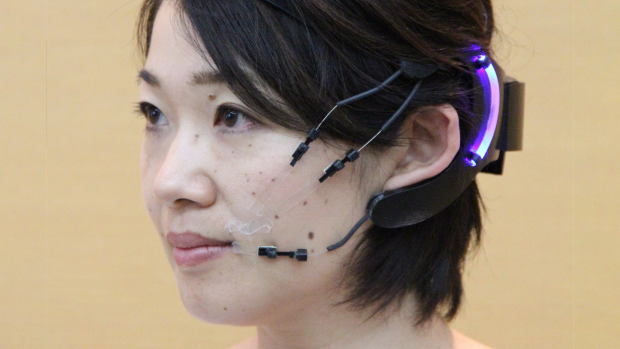
The use of wearable devices and designing decoders to gain insight into the internal brain states provides a good alternative to directly measuring brain activity. Inspired by recent advances in wearable technologies which could measure various physiological signals from humans in the loop, there exists possibilities to track emotional valence state indirectly and in a more practical manner. Among different physiological signals, it has been shown that facial electromyography (EMG) carries valuable information about the internal valence state. According to various research, facial EMG measurements of the zygomaticus muscle (zEMG) give the most distinct indicator of emotional valence state. In fact, changes in the zygomaticus muscle, which could be captured via wearables, could provide researchers with valuable information regarding one’s valence level.
In this research, the authors employ a mathematical framework to relate changes in zEMG signal for inferring the internal valence state. They extract corresponding features from the zEMG signal and estimate the internal valence state. Taking advantage of tracking of emotional valence state in a systematic way, they then propose a knowledge-based control architecture to close the loop and keep the estimated valence state within a favorable range. Within a closed-loop approach, biomarkers are collected to provide information regarding the individual's valence state to then automatically adjust the actuators in response to the current emotional state.
In silico results verify that, by making use of physiological data, the proposed controller could effectively regulate the estimated valence state. Ultimately, it is envisioned that the future outcomes of this research will include supporting alternative forms of self-therapy by using wearable machine interface architectures capable of mitigating periods of pervasive emotions and maintaining daily well-being and welfare. This study is the very first closed-loop control framework for regulating emotional valence state using facial muscle activity. This research suggests an important new step toward new clinical applications and the self-management of mental health. In the practical implementation of the proposed architecture, a wearable device would collect zEMG signal, and the appropriate practices (e.g., listening to music, breathing exercises) would be suggested to maintain the emotional valence levels within the favorable range.
Faghih, who joined NYU earlier in 2022, has been integrating research into her classroom teaching. The research covered in this Frontiers in Computational Neuroscience paper started as a course project in Faghih’s “State- Space Estimation with Physiological Applications” course at the University of Houston. In this class students had the opportunity to use advanced methods learned in the course to analyze physiological data in hands-on biomedical engineering projects designed by Faghih. Student authors Luciano Branco and Arian Ehteshami were graduate students in the course, and Hamid Fekri Azgomi, who recently completed his PhD under the supervision of Faghih, was a PhD student mentor for the project.
Hydrodynamic model of fish orientation in a channel flow
This research was led by Maurizio Porfiri, Institute Professor of mechanical and aerospace engineering, civil and urban engineering, and biomedical, and a member of the Center for Urban Science and Progress (CUSP) at NYU Tandon. Co-authors are Post-Doctoral Associate Peng Zhang of the department of mechanical and aerospace engineering at NYU Tandon and CUSP, and Sean D. Peterson of the University of Waterloo.
For over a century, scientists have sought to understand how fish orient against an incoming flow, even without visual and flow cues. In this study the researchers explore a potential hydrodynamic mechanism of fish rheotaxis — movement away or toward water currents — through the study of the bidirectional coupling between fish and the surrounding fluid.
The researchers point out that a major contribution of the proposed model is the treatment of the fish as an invasive sensor that both reacts to and influences the background flow, thereby establishing a coupled interaction between the fish and the surrounding environment.
By modeling a fish as a vortex dipole, a jet flow with a system of two vortices, in an infinite channel with an imposed background flow, they established a dynamical system that captures the existence of a critical flow speed for fish to successfully orient while performing cross-stream, periodic sweeping movements.
The researcher's juxtaposed their models with experimental observations in the literature on the rheotactic behavior of fish deprived of visual and lateral line cues. The crucial role of bidirectional hydrodynamic interactions unveiled by this model points at an overlooked limitation of existing experimental paradigms to study rheotaxis in the laboratory.

Enhancement of closed-loop cognitive stress regulation using supervised control architectures
In the modern world, any challenge might be a source of stress. The fast-paced life has the potential to induce emotional and cognitive stress. Feeling overwhelmed, anxious, and agitated are among the symptoms associated with high levels of cognitive stress. Conversely, loss of cognitive engagement might also prevent individuals from following their goals. A low level of positive stress, which is also called eustress, might cause memory problems, lack of motivation, and poor concentration. It can also negatively affect individuals’ productivity in the workplace. According to multiple reports from “Mental Health America”, the percentage of people with depression and anxiety is growing in the United States. Thus, it is crucial to establish a mechanism for tracking one's cognitive stress level and keeping it within a favorable range.
Influenced by the recent advances in wearable technologies and inspired by the fact that skin conductance signal carries important information regarding one’s internal arousal state, there could be practical approaches to handle cognitive stress levels in daily life. In response to any environmental stimuli, the human brain controls the autonomic nervous system in multiple ways. As changes in electrodermal activity (EDA) signals are impacted by the changes in sweat glands activation, variations in skin conductance signal can be tracked in real-time using wearable devices.
In order to eventually enable wearable technologies to track and regulate one's internal stress state, the lab of Rose Faghih has pioneered methods for estimating the internal arousal state by monitoring one's EDA, i.e., fluctuations in their skin conductivity. They have developed a mathematical framework to model the internal arousal state and relate it to the changes in skin conductance signal (i.e., a signal that can be measured via wrist-worn wearable devices). Moreover, to estimate the hidden arousal state, they have developed methods that analyze the EDA signal and extract the underlying arousal events that activate sweat glands.
Systematic modeling of the internal arousal state enables developing controllers to close the loop and regulate the estimated stress state. In this regard, well-established control techniques (i.e., linear quadratic regulator and model predictive controller) can be applied. In the process of finding the optimal control policy to regulate the stress state within these approaches, a corresponding cost function needs to be minimized. Hence, the performance of these control systems highly depends on the selection of corresponding objective functions.
As the researchers are dealing with a human-in-the-loop problem, the process of finding the appropriate objective functions becomes more complicated. To overcome this challenge and enhance the performance of the closed-loop system, Faghih and Fekri Azgomi, who recently completed his PhD under the supervision of Faghih, developed a supervised controller that includes a knowledge-based supervised layer that adjusts the objective function and tunes parameters in real-time. In this supervised architecture, a fuzzy system is utilized to continuously update parameters in the objective function to adjust environmental variations. The results verify the effectiveness of proposed architecture in keeping the estimated stress state within a desired range by designing a supervised layer on top of the optimal control formulation.
Furthermore, the proposed supervised control architectures provide an excellent setting to incorporate the relevant medical expertise to enhance the closed-loop system. These novel supervised control approaches could be further expanded to deliver adaptive and robust closed-loop characteristics to address inter- and intra-subject variations.
There also exists great potential in implementing the supervised control architectures in other closed-loop applications such as adaptive deep brain stimulation for the treatment of neurodegenerative brain disorders and automating medication intake in a wide range of diseases. Once one models and tracks one's internal states, utilizing supervised control methodologies would result in enhancing the closed-loop treatment practices in a more personalized manner.