

New Student Preparation Hub
Jumpstart your journey before you arrive on campus.

We’re excited to have you join the CUSP community! To support your transition, we’ve put together a range of resources to help you learn more about and prepare for the M.S. in Urban Data Science program.
We also encourage you to check out NYU Tandon’s Admitted Students Resources, where you’ll find essential next steps, upcoming events, and ways to connect with fellow students. Plus, keep an eye out for an invitation to NYU Tandon Admitted Students Day, where you’ll have the chance to visit campus, meet faculty, and engage with your future classmates.
CUSP Community Engagement Series
As you prepare to join CUSP, we invite you to take part in a series of virtual and in-person events designed specifically for prospective, admitted and deposited students. These range from virtual information sessions, interactive Masterclass sessions, Meet the Directors conversations, registration overview workshops, opportunities to chat with current students and alumni and more. Together, these experiences provide valuable insights into the program, introduce you to faculty, staff, current students and alumni, and help you begin building connections within the CUSP community.
We encourage you to bookmark and follow us on our Zoom hub, where we will continue to add new sessions throughout the coming months and into the summer. Be sure to check back regularly so you don’t miss opportunities to engage, learn, and connect ahead of the semester.
Virtual Information Sessions
Explore the power of Urban Data Science and join us for an interactive webinar to learn more about our innovative M.S. Urban Data Science and Informatics program.
This is a great opportunity to connect with us and learn how we equip students with the technical skills and interdisciplinary perspective to harness data for real-world impact, shaping smarter, more sustainable, and equitable cities.
Follow and bookmark our Zoom hub for more information on upcoming sessions!
Please check back for additional dates.
- Monday, September 28th from 10:00 - 11:00 AM
- Tuesday, October 13th from 8:30 - 9:30 AM
- Friday, October 30th from 8:30 - 9:30 AM
- Monday, November 9th from 8:30 - 9:30 AM
- Monday, November 23rd from 8:30 - 9:30 AM
Admitted Student Information Sessions
We’re thrilled to have you join our community and can’t wait to introduce you to everything the M.S. in Urban Data Science program has to offer.
To help you prepare for this exciting new chapter, we invite you to attend an information session as it's an excellent opportunity to further explore the program, connect, and get answers to any questions. In these sessions, we will provide an in-depth academic overview into the curriculum, collaborative research projects, experiential learning programming, hands-on learning and funding opportunities, student employment, professional development and more!
We offer multiple sessions to fit different schedules—choose the one that works best for you. Follow and bookmark our Zoom hub for more information on upcoming sessions!
Masterclass Series
As you prepare to join CUSP, we’re excited to offer you an exclusive opportunity to engage with our community before the program begins! Our CUSP Masterclass Series is designed to keep you connected, inspired, and ready for the journey ahead.
We’ll host various virtual masterclasses on a practical and engaging topic led by CUSP community members. These interactive sessions require minimal prior experience and are designed to be completed within an hour—making them a fun and accessible way to stay engaged.
Follow and bookmark our Zoom hub for more information on upcoming sessions!
Data, Communities, and Cities: Learning Urban Science Through Real-World Practice | Fall 2027 Dates TBC
Course Description:
This hands-on workshop, led by Industry Assistant Professor Manny Patole, is an introduction on how urban science becomes more meaningful when data is connected to people, place, and lived experience. Participants will explore Community-Centered Data Science as an applied approach that combines technical analysis, policy understanding, and community knowledge to better define urban problems and develop practical responses. Through examples drawn from student work at NYU Center for Urban Science and Progress, the session demonstrates how real-world projects with external partners help translate classroom learning into public impact. The class highlights how students engage urban systems critically, work across disciplines, and use both traditional and non-traditional data to address complex challenges facing cities.
Learning Objectives:
- Explain how community knowledge strengthens urban data analysis and problem framing
- Identify how applied student projects integrate data, policy, and civic context
- Recognize how urban science supports practical decision-making across sectors
Climate Risk Analysis and Urban Sustainability | Fall 2027 Dates TBC
Course Description:
This Masterclass session is presented in collaboration with the Center for Urban Science + Progress and the department of Mechanical and Aerospace Engineering, highlighting the interdisciplinary nature and partnership between the two programs. Led by Assistant Professor Yuki Miura, who holds a joint appointment between the two departments, this course serves as a teaser to her CUSP-GX 8123 // ME-GY 8123 - Climate Risk Analysis and Urban Sustainability course offered in the Spring. The masterclass examines climate risk from an end-to-end, systems perspective, focusing on how physical hazards such as hurricanes, floods, and heatwaves propagate through people, infrastructure, and urban systems. The course integrates theory with real-world datasets and applied case studies, supported by guest speakers from academia, industry, and the public sector. This course is designed for graduate students interested in risk and climate for practice and research.
Learning Objectives:
- Gain a thorough understanding of fundamental concepts of climate risk: natural hazards, urban vulnerabilities, exposure, and risk.
- Build introductory skill sets to state-of-the-art climate risk analysis with an understanding of data requirements and existing limitations.
- Gain critical insights into factors and mechanisms that can increase urban risk to natural hazards, including urban growth processes and climate change.
- Develop skill sets for project presentation on climate risks and visualization of risk data
The Human Side of Cities | Fall 2027 Dates TBC
Course Description:
Based on the course Cities in Motion: Urban Design through Digital Twins, this interactive masterclass, led by Industry Assistant Professor Rishabh Chauhan, explores cities as lived environments shaped by human perception, thoughtful urban design, and meaningful public spaces. The session further introduces ideas such as imagined geographies, emotional attachment to place, and the influence of media on the geography of reputation. Through reflective activities, visual comparisons, and discussions drawn from urban theory, participants will be encouraged to rethink cities through the lens of human experience.
Learning Objectives:
- Reflect on how perception, emotion, and memory shape human understanding and experience of cities.
- Identify characteristics of lively, human-centered urban environments.
- Examine how media, culture, and social representation influence the way cities are imagined and understood
Big Data Beneath New York City's Streets | Fall 2027 Dates TBC
Course Description:
This Masterclass session is presented in collaboration with the Center for Urban Science + Progress and the department of Civil and Urban Environmental Engineering, highlighting the interdisciplinary nature and partnership between the two programs. Led by Professor Debra Laefer, who holds a joint appointed by the two departments, this course will provide you insights into the complex and curious history of what lies beneath New York City's streets, the enormous quantities of affiliated open data, and strategies for extracting commercial opportunities and policy value from that data.
Learning Objectives:
- Students will be able to articulate the multiple uses for the underground, including the various utility types
- Students will be able to locate large open data sets related to the subsurface
- Students will gain new insight into the concept of subsurface zoning both within and outside the public right-of-way
Tell a Story with a Simple Map | Fall 2027 Dates TBC
Course Description:
Led by our Director of M.S. Urban Data Science program and Industry Assistant Professor Anton Rozhkov, you will learn how to unlock the power of storytelling through maps! In this hands-on workshop, you’ll learn how to transform real NYC Open Data into interactive, insightful maps using an easy-to-use online mapping tool. Whether you’re a beginner or have some experience with data visualization, this session will guide you through the process of finding, analyzing, and mapping public data to uncover trends and tell compelling narratives. We’ll start by exploring NYC’s vast open data resources, covering everything from transit patterns to environmental data. Then, using a user-friendly mapping platform, you’ll learn how to visualize this information to communicate key insights. By the end of the workshop, you’ll have built your own simple map that tells a story.
Learning Objectives:
- Discover & access NYC open data – learn how to find and interpret publicly available datasets to uncover meaningful insights
- Create interactive maps – use an online mapping tool to visualize data and craft engaging, informative maps
- Tell a story with data – develop a clear narrative using mapped data to highlight trends, patterns, or issues in NYC
Urban AI for Human Mobility | Fall 2027 Dates TBC
Course Description:
This Masterclass session is presented in collaboration with the Center for Urban Science + Progress and the department of Technology Management and Innovation, highlighting the interdisciplinary nature and partnership between the two programs. Led by Assistant Professor Takahiro Yabe, who holds a joint appointment between the two departments, this session introduces incoming CUSP students to the emerging field of human mobility and urban AI. The session will explore how large-scale mobility data, sensing technologies, and artificial intelligence can help us better understand how people move through cities, respond to disruptions, and interact with urban systems. Through examples from transportation, disaster response, and urban planning, students will gain a preview of how data-driven methods can support more adaptive, resilient, and human-centered cities.
Learning objectives:
- Understand the core concepts of human mobility and urban AI
- Explore how mobility data and AI can be used to study urban systems
- Describe applications in transportation, disaster response, and urban planning
Designing Public Interest AI | Fall 2027 Dates TBC
Course Description:
This Masterclass session is presented in collaboration with the Center for Urban Science + Progress and the department of Technology Management and Innovation, highlighting the interdisciplinary nature and partnership between the two programs. Led by Assistant Professor Graham Dove, who holds a joint appointment between the two departments, this session introduces a capabilities lens for understanding AI, and how this can be used to help non-profit organizations in the human-services sector respond to the challenge of safely and effectively realizing AI’s potential benefits. The session will introduce you to organizations that provide a wide variety of services to support vulnerable members of society. These organizations are typically under-resourced, and so there is almost no room for getting these important decisions wrong. It will then briefly introduce a capability-focused approach to thinking about how AI can help identify and respond to low-risk yet impactful opportunities, illustrated with examples from research. This course provides a taster for CUSP-GX 8823 // MG-GY 8823 “Digital Civics for Social Innovation” taught in Fall 2026 and MG-GY 8813 // CUSP-GX 8813 “Design for Innovation with AI & ML” taught in Spring 2027.
Learning Objectives:
- Introduce students to the role that non-profit organizations fulfill in providing crucial services for New York City residents
- Introduce students to opportunities and challenges offered by AI
- Introduce students to a way of thinking about how low-risk AI experiments can be implemented using a capabilities framework
Urban Climate | Fall 2027 Dates TBC
Course Description:
This Masterclass session is presented in collaboration with the Center for Urban Science + Progress and the department of Mechanical and Aerospace Engineering, highlighting the interdisciplinary nature and partnership between the two programs. Led by Assistant Professor Anamika Shreevastava, who holds a joint appointed by the two departments, this course introduces the science of urban climates, focusing on how cities modify atmospheric processes and how these changes impact energy, water, air quality, and human well-being. It develops a process-based understanding of urban climate systems — from surface–atmosphere interactions and boundary layer dynamics to urban heat islands, hydrology, and climate-sensitive design. Students will learn how urban form, materials, and human activities reshape fundamental physical processes, and how these insights can inform climate-resilient and equitable urban planning.
Learning Objectives:
- Understand the physical processes that distinguish urban climates from rural environments, including radiation, energy balance, airflow, and hydrology.
- Analyze how urban form, land cover, and materials influence local climate conditions such as the urban heat island effect.
- Apply quantitative and observational methods — including remote sensing, field instrumentation, and numerical modeling — to assess urban climate phenomena.
- Evaluate climate-sensitive design strategies and planning approaches that support resilient and equitable cities.
Spring 2025 Masterclass Presentations Links
|
Title |
Instructor |
Links |
|---|---|---|
|
Reflecting Towards a Purpose |
||
|
Mapping Housing Inequality |
Ziwei Zhang (CUSP ’25) |
|
|
Heatmap Sprint with Python |
Nissim Ram (CUSP ’26) |
|
|
The Art and Science of Data Visualization |
||
|
The Need For Municipal Solid Waste (MSW) Data Characterization: A Pilot Project Experience |
|
|
|
Tell a Story with a Simple Map |
||
|
Prototyping Community Projects |
||
|
Urban Environments & Mental Health |
Spring 2025 Masterclass Descriptions
- March 28, 2025 — Reflecting Towards a Purpose
Led by Peter Huu Tran, CUSP’s Assistant Director of Academic Administration and Student Engagement, this interactive workshop invited students to explore their sense of purpose and how it aligns with urban science. Through guided reflection and discussion, participants articulated their motivations, refined their understanding of urban science, and crafted a personal mantra to help center their class selection and career aspirations.
Learning objectives included: (1) Connecting Reflection to Purpose: Participants defined their purpose and how it connects to academic and career goals; (2) Understanding Urban Science: Attendees explored personal interpretations of urban science and its role in shaping cities and communities; (3) Personal Mantra: Each student developed a guiding statement to inform their class choices, research interests, and career direction.
- April 1, 2025 — Mapping Housing Inequality
Led by Ziwei Zhang (NYU CUSP ’25), this hands-on workshop introduced participants to the ArcGIS Online Map Viewer, focusing on how to visualize and analyze spatial data for real-world applications. Using NYC eviction data and U.S. Census Bureau income statistics, students created thematic maps, explored spatial relationships, and gained insights into how GIS can be used for social analysis.
Learning objectives include: (1) Understanding Basic GIS Concepts: Students learned the fundamentals of Geographic Information Systems (GIS) and how ArcGIS Online facilitates spatial analysis and visualization; (2) Creating and Customizing Thematic Maps: Students used ArcGIS Online’s tools to add, style, and analyze datasets, including NYC eviction data and census tract income layers; (3) Performing Spatial Analysis: Students Applied techniques like data aggregation and filtering to uncover patterns in socioeconomic data, improving decision-making and storytelling with maps.
- April 7, 2025 — Heatmap Sprint with Python (Presentation Slides and GitHub Repository)
Led by Nissim Ram (NYU CUSP ’26), this workshop guided participants through the process of creating compelling graphical visualizations with just a few lines of Python using powerful plotting libraries like Seaborn and Matplotlib! Attendees learned to convey critical insights through heatmaps—whether analyzing trends, mapping geographic data, or uncovering patterns in large datasets. This hands-on course allowed participants to follow along in real-time, ensuring they left with a polished heatmap and practical skills to apply immediately.
Learning objectives included: (1) Understanding the Fundamentals of Heatmaps and Geographic Heatmaps: Students learned how both traditional and spatial heatmaps work, and when to use each; (2) Creating and Customizing Heatmaps using Python: Students used libraries like Seaborn, Matplotlib, and Plotly to generate standard and geographical heatmaps; (3) Applying Heatmaps to Real-world Spatial Data: Participants visualized geographic trends, such as population density or temperature variations.
- April 16, 2025 — The Art and Science of Data Visualization
Led by Rishabh Chauhan, Industry Assistant Professor at CUSP, this workshop offered hands-on experience in data visualization using Python, exploring libraries like Matplotlib, Seaborn, and Plotly to create meaningful visualizations from real datasets. This session covered best practices and identified potential pitfalls, as well as the crucial role of data visualization in urban science and policy-making.
- April 24, 2025 — The Need For Municipal Solid Waste (MSW) Data Characterization: A Pilot Project Experience
Led by Tekle Kahsay, Visiting Associate Professor of Environmental Planning at CUSP, this workshop discussed the purpose of analyzing segregated MSW data, highlighting its environmental and economic importance based on a practical pilot project carried out in Addis Ababa and offering the perspective of an emerging megacity in a developing country. The experience details a demonstrated change from a burden of dumping into an important income-generating source of employment. The project involved a systematic separation of solid waste into four categories: metals, plastic and papers, glass and related, and organic. All three categories were sold directly to recyclers while the organic waste was composted and used as an organic fertilizer.
Learning objectives included: (1) Understanding the nature of MSW data and its different categories; and (2) Perceiving how segregated MSW data was converted from a burden of dumping into a resource that created opportunities for both employment and income—in addition to environmental benefits. By introducing a separation system involving four categories (metal, glass, paper or plastic, and organic waste), each was transformed into an income-generating opportunity. Waste segregation training was offered by experts to both households and to those who collect separated waste and sell it to reusers and recyclers.
- May 2, 2025 — Tell a Story with a Simple Map
Led by Anton Rozhkov, Industry Assistant Professor and Director of the M.S. in Urban Data Science program at CUSP, this hands-on workshop showed how to transform real NYC Open Data into interactive, insightful maps using an easy-to-use online mapping tool. The session guided students through the process of finding, analyzing, and mapping public data to uncover trends and tell compelling narratives. It started by exploring NYC’s vast open data resources, covering everything from transit patterns to environmental data. Then, using a user-friendly mapping platform, students learned how to visualize this information to communicate key insights. By the end of the workshop, each student built a simple map that tells a story. Unlock the power of storytelling through maps!
Learning objectives included: (1) Discovering and Accessing NYC Open Data: Students learned how to find and interpret publicly available datasets to uncover meaningful insights; (2) Creating Interactive Maps: Attendees use an online mapping tool to visualize data and craft engaging, informative maps; (3) Telling a Story with Data: Participants developed a clear narrative using mapped data to highlight trends, patterns, or issues in NYC.
- May 7, 2025 — Prototyping Community Projects
Led by Manny Patole, Industry Assistant Professor at CUSP, this interactive class invited students to explore how Design Thinking and Community Science can be used to co-create projects that reflect community needs and aspirations. Through hands-on exercises and case studies, participants learned practical strategies to collaborate as equal partners, ensuring that projects are inclusive, actionable, and sustainable.
A key activity involved creating an empathy map, helping participants understand what different community partners think, feel, say, and do when given the opportunity to share. This exercise fosters deeper insight into community perspectives, enhancing the design and implementation of impactful projects.
Whether you're a policymaker, researcher, nonprofit leader, or grassroots organizer, this session provided valuable tools to prototype, test, and refine ideas with communities—not for them.
Learning objectives included: (1) Applying Design Thinking for Collaborative Problem-Solving: Students learned how to use human-centered design principles to co-develop, test, and refine community projects that address real needs through an iterative process; (2) Utilizing Community Science to Integrate Local Knowledge: Participants understood how to engage community members as community scientists, leveraging their lived experiences and expertise to shape data-driven, community-led solutions; (3) Developing Empathy-Driven Insights for Inclusive Project Design: Students used empathy mapping to analyze what community members think, feel, say, and do, ensuring that project development is responsive, inclusive, and reflective of diverse perspectives.
- May 14, 2025 — Urban Environments & Mental Health
Led by Hanxue Wei, Industry Assistant Professor at CUSP, this workshop explored how the intersection of urban data science and public health offers opportunities to design cities that support mental well-being and how spatial data, environmental metrics, and computational modeling can be leveraged to analyze the relationship between urban environments and mental health outcomes. Students engaged in team-based activities to: (1) examine real-world case studies on how urban factors may impact mental health, and (2) propose data-driven strategies for evidence-based urban interventions.
Learning objectives included: (2) Learning how urban data science can be used to analyze the relationship between urban environments and urban health; (2) Working with real-world case studies to propose data collection strategies, modeling approaches, and potential urban interventions to improve mental health outcomes.
CUSP Community Sessions
Connect directly with the people who make up the CUSP community—faculty, staff, current students and alumni. We encourage you to join these informal and interactive sessions, which are designed to give you a firsthand perspective on the program, to ask candid questions about academics, student life, career pathways, and available opportunities. Our goal is to help you feel more confident as you solidify your decision to join CUSP.
Follow and bookmark our Zoom hub for more information on upcoming sessions!
Please check back for additional dates.
From Students, To Students | Fall 2027 Dates TBC
Start a casual conversation and get to know your graduate assistants! Open conversations organized by graduate assistants sharing their own unique stories and experiences about their undergraduate backgrounds, experiences in New York, CUSP, and more!
Living in NYC - Beyond the Classroom | Fall 2027 Dates TBC
New York City is a place with all the unique and exciting stories! Learn from your graduate assistants about their experiences living in New York City. Get to know some of their favorite unique places that they would enjoy in their free time in New York City!
Insider's Guide at CUSP | Fall 2027 Dates TBC
Seeking tricks and tips at CUSP and NYU? This is the right session for you! Listen to the graduate assistant about some of the insider’s guides to CUSP and NYU! Resources and things you might want to know before coming here!
Meet the Directors | Fall 2027 Dates TBC
This is an open and informal talk about where CUSP is headed, what’s thriving, and how your experience as a student will be shaped by research, innovation, and global collaboration. This behind-the-scenes conversation with industry professionals—who also serve as directors of CUSP—offers a unique opportunity to connect directly with program leadership to gain comprehensive knowledge of the vision, priorities, and opportunities that will define your experience.
Lead with Example | Fall 2027 Dates TBC
Are you curious about how students get involved in on-campus jobs? This session is just what you need! You will learn useful information and tips on securing an on-campus job. From exploring opportunities to connecting with people, submitting resumes, and finally getting accepted for the position! Be sure to attend the session for more details!
CUSP Fall Launch & Ice Cream Social | Fall 2027 Dates TBC
Mandatory in-person attendance
To kick off the semester, join us at the Fall Launch, where you'll meet your classmates, connect with the CUSP Education team in person, learn more about the curriculum, key policies, and program experiences, followed by locally-crafted ice cream and a chance to mingle with each other!
Urban Research Methods Camp | Fall 2027 Dates TBC
An intensive three-day bootcamp designed specifically for students who are passionate about urban research — whether you're considering a PhD down the road or simply want to go deeper into how cities are studied and understood. Through hands-on sessions tailored to urban contexts, you'll explore research methodologies, frameworks, and questions that sit at the heart of urban science. It's also a great way to settle in, meet your cohort, and make the most of the days before classes begin. Please sign up here if you are interested in participating. This is only open to CUSP's incoming fall 2026 cohort.
Explore our Course Lookbook
Get a sneak peek at our course offerings for the upcoming academic year! This guide provides additional context to help you make informed enrollment decisions.
Meet the CUSP Graduate Assistants
Get to know CUSP's Graduate Assistants, who are here to share their experiences, answer your questions, and help you navigate the journey to joining CUSP.
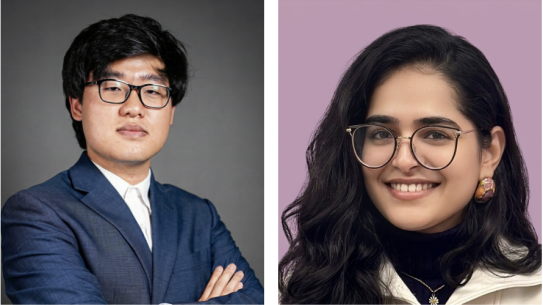
Johnny Xie
Connect with Johnny on LinkedIn, or schedule an appointment to chat directly.
Zhiwei (Johnny), an industrial designer and urban science data analyst from Arcadia, California, completed his undergraduate studies in industrial design and design engineering. With a fervent passion for design, he enjoys transforming concepts from sketches into tangible products. His objective is to impact urban planning through data analysis by utilizing his skills in mathematics and statistics. He is eager to contribute his enthusiasm and expertise to the community.
Check out his portfolio.
Vaishnavi Potphode
Connect with Vaishnavi on LinkedIn, or schedule an appointment to chat directly.
Vaishnavi Potphode is a Graduate student at NYU Tandon’s Center for Urban Science and Progress (CUSP), and was recognized as a Rising Scholar in 2025. She comes from a non-technical background, having completed her Bachelor's in Architecture from DYPSOA, and a Masters in Urban Planning from CEPT University, both from India. Currently, she is pursuing her second Masters in Urban Data Science to further bridge the gap between physical design and analytical insights.
Her professional journey has spanned the full spectrum of the built environment, from the on-site execution of architectural and interior design projects to development plans and policy-making initiatives aimed at creating better cities. Over the past year at CUSP, Vaishnavi focused on upscaling her technical toolkit by enrolling in Applied Data Science and Machine Learning courses. She has consistently kept her spatial analysis skills updated with GIS while exploring the vital intersection of governance and community engagement through her recent work with the Mayor’s Office in Tulsa last year.
Beyond her academic and technical pursuits, Vaishnavi serves as the Director of Marketing and Design for TechSHRM club at NYU Tandon. She is deeply interested in the synergy between planning, policy, and data science streams. Having navigated this transition herself, she is very excited to serve as a Graduate Assistant to help prospective students as they find their own path, remembering well that she was once in their place.
Arya Roi
Connect with Arya on LinkedIn or schedule an appointment to chat directly.
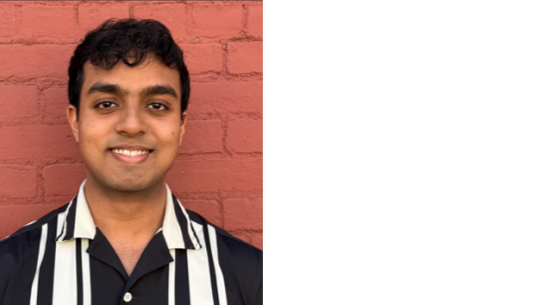
Arya Roi is a second year graduate student at NYU’s Center for Urban Science and Progress (CUSP) and currently serves as a Graduate Assistant at CUSP. He holds a Bachelor’s degree in Electronics and Communication Engineering and brings professional experience from SIEMENS, where he worked as a Data Scientist on projects involving cutting-edge Artificial Intelligence to improve the accuracy and efficiency of industrial systems.
Passionate about research and innovation, Arya has published two research papers — one during his undergraduate studies and another during his tenure at SIEMENS. His interests strongly lie at the intersection of AI, urban livability, and data-driven decision making.
Since joining CUSP, Arya has actively participated in multiple hackathons, including events hosted at the American Museum of Natural History and in collaboration with NYIT. Through these experiences, his primary goal has been to leverage technology and data science to improve the livability of urban communities. He is also deeply passionate about data visualization and presented his work at an NYU data visualization competition.
Arya has been actively involved in research since his first semester at CUSP under the guidance of Professor Rishabh Chauhan and Professor Yuki Miura. He also had the opportunity to present at NYU’s Earth Day sustainability event this year, further reflecting his commitment to impactful and socially driven innovation.
As someone who values collaboration, mentorship, and community, Arya is eager to foster the spirit of CUSP among incoming students and support them in achieving their academic and professional goals.
“Growth begins where fear ends — the biggest risks often lead to the most meaningful impact.”
Apply for Funding through the CUSP Rising Scholar Program
We offer a limited number of scholarships to incoming students in the M.S. in Urban Data Science program, covering the tuition for three credits in their first semester. Admitted students receive an invitation to apply after submitting their deposit.
Work towards a CUSP Foundations Badge with the Urban Computing Skills Lab
The CUSP Foundations Badge is a learning credential that validates your expertise in the interdisciplinary field of urban informatics. It can be showcased on LinkedIn, your CV, and other professional networking platforms to highlight your skills. Get a head start on earning your Badge by enrolling in the Urban Computing Skills Lab, an 8-week online summer course available at no additional cost to admitted students upon submitting their deposit. This flexible, self-paced course walks you through urban science tasks and analyses, ensuring you feel confident before classes begin.
Access NYU Online Resources
To build your skills in data science and computing, we recommend the following resources designed exclusively for the NYU community.
- NYU Libraries Research Guides for Geographic Information Systems, Data Science, and Computer Science