When Disaster Strikes, People Often Flee to Places That Feel Familiar
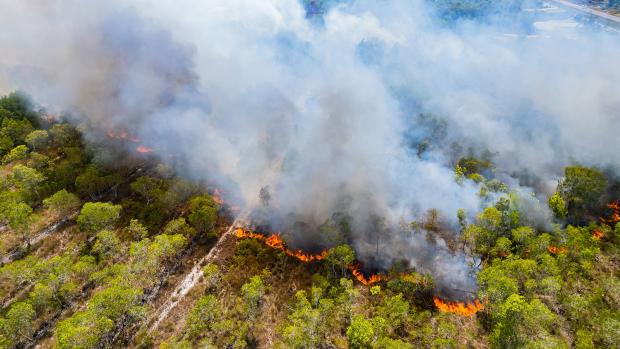
When the Marshall Fire tore through suburban Colorado in late 2021, residents had only hours to decide where to go. Some fled to nearby towns. Others stayed farther away for weeks or months. Now a recent study published in Humanities and Social Sciences Communications suggests those decisions were shaped not only by distance or danger, but also by something more human: the pull of familiar communities and social ties.
Researchers at NYU Tandon analyzed anonymized mobile phone location data from more than 200,000 devices in Colorado before and after the fast-moving wildfire, which destroyed more than 1,000 homes and displaced thousands of people. They combined those movement patterns with demographic data and measures of social connectedness between neighborhoods. Their conclusion: evacuees were more likely to choose destinations that resembled their home communities or where they had stronger social links.
“Even during a chaotic emergency, people do not move randomly,” says lead author Takahiro Yabe, Assistant Professor of Technology Management and Innovation and the Center for Urban Science + Progress. “They tend to seek places where they feel socially connected or where the community feels familiar.”
The study adds nuance to how scientists understand evacuation behavior. Traditional models often assume people head to the nearest available safe place or to larger population centers. But this research found that social factors strongly influenced where people actually went.
Most evacuees relocated between 20 and 60 kilometers from the fire zone, suggesting many wanted to remain relatively close to home. Yet when researchers compared real evacuation destinations with simulated destinations based only on population size and distance, the real destinations scored significantly higher for demographic similarity and friendship connections. In other words, people often chose places where they knew someone, or places that looked socially like where they came from.
The findings also revealed inequality in who could access those familiar refuges. Residents from whiter, wealthier, and more highly educated neighborhoods were more likely to evacuate to destinations with stronger social similarity and connectedness. Black, Asian, and lower-income populations were less likely to do so. That gap may matter because social networks can provide practical help during crises: a spare bedroom, child care, transportation, local knowledge, or emotional support.
“Access to social capital can shape recovery just as much as physical damage does,” says Vaidehi Raipat, a PhD candidate and lead author on the paper. “If some groups have fewer options to relocate into supportive communities, that can deepen existing inequalities after disasters.”
The team also examined what happened after the initial evacuation. People who relocated to areas with stronger social connectedness were more likely to return home over the following months. But those who moved to places that were demographically similar to their original communities were somewhat less likely to return, suggesting that a comfortable temporary destination may sometimes become a longer-term alternative.
That distinction could help officials plan for future climate disasters, which are becoming more frequent and more destructive. Wildfires, floods, and storms increasingly force sudden movement, yet emergency planning still tends to focus on roads, shelters, and hazard maps rather than the social geography of where people want to go.
The researchers argue that disaster response could improve by accounting for community ties. Knowing where evacuees are likely to head could help agencies position aid, anticipate population surges, and better support displaced residents. It could also identify people who lack strong networks and may need more assistance.
The study focused on one wildfire, so its authors caution that patterns may differ in hurricanes, floods, or other disasters. Still, the broader message is clear: in moments of upheaval, people often search not just for safety, but for belonging.