

Research News


The genetic basis of tail-loss evolution in humans and apes
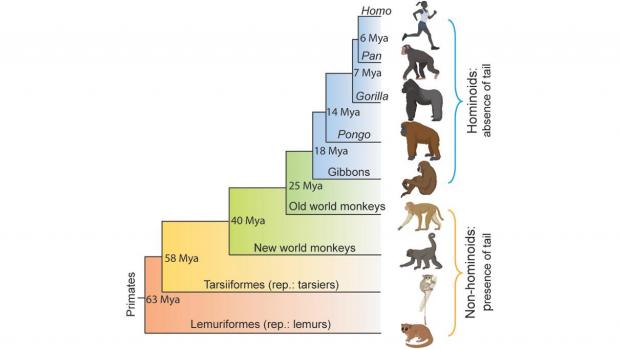
NYU researchers at the Tandon School of Engineering and the Grossman School of Medicine are trying to understand an age-old question that bedeviled most of us at some point: Why do all the other animals have tails, but not me? The loss of the tail is one of the main anatomical evolutionary changes to have occurred along the lineage leading to humans and to the “anthropomorphous apes.” The loss of tails has long been thought to have played a key role in bipedalism in humans.
This curiosity-based question was addressed by using bioinformatics tools to look at differences between the genomes of humans (and the other apes, which all lack tails) and monkeys (which all have tails, like most other mammals).
Bo Xia, a PhD candidate studying this problem in the labs of Jef Boeke and Itai Yanai, looked at sequence alignments of all genes known to be involved in tail development and discovered a movable piece of DNA called a retrotransposon inserted in the TBXT gene, which is a developmental regulator crucial for tail development. The reason it had not been spotted before was due its placement in noncoding (intron) DNA, where most people would not look for mutations.
Examination of the gene, which carried other copies of the Alu retrotransposon, led to a model for how the Alu might disregulate splicing of TBXT RNA. The researchers engineered a mouse model to test this hypothesis and found that indeed, many mice with a suitably altered genome lacked a tail. They also found that the mice without tails also suffered from spinal cord malformations. It’s possible our ancestors who lost their tails also had this side effect, which may contribute to some health problems even today.
Evaluation of lupus arthritis using frequency domain optical imaging
Systemic lupus erythematosus (SLE), commonly referred to as simply “lupus”, is an autoimmune disorder where the body’s immune system attacks healthy tissue. Lupus affects somewhere between 20 to 150 people per 100,000, with variations among different racial and ethnic groups. The disease often causes arthritic symptoms in the joints, which can be debilitating in some cases.
Despite the severity of the disease, identification of lupus arthritis and assessment of its activity remains a challenge in clinical practice. Evaluations based on traditional joint examination lack precision, due to its subjective nature and accuracy in situations such as obese digits and co-existing fibromyalgia. As such, these examinations have limited ability to render quantitative data about improvement and worsening.
Recently, imaging technology, especially ultrasound (US) and magnetic resonance imaging (MRI), has enabled more objective and detailed assessment of articular and periarticular abnormalities with higher sensitivity. However, MRI and US are expensive and time-consuming. Furthermore, US has been found to be very operator dependent. Therefore, both modalities are currently not routinely used in practice. There is a clear unmet need for a simple, reliable, non-invasive and low-cost imaging modality that can objectively assess and monitor arthritis progress in patients with lupus.
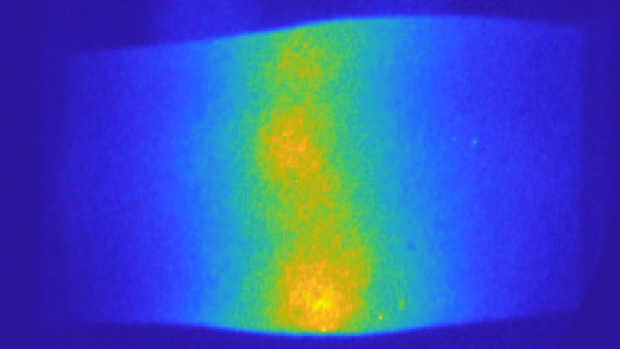
Now, researchers at NYU Tandon in collaboration with Columbia University are exploring optical imaging technology as a reliable way to diagnose patients and assess the progression of the disease. The researchers, including Research Assistant Professor Alessandro Marone and Chair of the Biomedical Engineering Department Andreas H. Hielscher, found that frequency domain optical imaging could reliably identify lupus arthritis, and could be used to track how the disease progressed.
The results provide strong evidence that frequency domain optical images could provide objective, accurate insights into SLE that were not possible or economically feasible using other technologies. The light diffusion identified inflammation in the blood vessels around joints, similar to but distinct from the symptoms caused by rheumatoid arthritis. With this technology, caregivers may not have to rely on patient feedback to track the progression of lupus, but can see it in action.
Optical imaging methods have been used in studies comparing osteoarthritis, rheumatoid arthritis (RA) and healthy controls. The results of those studies highlighted that patients suffering from RA have higher light absorption in the joint space compared with healthy subjects. This is likely due to the presence of inflammatory synovial fluid that decreases light transmission through the inflamed joints. But these observations have never been used to study lupus before, and these findings could provide a reliable, rapid, and cost-effective method of assessing joint involvement in lupus patients.
Mobility in post-pandemic economic reopening under social distancing guidelines: Congestion, emissions, and contact exposure in public transit
The COVID-19 pandemic has raised new challenges for urban transportation — “back to the office” policies, staggered teleworking hours, and social distancing requirements on public transit may exacerbate traffic congestion and emissions due to shifts in travel modes and behaviors.
A team consisting of C2SMART members Ding Wang, Yueshuai Brian He, Jingqin Gao, Joseph Chow, Kaan Ozbay, and researchers from Cornell University, proposed a simulation tool for evaluating trade-offs between traffic congestion, emissions, and COVID-19 spread mitigation policies which impact travel behavior. Their research has been published in the November 2021 volume of the Transportation Research Part A journal.
Using New York City as a case study, the team used open-source agent-based simulation models to evaluate transportation system usage. Additionally, a Post Processing Software for Air Quality (PPS-AQ) estimation was used to evaluate air quality impacts associated with pandemic-related transportation changes.
The research also estimated system-wide contact exposure, finding that the social distancing requirement on public transit to be effective in reducing exposure but having negative impacts on congestion and emission within Manhattan and in neighborhoods at transit and commercial hubs.
The proposed integrated traffic simulation models and air quality estimation models may have the potential to help policymakers evaluate the impact of policies on traffic congestion and emissions and also to help identify transportation “hot spots,” both temporally and spatially.
The research was conducted with the support of the C2SMART University Transportation Center, and funded in part by the 55606–08-28 UTRC-September 11th grant as well as a grant from the U.S. Department of Transportation’s University Transportation Centers Program.
Programmable off-the-shelf dendritic cells as an immunotherapy discovery platform
A new therapeutic era has been ushered in with Adoptive Cell Immunotherapy, which uses patient-harvested T cells genetically engineered against tumor-specific targets. However, the number of addressable cancers is limited by a lack of tumor-specific targets and T cell receptors.
A team led by David M. Truong, Ph.D., assistant professor of biomedical engineering, has been awarded a $1.8 million grant from the National Institute of Allergy and Infectious Diseases (NIAID) under the NIH Director’s New Innovator program, to address this issue by expanding the number of human leukocyte antigen (HLA) restricted T cell receptors (TCRs) and tumor-specific antigens (TSAs), thus transforming the entire immunotherapy pipeline.
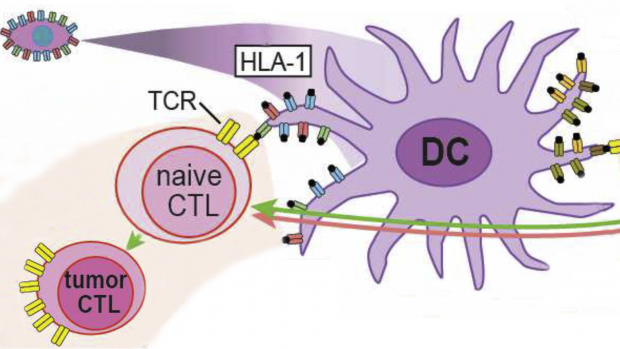
To accomplish this, Truong proposes the generation of programmable Dendritic cells (DCs), which are professional antigen presenting cells that function to mature and activate naive T cells. These programmable DCs would facilitate the discovery of new TCRs, the validation of TSAs, and could even be used as “living” vaccines to marshal a patient’s own immune system against infectious disease and cancer.
Truong specifically hopes to produce off-the-shelf DCs pre-engineered to match any HLA haplotype, even rarer haplotypes, that are pre-encoded with any combination of TSAs. Truong’s group will search for and validate “universal” TSAs and TCRs that can be used broadly in TCR therapy for any patient.
More specifically, the group will focus on peptides expressed from regions of the genome which are normally epigenetically silenced, but which are reactivated in tumor cells, e.g., endogenous retroviruses. To further this, the group will continue to develop technology enabling the “writing” of millions of DNA base-pairs in human-induced pluripotent stem cells (iPSCs). Such technology allows for direct customization of the large HLA locus iPSCs in a single step, the introduction of libraries of potential TSAs, as well as integration of synthetic reporter constructs for safer and scalable directed differentiation of iPSCs to DCs.
This research on allogeneic programmed DCs may catalyze a wide variety of immunotherapy applications and expand access to advanced treatments for a greater number of patients.
NYC Future Manufacturing Collective
Extensive use of sensors, computers and software tools in product design and manufacturing requires traditional manufacturing education to evolve for the new generation of cyber-manufacturing systems. While universities will continue to provide education to build a fundamental knowledge base for their students, the widening gap between the education delivered and the skills required by industry needs innovative solutions to prepare the workforce for future generations of manufacturing.
The New York City Future Manufacturing Collective (NYC-FMC) will develop a network of multidisciplinary researchers, educators, and stakeholders in New York City to explore future cyber manufacturing research through the lens of the worker's relationship to an increasingly complex and technologically driven environment and set of processes. The NYC-FMC will advance related technologies as well as the underlying systems, processes, and organizational conditions to which these interfaces are connected, to change and drive the roles of people in manufacturing.
NYC-FMC will organize a variety of activities, including an internship program for students to obtain exposure to industrial environments by engaging major manufacturing based corporations, producing a newsletter to define the state-of-the-art in manufacturing technologies and the new manufacturing ecosystem, and organizing two manufacturing-focused symposia each year. The program will build a coalition of multidisciplinary faculty from NYC universities, industry executives and technologists, investors, entrepreneurs, public sector and other relevant manufacturing ecosystem participants.
The NYC-FMC will take a convergence approach to generate novel ideas, frameworks, and hypotheses to catalyze future research, partnerships, and industrial innovation in manufacturing and cyber-physical systems. Executives and technologists from industry, including large manufacturing concerns with a connection to the greater NYC region and beyond and startup companies in the Brooklyn Navy Yard’s New Lab, will provide stimulus from the private sector and help create conditions to advance education and research goals. This coalition will build a novel education and workforce training program framework to create a learning and feedback loop between researchers, industry partners, and the workforce focused on the future cyber-manufacturing systems.
This award reflects NSF's statutory mission and has been deemed worthy of support through evaluation using the Foundation's intellectual merit and broader impacts review criteria.
Biomedical engineers show potential of new peptide for fighting Alzheimer’s disease and COVID-19
NYU Tandon professors Mary Cowman and Jin Ryoun Kim recently published a paper describing a novel peptide with broad therapeutic potential to combat chronic inflammation in multiple diseases. The peptide, called Amilo 5-MER, was discovered by Professor David Naor and his colleague Dr. Shmuel Jaffe Cohen in the Faculty of Medicine at the Hebrew University of Jerusalem in Israel. They showed that Amilo 5-MER has anti-inflammatory effects that reduce pathological and clinical symptoms in mouse models for rheumatoid arthritis, inflammatory bowel disease, and multiple sclerosis.
Based on Naor's finding that the peptide binds to several proteins associated with inflammation, including Serum Amyloid A (SAA), Cowman and Kim proposed a working mechanism for the peptide. In a collaboration between the Israeli and Tandon teams they were able to show that the peptide inhibits aggregation of SAA into more pro-inflammatory and pro-amyloidogenic forms. Amyloid-type aggregation of proteins is associated with many diseases, and the Amilo 5-MER peptide has been found to bind to other aggregating proteins that play key roles in chronic inflammations and neurodegenerative diseases. Thus, the peptide could have significant therapeutic value in many other pathological conditions, such as Alzheimer's Disease, AA amyloidosis, and even COVID-19.
The project was supported by the Ines Mandl Research Foundation (IMRF), which is dedicated to providing research funding in the fight against connective tissue disease. It is the legacy of Dr. Ines Mandl, who was the first woman to graduate from the Polytechnic Institute of Brooklyn (today’s NYU Tandon School of Engineering) with a Ph.D. in chemistry in 1949.
On the mechanism and utility of laser-induced nucleation using microfluidics
This research will be led by Ryan Hartman, professor, with co-principal investigator Bruce Garetz, professor and Associate Chair, the Department of Chemical and Biomolecular Engineering at NYU Tandon.
Why does shining a laser on some liquid solutions cause them to crystallize? The researchers are awarded a National Science Foundation (Chemical, Bioengineering, Environmental, and Transport Systems) grant to elucidate the mechanisms by which light can induce nucleation — the process by which molecules cluster together and organize during the earliest stages of crystallization. Understanding these mechanisms could result in “greener” industrial processes by which a wide range of materials and chemicals that we use every day, such as dyes and pharmaceuticals, are made, saving energy and reducing the need for large amounts of chemical solvents.
In addition to reducing the environmental impact of manufacturing crystalline materials, laser-induced nucleation has the potential to provide better control over crystal shape and the arrangement of molecules in the crystals during the manufacturing process, properties that can be optimized for a specific application of the material. To make greener crystallization part of undergraduate and graduate education, the project will create educational activities that train students from diverse backgrounds to engineer solutions based on this new approach to crystallization, making it an inherent part of basic chemical engineering education.
Specifically, the research program will design and study microfluidic nonphotochemical, laser-induced nucleation (NPLIN) of preselected organic molecules. To understand light-field induced nucleation mechanisms, the investigators will examine molecules that crystallize into different morphologies, into different polymorphs, and that follow single-step versus two-step nucleation. The team will look at three different mechanisms:
- The optical Kerr effect by which light can align molecules in a disordered solute cluster and thereby induce nucleation
- Dielectric polarization in which light lowers the energy of slightly sub-critical solute clusters
- The absorption of light by colloidal impurity particles resulting in the formation of nanobubbles that induce nucleation.
As part of the project, and in order to do many aspects of this research, the team will design high-pressure microfluidics coupled with a pulsed, collimated laser beam, and perform investigations of laser-induced crystallization of ibuprofen, carbamazepine, and glycine crystals. The use of microfluidics will contribute a quantitative experimental methodology for NPLIN that can also distinguish single-step nucleation from two-step nucleation. The research discoveries will set the foundation for translating fundamental findings to practical applications.
Forecasting e-scooter substitution of direct and access trips by mode and distance
This research was performed under the direction of Joseph Chow, industry associate professor of civil and urban engineering and Deputy Director of the C2SMART transportation research center at NYU Tandon. Authors included former C2SMART graduate students Mina Lee and Gyugeun Yoon, and Brian Yueshuai He of the University of California, Los Angeles.
The e-scooter sharing ecosystem is now one of the fastest emerging micromobility services. As of 2018, such e-scooter sharing companies as Lime and Bird operate in over 100 cities around the world. This year New York City chose Lime, Bird, and VeoRide as the first participants in its inaugural electric scooter pilot.
Sector growth is being driven now by the low entry barrier, but also because e-scooters are potentially filling a mobility gap in cities that have weaker public transit infrastructure. This is due to the fact that they provide better access to transit access points and offer an economical means to travel short distances as part of a Mobility-as-a-Service (MaaS) system. They also reduce traffic congestion and fuel use, which can be a catalyst for adoption in cities where automobiles are the most common mode of transportation.
In a new predictive study, the researchers created forecast models for motorized stand-up scooters (e-scooters) in four U.S. cities based on user age, population, land area, and the number of scooters. Using data from Portland, Ore, Austin, Tex., Chicago, IL., and New York City, the model predicted 75,000 daily e-scooter trips in Manhattan for a deployment of 2000 scooters, which translates to $77 million in annual revenue. The investigators assessed the number of daily trips by the alternative modes of transportation that they would likely substitute based on statistical similarity.
The model parameters reveal a relationship with direct trips of bike, walk, carpool, automobile and taxi as well as access/egress trips with public transit in Manhattan. The study estimates that e-scooters could replace 32% of carpool; 13% of bikes; and 7.2% of taxi trips. E-scooters are likely to compete with the other modes at shorter distances than at longer distances. The results statistically support the hypothesis that e-scooters play distinct roles as direct trip-substituting at short distances and access trip-substituting at longer distances.
In the study, published in the Elsevier journal Transportation Research Part D: Transport and Environment, the investigators argued that their research results are valuable for government or city transportation planners as the growing popularity of environment-friendly-transportation make e-scooters a sustainable mode providing significantly less pollution. In particular, the confirmed hypothesis that e-scooters can play a role for access trips lends support to its value toward increasing the public’s accessibility to public transit.
“The economical demand analysis we proposed can promote the development of policy and infrastructure relating to e-scooter systems,” they write. “For example, e-scooters are driving much of the discussion on curb management practices, as well as mobility data sharing and as a core part of Mobility-as-a-Service platforms.
This research was conducted with support from the C2SMART University Transportation Center (USDOT #69A3551747124).
A Node-Charge Graph-Based Online Carshare Rebalancing Policy with Capacitated Electric Charging
Authors include Joseph Chow, Institute Associate Professor of civil and urban engineering and deputy director of the C2SMART transportation research center at NYU Tandon; principal author Theodoros P. Pantelidis, a former Ph.D. student under Chow’s direction; Saif Eddin G. Jabari, global network assistant professor of civil and urban engineering at NYU Abu Dhabi and NYU Tandon; Li Li, recently awarded her Ph.D. at NYU Abu Dhabi; and Tai-Yu Ma of the Luxembourg Institute of Socioeconomic research.
As the makeup of car-share fleets reflect the global shift to electric vehicles (EV) operators will need to address unique challenges to EV fleet scheduling. These include user time and distance requirements, time needed to recharge vehicles, and distribution of charging facilities — including limited availability of fast charging infrastructure (as of 2019 there are seven fast DC public charging stations in Manhattan including Tesla stations). Because of such factors, the viability of electric car-sharing operations depends on fleet rebalancing algorithms.
The stakes are high because potential customers may end up waiting or accessing a farther location, or even balk from using the service altogether if there is no available vehicle within a reasonable proximity (which may involve substantial access, e.g. taking a subway from downtown Manhattan to midtown to pick up a car) or no parking or return location available near the destination.
In a new study, published in the journal Transportation Science, the authors present an algorithmic technique based on graph theory that allows electric mobility services like carshares to reduce operating expenses, in part because the algorithm operates in real time, and anticipates future costs, which could make it easier for fleets to switch to EV operations in the future.
The common practice for carshare scheduling is for users to book specific time slots and reserve a vehicle from a specific location. The return location is required to be the same for “two-way” systems but is relaxed for “one-way” systems. Examples of free-floating systems were the BMW ReachNow car sharing system in Brooklyn (until 2018) and Car2Go in New York City. These two systems recently merged to become ShareNow, which is no longer in the North American market.
Rebalancing involves having either the system staff or users (through incentives) periodically drop off vehicles at locations that would better match supply to demand. While there is an abundant literature on methods to handle carshare rebalancing, research on rebalancing EVs to optimize access to charging stations is limited: there is a lack of models formulated for one-way EV carsharing rebalancing that captures all the following: 1) the stochastic dynamic nature of rebalancing with stochastic demand; 2) incorporating users’ access cost to vehicles; and 3) capacities at EV charging stations.
The researchers offer an innovative rebalancing policy based on cost function approximation (CFA) that uses a novel graph structure that allows the three challenges to be addressed. The team’s rebalancing policy uses cost function approximation in which the cost function is modeled as a relocation problem on a node-charge graph structure.
The researchers validated the algorithm in a case study of electric carshare in Brooklyn, New York, with demand data shared from BMW ReachNow operations in September 2017 (262 vehicle fleet, 231 pickups per day, 303 traffic analysis zones) and charging station location data (18 charging stations with 4 port capacities). The proposed non-myopic rebalancing heuristic reduces the cost increase compared to myopic rebalancing by 38%. Other managerial insights are further discussed.
The researchers reported that their formulation allowed them to explicitly consider a customer’s charging demand profile and optimize rebalancing operations of idle vehicles accordingly in an online system. They also reported that their approach solved the relocation problem in 15% – 89% of the computational time of commercial solvers, with only 7 – 35% optimality gaps in a single rebalancing decision time period.
The study’s authors say future research directions include dynamic demand (function of time, price and other factors), data-driven (machine learning) algorithms for updating, more realistic/ commercial simulation environment using data from larger operations, and detailed cost-benefit analysis on the tradeoffs of EV’s and regular vehicles.
This research was supported by the C2SMART University Transportation Center, the Luxembourg National Research Fund, the New York University Abu Dhabi (NYUAD) Center for Interacting Urban Networks (CITIES), Tamkeen, the Swiss Re Institute through the Quantum CitiesTM Initiative. Data was provided by BMW ReachNow car-sharing operations in Brooklyn, New York, USA.
A study on the association of socioeconomic and physical cofactors contributing to power restoration after Hurricane Maria
This research was led by Masoud Ghandehari, professor in the Department of Civil and Urban Engineering at NYU Tandon, with Shams Azad, a Ph.D. student under Ghandehari’s guidance.
The electric power infrastructure in Puerto Rico suffered substantial damage as Hurricane Maria crossed the island on September 20, 2017. Despite significant efforts made by authorities, it took almost a year to achieve near-complete power recovery. The electrical power failure contributed to the loss of life and the slow pace of disaster recovery. Hurricane Maria caused extensive damage to Puerto Rico’s power lines, leaving on average 80% of the distribution system out of order for months.
In this study, imagery of daily nighttime lights from space was used to measure the loss and restoration of electric power every day at 500-meter spatial resolution. The researchers monitored the island’s 889 county subdivisions for over eight months using Visible/Infrared Imagery and Radiometer Suite sensors — which showed how power was absent/present visually — and by formulating a regression model to identify the status of the power recovery effort.
The hurricane hit the island with its maximum strength at the point of landfall, which corresponds to massive destruction across all physical infrastructures, resulting in a longer recovery period. Indeed, the researchers found that every 50-kilometer increase in distance from the landfall corresponded to 30% fewer days without power. Road connectivity was a major issue for the restoration effort: areas having a direct connection with hi-speed roads recovered more quickly with 7% fewer outage days. Areas that were affected by moderate landslides needed 5.5%, and high landslide areas needed 11.4% more days to recover.
The researchers found that financially disadvantaged areas suffered more from the extended outage. For every 10% increase in population below the poverty line, there was a 2% increase in recovery time. While financial status did impact restoration efforts, the investigators did not find any additional association of race or ethnicity in the study.