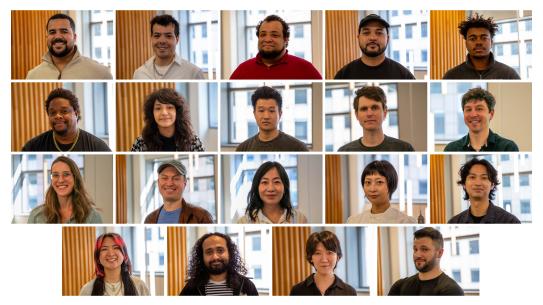

NYU Tandon welcomes new faculty for the 2025-26 academic year

When Juan de Pablo arrived in 2024 as the Anne and Joel Ehrenkrantz Executive Vice President for Global Science and Technology,and the Executive Dean of NYU Tandon, he emphasized that research progress over the next decade will be critical to the future of a planet facing major challenges in a multitude of areas, from human health to global sustainability.
He immediately outlined an ambitious strategy to grow NYU's vast science and technology enterprise in six key areas, ranging from responsible AI and embodied intelligence to bioengineering, quantum information sciences and materials science, urban resilience and complex systems engineering, and emerging technologies at the intersection of engineering and the arts. A cornerstone of this plan is attracting pioneering researchers who are reshaping their respective fields. The exceptional cohort of faculty joining NYU Tandon for the 2025-26 academic year exemplifies this commitment to excellence, bringing cutting-edge expertise that will drive breakthrough discoveries and prepare the next generation of engineers to tackle complex global challenges.
New Faculty:
Ainesh Bakshi
Assistant Professor of Computer Science and Engineering
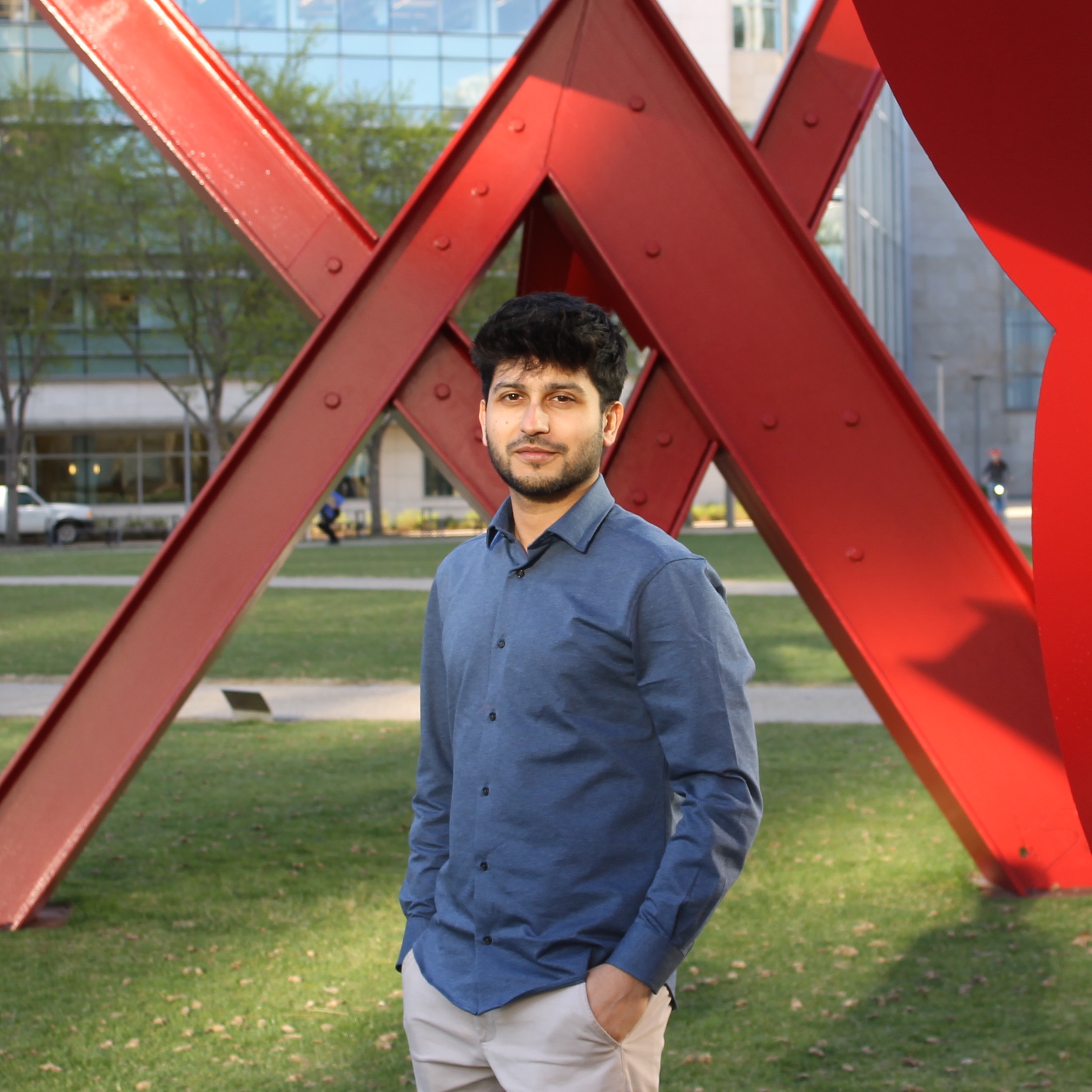
Ainesh Bakshi describes himself as a “theoretical computer scientist who applies the algorithmic lens to analyze the behavior of large quantum systems.” Quanta Magazine describes him as part of the team of researchers behind one of 2024’s “Biggest Breakthroughs in Computer Science.”
That breakthrough involved Hamiltonians — equations that would, theoretically, describe the total energy of a given quantum system, including both kinetic and potential energy. There was just one seemingly intractable problem: quantum systems are so complex that discovering their Hamiltonians would require too many calculations and too lengthy a process to be efficient or practical.
Learn more about Ainesh Bakshi
Wenqi Cui
Claire Booth Luce Assistant Professor of Electrical and Computer Engineering
 An endowed professorship is among the highest accolades a faculty member can have bestowed upon them. It serves as both a symbol of the esteem in which a professor is held and a lasting tribute to the person whose name it bears. Wendy Cui comes to NYU Tandon as the school’s first Claire Booth Luce Assistant Professor, a title named for the trailblazing writer, politician, and diplomat.
Cui was identified for the honor, which is funded by the Henry Luce Foundation, while still a doctoral student in Electrical and Computer Engineering at the University of Washington, and she arrived at Tandon to accept the post shortly after completing her postdoctoral work in the Department of Computing + Mathematical Sciences at California Institute of Technology.
Her expertise lies in the area of energy systems — specifically in ensuring that they are sustainable, safe, and efficient. Named a “Rising Star in Electrical Engineering and Computer Science” in 2022 and a “Rising Star in Cyber-Physical Systems” in 2023, Cui leverages machine learning, control, and optimization to solve one of the most pressing issues now facing the planet: to mitigate climate change, power and energy systems is currently being structurally transformed to integrate renewables, facilitate decarbonization, and electrify our economies. Consequently, the grid is becoming more distributed, faster in its dynamics, and subject to greater uncertainties — making its safe and efficient operation increasingly complex. (The problem becomes even more stark when you consider that the current boom in AI means more high-density data centers and more electricity to power them; some industry forecasters predict that global power demand from data centers will increase by as much as 165% by the end of the decade.)
Fortuitously, with the increasing controllability of hardware and a tremendous expansion in sensing and data, there are opportunities to deploy flexible control strategies and AI-based methods that can reshape the landscape of energy systems. Cui has thus been able to create novel theoretical and algorithmic frameworks to address the issue, and she is among the first to develop provable safety-critical guarantees on AI-based nonlinear controllers for energy systems.
Her work has already attracted extensive interest within both academia and industry, and she is eager to explore the collaborative possibilities in a city as dynamic as New York — and at a school as dynamic as Tandon.
Vedant Das Swain
Assistant Professor of Technology Management and Innovation

Vedant Das Swain learned to code in high school using just paper and pencil. “We were lucky to get even an hour a week on one of the school’s computers,” he recalls, “but that only made me more interested in computing, because I realized how much you could create with so little.”
In 2012 he entered the Indraprastha Institute of Information Technology (IIIT) Delhi, which had been founded just four years earlier, and after graduating in 2016, he was admitted to the Georgia Institute of Technology, where he focused on human-computer interaction.
Learn more about Vedant Das Swain
Juanita Hidalgo
Assistant Professor of Chemical and Biomolecular Engineering
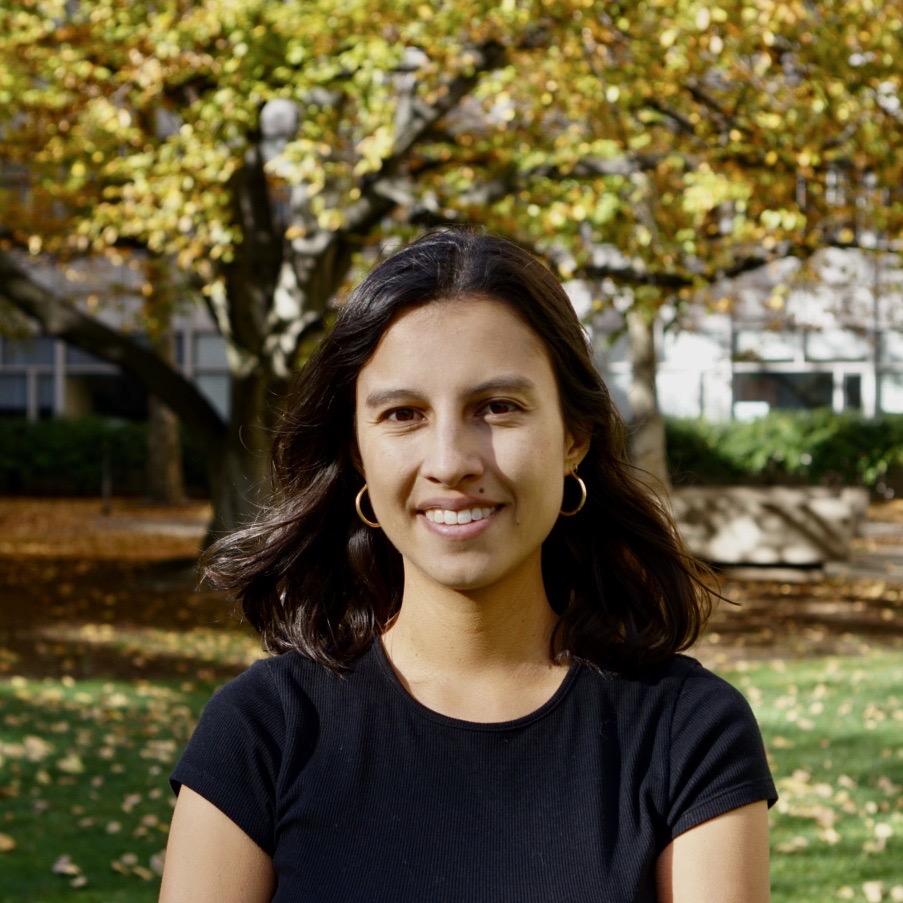
“It’s important to remember that electricity is not infinite; it’s a gift,” Juanita Hidalgo asserts.
Her native Colombia has many remote areas, known as rural non-interconnected zones, which lack access to reliable electricity. “When I looked around, it was obvious to me that this was one of the biggest challenges facing the country, and if I wanted to make a positive impact, that was where I should be focused — in energy conversion into electricity,” she recalls.
At the Universidad de Los Andes, she majored in chemical engineering, reasoning that earning her undergraduate degree in that discipline would provide her with a practical start on her goals, and her academic journey next took her to the Georgia Institute of Technology. There, she earned a master’s degree in 2021 and a Ph.D. in 2023, both in Materials Science and Engineering.
Learn more about Juanita Hidalgo
Pavel Izmailov
Assistant Professor of Computer Science and Engineering and NYU Courant Department of Computer Science

Pavel Izmailov points out that there was a time, not that long ago, when computers could not discern the difference between dogs and cats. We’ve come a long way since then, with AI now being leveraged to help medical practitioners diagnose disease, financial professionals detect fraud, robots successfully navigate difficult terrain, and much more.
Izmailov, who has worked at such major companies as OpenAI and Anthropic, has made significant contributions to those increasingly sophisticated systems.
Learn more about Pavel Izmailov
Roy Maimon
Assistant Professor of Biomedical Engineering

By the time neurodegenerative diseases like Huntington's Disease (HD) and Amyotrophic Lateral Sclerosis (ALS) are diagnosed in a patient, up to 80 percent of their neurons may be affected. That’s an especially grievous problem, since neurons — the fundamental cells in the brain and nervous system — do not naturally regenerate the way other cells do.
That figure troubled Roy Maimon, who had first become interested in the topic as a 20-year-old, after meeting someone suffering from a neurodegenerative disease. “I was struck by the lack of options and sense of hopelessness he described,” Maimon recalled. “I had originally thought that I would major in civil engineering, but that encounter changed my mind.”
Learn more about Roy Maimon
Nana Obayashi
Assistant Professor of Mechanical and Aerospace Engineering

Nana Obayashi has been interested in flying for as long as she can remember. Her mother worked as a flight attendant, and her favorite toys were all airplane-related. She also loved the films made by Tokyo-based Studio Ghibli, such as Porco Rosso and The Wind Rises, which included themes of flight. The director, Hayao Miyazaki, conveyed in the latter film, “Airplanes are beautiful dreams, and engineers turn dreams into reality” — a sentiment that resonated deeply with Obayashi. “Robotics is similar,” she says. “Our field has the power to take people’s dreams and ideas and bring them into the real world.”
After completing her studies in aerospace engineering at the Georgia Institute of Technology, Obayashi worked in the automotive and aviation industries as an aerodynamics engineer, specializing in computational fluid dynamics. During this time, she earned her private pilot’s license and instrument rating. But while she enjoyed working in industry, when the global COVID-19 pandemic hit, she felt ready for a change.
Learn more about Nana Obayashi
Phillip Rauscher
Assistant Professor of Chemical and Biomolecular Engineering

In graduate school at the University of Chicago’s Pritzker School of Molecular Engineering, Phillip Rauscher became adept at bridging two different worlds.
He studied under renowned chemist Stuart Rowan, whose research focused on the construction and properties of structurally dynamic and adaptive polymeric materials, while concurrently working with Juan de Pablo, the equally renowned materials scientist and chemical engineer who now serves as NYU’s inaugural Executive Vice President for Global Science and Technology, as well as Tandon’s Executive Dean. In de Pablo’s lab, Rauscher was immersed in work heavily dependent on computer science, collaborating with dozens of brilliant colleagues to investigate the physics and thermodynamics of complex materials using statistical mechanics, molecular simulations, and machine learning.
Learn more about Phillip Rauscher
Benjamin Rivière
Assistant Professor of Mechanical and Aerospace Engineering and NYU Courant Department of Computer Science
Science Robotics, a journal published by the American Association for the Advancement of Science, is dedicated to providing a high-level forum for the latest technological advances and issues surrounding robotics. Having an article accepted to the peer-reviewed publication is a noteworthy achievement for any young researcher.
Benjamin Rivière, who will work within Tandon’s new Center for Robotics and Embodied Intelligence, earned that honor in 2024 with his paper “Online tree-based planning for active spacecraft fault estimation and collision avoidance.”
Learn more about Benjamin Rivière
Bridger Ruyle
Assistant Professor of Civil and Urban Engineering

When Bridger Ruyle was an undergraduate studying environmental engineering at the University of Colorado, Boulder, it was the height of the fracking boom, and he became involved in a research project that sought to determine how wastewater from the extraction of shale gas and oil affected downstream communities. The issue was personal for him: his grandparents lived in one of those communities. Although part of the impetus for choosing his major was that in the years following the great recession of 2008, engineering seemed like a solid career path, he now realized that it would also allow him to make a positive impact in areas that were truly important to him.
As he neared graduation, he was introduced to a topic that would deeply influence his academic path and research career. A good friend who lived near Fort Carson recounted an incident in which military officials came to their home to test their well water for two chemicals they had never heard of: PFOS and PFOA.
Learn more about Bridger Ruyle
Anamika Shreevastava
Assistant Professor of Mechanical and Aerospace Engineering and at the Center for Urban Science & Progress (CUSP)

Over the years, Anamika Shreevastava’s view of her work has expanded — from building scale to city scale, and, ultimately, encompassing the entire planet.
Shreevastava received her bachelor's degree from the Indian Institute of Technology and then embarked on a master’s program in architectural engineering at Purdue University, where she studied ways to make the heating and cooling systems of buildings more energy efficient. But individual buildings can’t be considered in a vacuum, she quickly discovered. “When you cool down a building, the heat has to go somewhere, and it simply goes out into the environment! In other words, the city itself became a dumping ground for heat,” she explains. It was this realization that prompted a significant shift, and her ambition evolved beyond cooling buildings to the city itself.
Learn more about Anamika Shreevastava
Eleonora Maria Tronci
Assistant Professor of Civil and Urban Engineering/ Center for Urban Science & Progress

Before arriving in Brooklyn, Eleonora Maria Tronci read up on the iconic Brooklyn Bridge, which was opened to the public in 1883 and was originally designed to bear horse-and-buggy traffic and trolley cars. Thanks to its unique system of cables and trusses, it can bear loads of 17,000 metric tons, but how can we measure its integrity now that it is well past its 100th birthday and more than 107,000 vehicles, 32,000 pedestrians, and 4,000 bikes traverse it each day?
Tronci is supremely qualified to answer questions like that. “Structures speak to us,” Tronci says. “Through vibrations, displacements, and their own language, they tell us how they’re doing, we just need to learn how to listen.”
Learn more about Eleonora Maria Tronci
Joline Uichanco
Associate Professor of Technology Management and Innovation
 Joline Uichanco was serving as a postdoctoral scholar at IBM Research when Super Typhoon Haiyan hit her native Philippines on November 8, 2013. One of the most powerful typhoons in history, Haiyan killed some 10,000 people and upended the lives of millions more.
Uichanco — who had earned her Ph.D. in Operations Research from the Massachusetts Institute of Technology earlier that year — watched the devastation unfold on television, understanding better than most just how important response coordination and resource allocation are in such situations. Operations research involves using advanced analytical techniques and quantitative modeling to improve decision-making in complex systems, and Uichanco’s work centers on finding ways for organizations to manage their resources optimally, even when those resources are limited and conditions are uncertain. “There’s always some degree of chaos in disaster scenarios,” she says, “and when Haiyan struck, people in some areas went without food or water for days.” In the wake of the typhoon, which saw winds reach almost 200 miles an hour, she partnered with a group of Philippine researchers and government agencies to develop a decision-support tool for use in crises.
Uichanco — who, before coming to Brooklyn, was the Co-Director of the Tauber Institute for Global Operations at the University of Michigan — aims to develop models for making data-driven, provably near-optimal decisions, and in cases where data is unavailable, to settle upon decisions robust enough to withstand some ambiguity.
Decision-making tools like those she builds are not useful only in disasters: Uichanco, who worked for a time as a senior research scientist at Amazon, explains that they can be leveraged by retailers seeking ways to control inventory, optimize their supply chains, and improve revenue. (The fact that an item you order online one day can be at your doorstep the next is powered by Amazon’s vast fulfillment network — millions of products and thousands of routes — continuously optimized for speed and efficiency.)
Uichanco is looking forward to the many possibilities for collaboration that being at NYU and New York City present, and she foresees working with faculty members focused on data analytics, and disaster preparedness, among other topics. Optimization, she says, will be a common thread in all her cross-disciplinary projects, so that the solutions she builds at Tandon are as effective and efficient as possible, no matter what the sector.
The former coordinator of the Technology & Operations doctoral program at the University of Michigan, she is looking forward, as well, to introducing a new generation of students to operations research at Tandon. “While the COVID-19 pandemic showed the general public the importance of supply chains to everyday life, many students have not thought about the issue as a field of academic study,” she says. “It’s an exciting time to get involved, considering the potential of generative AI and other rapidly evolving technologies.”