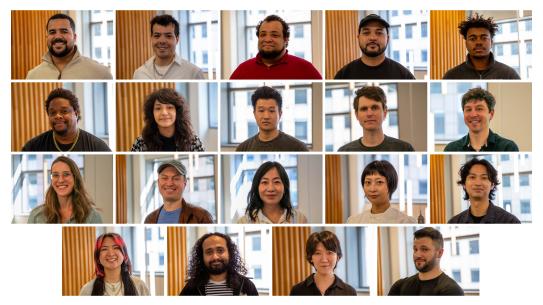

NYU Tandon’s newest cohort of faculty members is addressing a wide range of interdisciplinary topics
Whether they’re unlocking the mysteries of thermodynamics, deepening our understanding of quantum mechanics, harnessing cutting-edge research in human-computer interaction to improve daily life, or helping build more secure cyber systems, these new additions to the Tandon faculty are poised to contribute to the School – and the world.

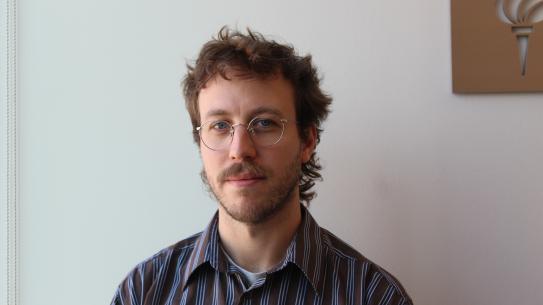
From top left, clockwise: Ainesh Bakshi, Vedant Das Swain, Phillip Rauscher, Evan Johnson
New Faculty:
Assistant Professor Ainesh Bakshi
Department of Computer Science and Engineering
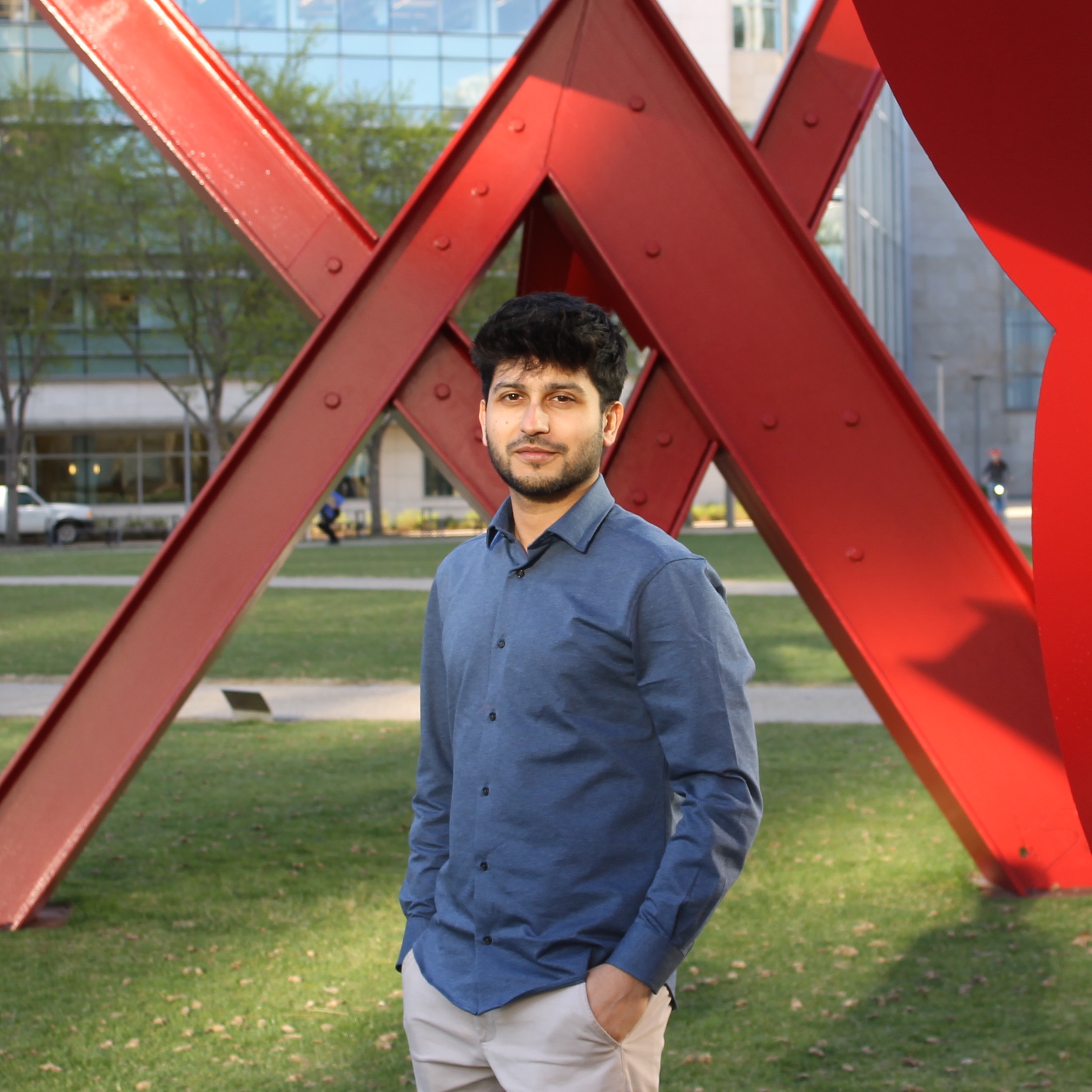 Ainesh Bakshi describes himself as a “theoretical computer scientist who applies the algorithmic lens to analyze the behavior of large quantum systems.” Quanta Magazine describes him as part of the team of researchers behind one of 2024’s “Biggest Breakthroughs in Computer Science.”
That breakthrough involved Hamiltonians — equations that would, theoretically, describe the total energy of a given quantum system, including both kinetic and potential energy. There was just one seemingly intractable problem: quantum systems are so complex that discovering their Hamiltonians would require too many calculations and too lengthy a process to be efficient or practical.
Enter Bakshi, then an MIT postdoctoral researcher, and his co-authors. The group has uncovered new quantum algorithms for Hamiltonian learning at low temperatures (a central paradigm in condensed matter physics) — an unprecedented accomplishment with major implications for advancing our understanding of phenomena such as superconductivity and superfluidity.
Quanta also took notice when he helped prove mathematically that entanglement — which occurs when particles, such as pairs of photons or electrons, remain connected even when separated physically by enormous distances — doesn’t merely weaken as temperature but vanishes completely, meaning that quantum systems at thermal equilibrium above a fixed constant temperature cannot be entangled. For decades, other researchers had suspected the behavior, dubbing it entanglement “sudden death,” but had never before been able to document it in a rigorous, algorithmically based way.
“Quantum mechanics has been one of the most profound and successful theoretical frameworks for understanding the physical world, and it continues to drive remarkable technological and theoretical breakthroughs spanning computing, coding theory, cryptography, material science, and chemistry,” Bakshi has written. “I believe this new algorithmic perspective on understanding quantum systems will continue to reveal deeper structural properties that were previously inaccessible through traditional approaches.”
He explains that algorithmic tools developed in theoretical computer science had already achieved significant success in analyzing large-scale classical systems across diverse fields, including statistics, economics, machine learning, and statistical physics, so it seemed only natural to apply an algorithmic approach to understanding large quantum systems as well.
But what drew Bakshi, who holds a doctoral degree from Carnegie Mellon University, to the quantum world in the first place? “As a theoretical computer scientist, I was looking for challenging, new problems to solve,” he says, “and there are few richer sources of challenging problems.”
Assistant Professor Vedant Das Swain
Department of Technology Management and Innovation
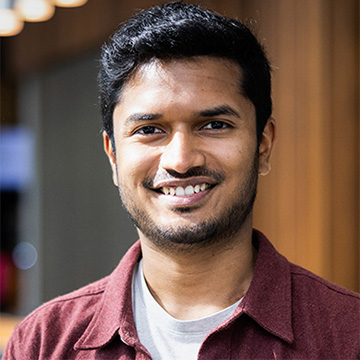 Vedant Das Swain learned to code in high school using just paper and pencil. “We were lucky to get even an hour a week on one of the school’s computers,” he recalls, “but that only made me more interested in computing, because I realized how much you could create with so little.”
In 2012 he entered the Indraprastha Institute of Information Technology (IIIT) Delhi, which had been founded just four years earlier, and after graduating in 2016, he was admitted to the Georgia Institute of Technology, where he focused on human-computer interaction.
At the time, programming for Android phones was becoming an increasingly hot topic, and Das Swain had begun wondering how smartphones could be used more effectively. As your phone collected data, could it also be used to inform users of healthier behavior and decisions for the better? Take energy use, for example. With power outages a serious issue in India — one that could even sway elections — could a phone monitor appliance usage and encourage residents to be more judicious?
At Georgia Tech, he met Professor Gregory Abowd and Professor Munmun De Choudhury, experts in human-computer interaction who were thinking in similar terms, with a focus on applications to improve the health and well-being of students in higher education. How, for example, could fitness trackers best motivate them to exercise more, eat better, or fight stress? Could technology be harnessed to fight loneliness? Das Swain was hooked and decided that he would remain at Georgia Tech for a Ph.D. “These technologies exist, but I wanted to go the extra mile and make them truly transformational,” he says.
The COVID-19 pandemic hit in the middle of his doctoral program, and he pivoted to focus specifically on worker wellness. “Work sustains our livelihoods and is key to leading a fulfilling life,” he says. “Improving our effectiveness at work helps us progress toward our goals and reclaim our lives for other activities. But now I saw people struggling, and I knew we needed tools that would help.”
Advised by De Choudhury and Abowd (who is now the Dean of the College of Engineering at Northeastern University), Das Swain earned his Ph.D. in 2023, with a thesis on boosting the wellness of information workers by leveraging the everyday digital technology they use.
He studied the technology readily available to information workers, including wearables, mobiles, desktops, Bluetooth beacons, WiFi router networks, and social media, applying statistical modeling and machine learning to demonstrate new ways to examine worker behavior and identify indicators of their experiences at the individual, group, and organizational levels.
The research demonstrated computationally efficient and versatile opportunities to model passively collected behavioral traces and provide insight into worker effectiveness. Meanwhile, his work also posed key methodological and socio-technical challenges to suggest how these technologies should — and should not — manifest in the workplace. His recent publication at this year’s Conference on Human Factors in Computing Systems (CHI 2025) presents a Generative AI-powered virtual assistant to support emotional labor in work roles with intense interpersonal emotions. “Collectively,” he says, “my research aims to help workers by underscoring digital health practices that are more holistic, accurate, and humane.”
Das Swain, who recently served as a Distinguished Postdoctoral Fellow at Northeastern, is looking forward to continuing his work here in Brooklyn. He hopes to develop a course he is thinking of calling “AI in the Wild,” which will encourage students to understand how the technology they develop and use affects society and is affected by society.
Given his interdisciplinary approach, he feels Tandon’s Department of Technology Management and Innovation is a stellar fit. “I’ll have the opportunity to collaborate with colleagues focused on behavioral issues, health, and other areas that are important to me,” he says. “And New York certainly has an enormous workforce to study.”
Assistant Professor Evan Johnson
Department of Computer Science and Engineering
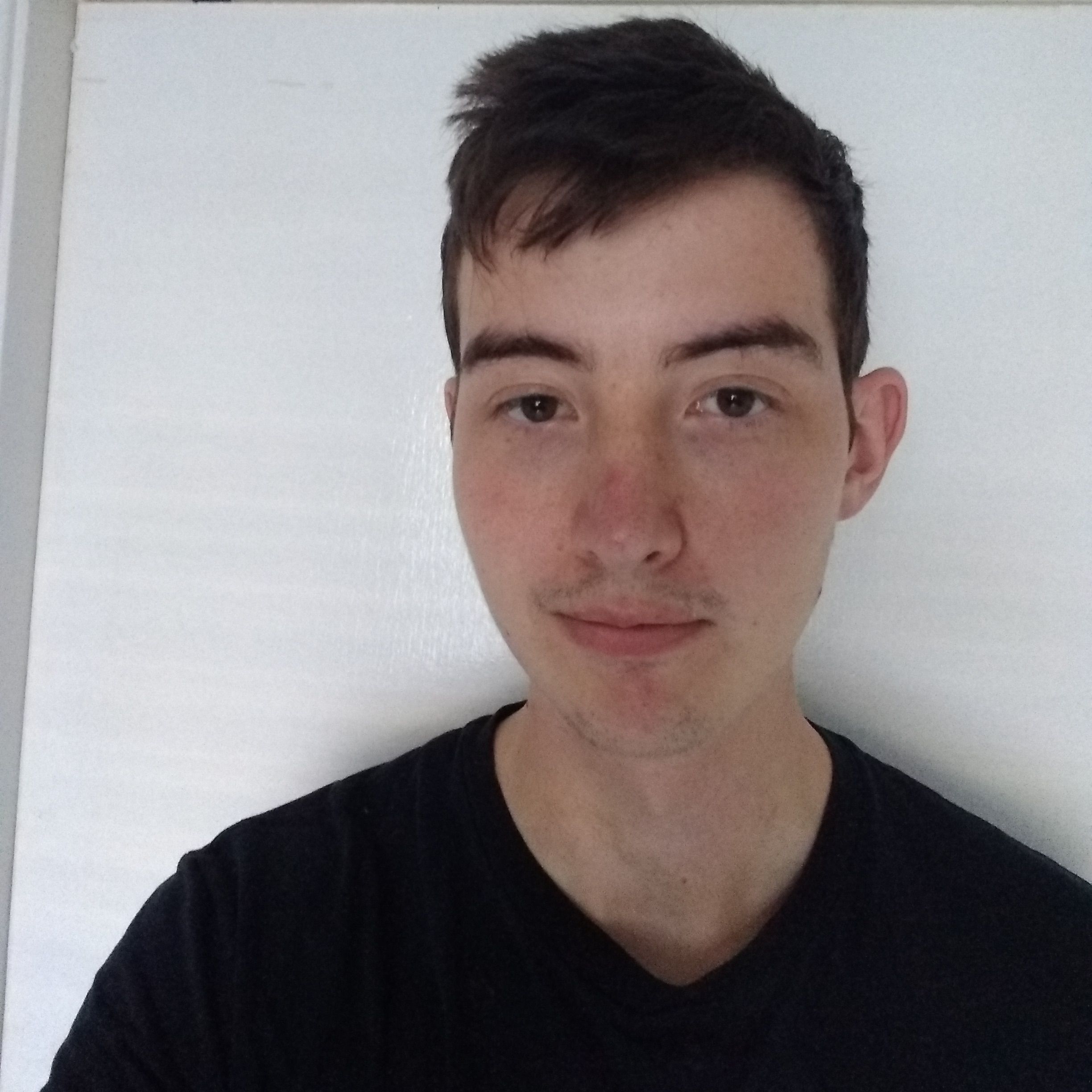 Evan Johnson works at the intersection of cybersecurity and programming languages.
Since the 1980s, computer scientists have known that compilers — used to convert code written in text files to executable formats — are vulnerable to risk, so he wants code to be checked as early as possible — even before it’s used.
Johnson, who holds a Ph.D. in Computer Science from the University of California, San Diego, has written: “Software vendors routinely describe their offerings as ‘secure,’ but few are based on designs that can guarantee even the most basic security properties. Indeed, even guaranteeing memory safety can be inherently challenging as code written in C and C++ requires developers to manually enforce safety, and if one developer misses one safety check, the system’s guarantees vanish.”
Even those languages that promise to address those shortcomings by design, at a foundational level, can fall short, since any vulnerability in the execution stack — compiler, runtime system, or OS — can undermine language-level security.
Johnson, who was attracted to cybersecurity, in part, by the chance to work on systems from top to bottom, conducts research aimed at delivering on the promise of language-level security; he builds systems capable of proving that vulnerable key components of the execution stack are bug-free and trustworthy.
His core principles are that:
-
systems should be principled: they should not rely on developers to correctly implement ad-hoc safety checks and should instead be built on well-defined security properties that can be automatically checked and enforced.
and
- they should be practical, built with real production constraints in mind.
Those principles have made his security tools attractive to industry, and they’ve been deployed by major companies such as Fastly and Mozilla, as well as adopted by open-source communities.
Much of his most recent work has involved providing formally guaranteed security for Tock, a popular, open-source embedded operating system for microcontrollers. With Tock currently running on some 10 million devices, the security implications are enormous, and he intends to continue that work here at Tandon.
“Cybersecurity not only gives me a chance to understand systems at every level,” he says, “it allows me to contribute to the social good in a significant way.”
Assistant Professor Phillip Rauscher
Department of Chemical and Biomolecular Engineering
 In graduate school at the University of Chicago’s Pritzker School of Molecular Engineering, Phillip Rauscher became adept at bridging two different worlds.
He studied under renowned chemist Stuart Rowan, whose research focused on the construction and properties of structurally dynamic and adaptive polymeric materials, while concurrently working with Juan de Pablo, the equally renowned materials scientist and chemical engineer who now serves as NYU’s inaugural Executive Vice President for Global Science and Technology, as well as Tandon’s Executive Dean. In de Pablo’s lab, Rauscher was immersed in work heavily dependent on computer science, collaborating with dozens of brilliant colleagues to investigate the physics and thermodynamics of complex materials using statistical mechanics, molecular simulations, and machine learning.
Working with Rowan and de Pablo, Rauscher, who earned his B.S. in Physics and Chemistry from Emory University, deepened his interest in thermodynamics (a branch of physics that involves the transfer of energy from one place to another, and from one form to another). Wanting to bring his solid foundational knowledge to practical applications, he accepted a job as a research scientist at Solvay, a large chemical materials company creating speciality polymers and composites, later spun off under the name Syensqo.
He describes working in industry as a transformative experience. “I thrived working to solve clients’ problems,” he says. “Often, they might not even realize that their issue was related to fundamental physics. Take thermosets, adhesives that form when you mix epoxides with hardeners. They’re used a lot in aerospace, automotive, electronics, and many other industries, and everyone wants them to work quickly, even though the chemical processes involved take time. Chemists can speed things up by modifying the molecules, but these are complex formulations: when you change one molecule, you change how the whole system mixes together, and that, in turn, affects the final product.”
Despite his love of industry, Rauscher was lured back to academia for the chance to work not only in New York City but with his former mentor.
“At the University of Chicago, I watched the engineering program expand from eight faculty members to almost three-dozen, and it was an exciting time to be part of the School of Molecular Engineering,” Rauscher recalls. “I feel that same excitement and sense of possibility in Brooklyn. NYU Tandon has a long history as a hub of polymer science, so I'm looking forward to being part of its future.”
He’s also looking forward to teaching and passing on his love of thermodynamics to a new generation of engineers. “If I had to give any advice to prospective students, it would be to show up consistently, ask questions, and don’t quit,” he says. “Nothing else is as important; if you’re curious and motivated, you’ll be fine.”