
Mass Shootings Trigger Starkly Different Congressional Responses on Social Media Along Party Lines, NYU Tandon Study Finds
Advanced analysis shows Democrats respond directly to shooting events within 48 hours, while Republicans show no such response
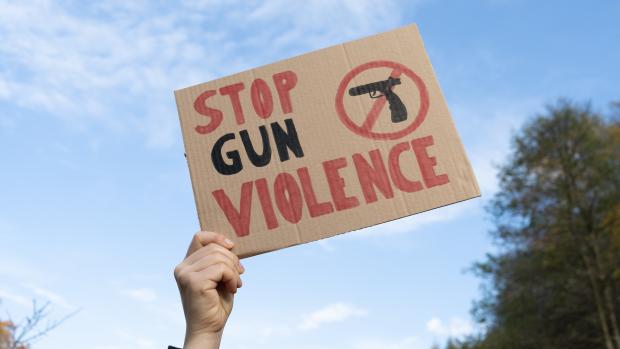
After mass shootings, Democrats are nearly four times more likely than Republicans to post about guns on social media, but the disparity goes deeper than volume, according to research from NYU Tandon School of Engineering.
The study analyzed the full two-year term of the 117th Congress using computational methods designed to distinguish true cause-and-effect relationships from mere coincidence. The analysis reveals that mass shootings directly trigger Democratic posts within roughly two days, while Republicans show no such causal response.
Topic analysis of gun-related posts, moreover, reveals strikingly different foci. Democrats are far more likely to zero in on legislation, communities, families, and victims, while Republicans more often center on Second Amendment rights, law enforcement, and crime.
The study, in PLOS Global Public Health, analyzed 785,881 total posts from 513 members of the 117th Congress on X over two years, and identified 12,274 gun-related posts using keyword-based filtering. The team tracked how legislators’ posting related to 1,338 mass shooting incidents that occurred between January 2021 and January 2023.
"In this research, we tested a long-running concern, namely that when it comes to gun violence, Americans too often talk past each other instead of with each other,” said Institute Professor Maurizio Porfiri, the paper’s senior author. Porfiri is director of NYU Tandon’s Center for Urban Science + Progress (CUSP) and of its newly formed Urban Institute. “Our findings expose a fundamental difference in the way we mourn and react in the aftermath of a mass shooting. Building consensus with these stark differences across the political aisle becomes exceptionally difficult under these conditions.”
The research team employed the PCMCI+ causal discovery algorithm, which uses statistical methods to identify whether one event genuinely causes another or whether they simply occur around the same time. Combined with mixed-effects logistic regression and topic modeling, this approach revealed that Democrats respond causally to shooting severity — particularly the number of fatalities — both immediately and the day after incidents. Posting likelihood rose especially when incidents occurred in legislators' home states.
"The findings matter because they expose a structural problem in how Americans address gun violence as a nation," said CUSP Assistant Research Scientist Dmytro Bukhanevych, the paper’s lead author. "When Democrats surge onto social media after mass shootings while Republicans have a comparatively smaller level of response, there's no shared moment of attention. The asymmetry itself becomes a barrier to meaningful exchange."
The research may help advocates and policymakers time interventions more strategically. With congressional attention peaking immediately and declining within roughly 48 hours, sustained public pressure needs to extend well beyond the immediate aftermath. And understanding the distinct frames each party uses could help communicators craft messages that bridge ideological divides rather than reinforcing them.
Along with Porfiri and Bukhanevych, CUSP Ph.D. candidate Rayan Succar served as the PLOS paper’s co-author.
This study contributes to Porfiri’s ongoing research related to U.S. gun prevalence and violence, which he and colleagues are pursuing under a National Science Foundation grant to study the “firearm ecosystem” in the United States. Prior published research under the grant explores:
- the degree that political views, rather than race, shape reactions to mass shooting data;
- the role that cities’ population size plays on the incidences of gun homicides, gun ownership and licensed gun sellers;
- motivations of fame-seeking mass shooters;
- factors that prompt gun purchases;
- state-by-state gun ownership trends; and
- forecasting monthly gun homicide rates.