

Augustin Guibaud
,
Ph.D.
-
Assistant Professor

Dr. Augustin Guibaud is an Assistant Professor in the Department of Mechanical and Aerospace Engineering (MAE) and a member of the Center for Urban Science and Progress (CUSP). His research focuses on hazards through physics-based modeling and physics-informed machine learning (PIML), with a particular emphasis on fire safety challenges in complex environments. He leads the IgNYte Lab, which investigates urban air quality monitoring during large-scale haze events, fire dynamics in low buoyancy conditions for space exploration missions, heritage conservation through the modeling of fire-structure interactions, city-scale fire modeling in densely populated areas, and land management strategies for wildfire resilience. Dr. Guibaud's work bridges practical applications with fundamental lab-scale analyses.
Dr. Guibaud is an active member of the Fire Safety in Space ESA International Topical Team, the Combustion Institute, and the Structure group of the French CNRS/Ministry of Culture's Chantier Scientifique Notre Dame de Paris. He also serves as an Honorary Lecturer at University College London in the Department of Civil, Environmental, and Geomatic Engineering.
His contributions have been recognized with several prestigious awards, including the 2020 Prix de la Chancellerie and the Distinguished Paper Award at the 39th International Symposium on Combustion.
Education
Ecole polytechnique, France, 2016
Bachelor of Science and Master of Science, Mechanical Engineering
Imperial College, United Kingdom, 2016
Master of Science, Mechanical Engineering
Sorbonne Université, France, 2019
Doctor of Philosophy, Mechanical Engineering
Experience
University College London, January 2020 to October 2021
Research Fellow, Civil Engineering Department
University College London, November 2021 to August 2024
Assistant Professor of Civil Engineering
New York University, September 2024 to Present
Assistant Professor of Mechanical Engineering
Research News
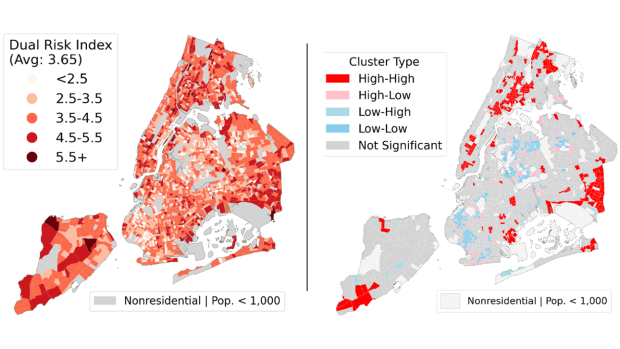
NYU Tandon Study Finds City-Level Fire Data Can Hide What's Happening Block by Block
A decade of New York City fire data shows that citywide trends can mask sharply different realities on the ground, with some neighborhoods moving in the opposite direction of the city as a whole.
A new study published in the Fire Safety Journal breaks down more than 411,000 structural fire incidents recorded by the FDNY between 2013 and 2023 across roughly 2,200 census tracts, small statistical subdivisions of a few thousand residents each, rather than the borough- or citywide figures typically used to track fire trends.
Hannah Bonestroo, a Ph.D. student in Urban Systems at NYU Tandon School of Engineering, conducted the research with Assistant Professor Augustin Guibaud, a faculty member of the Department of Mechanical and Aerospace Engineering affiliated with the NYU Tandon’s Center for Urban Science + Progress.
"If the city is looking at inequalities at the neighborhood scale, or allocating resources at the neighborhood scale, there may be areas with different patterns that get missed," said Bonestroo.
At the citywide level, the story looked simple. Structural fires fell 11.3 percent over the decade, a clear improvement. But that average hid real variation underneath it.
"If you look much more granularly at the census tract level, there were hot spots, areas where fires were actually increasing over the ten years,” said Bonestroo. Eastern Queens and Staten Island were among the places moving against the citywide trend.
Response time showed a different pattern entirely, forming large clusters of similar trends across the city rather than concentrating in pockets. Average response time rose 30 seconds over the decade, from 4 minutes 6 seconds to 4 minutes 36 seconds, now exceeding the National Fire Protection Association's 4-minute travel-time standard.
"In a fire, every second counts," said Guibaud. "Thirty seconds may not sound like much, but it can be enough time for a fire to intensify and for smoke to fill a space, and the first crew on scene can arrive to a situation that's already beyond what they can handle."
"Almost the entire city is following the pattern of it increasing," Bonestroo said, a contrast to fire frequency, which varied sharply block to block. Northwestern Queens saw the sharpest deterioration in response time over the decade.
Recent reviews by the FDNY and the New York State Senate have pointed to traffic congestion and rising call volume – the department responds to more than a million emergency calls a year – rather than neighborhood demographics or distance from firehouses. The researchers' analysis agrees, as fixed socioeconomic and built-environment factors explained only about a quarter of the differences in response time between tracts.
That contrast pointed to a second finding. Fire frequency and response time capture largely different dimensions of risk. Areas with the most fires tended to have faster response times, not slower, something Bonestroo reads as reassuring rather than puzzling.
"That's a good indicator that FDNY has placed its resources where the fires are," Bonestroo said.
Because the two measures move independently, Bonestroo and Guibaud built a Dual Risk Index, designed to catch tracts that don't top the list on fire count or response time individually, but rank high on both at once. To put it simple, fire frequency reflects the likelihood of a fire. Response time shapes how bad it can get once one starts. The index multiplies the two.
"If you just looked at the top 50 tracts by number of fires, you might miss a tract that has a fairly high number of fires and fairly slow response time, just not the highest number and the slowest time," Bonestroo said. "That's the kind of area the index is meant to catch."
Mapped across the city, high dual-risk areas cluster in Manhattan, the Bronx, and at the city's periphery, while central Brooklyn and Queens score lowest.
Tested against the locations of multi-alarm fires, the most severe incidents, over the decade, the index performed modestly better than either individual measure at flagging high-priority tracts. None of the measures, including the index, strongly pinpointed where the city's most severe fires occurred.
"It showed that it did capture more, but it wasn't statistically significant once you account for the confidence intervals," Bonestroo said.
The researchers say that shows the need for better public data on fire outcomes. "The paper isn't meant to tell FDNY where they need to reallocate resources," Bonestroo added. "Rather, it’s meant to reveal neighborhoods that may not be following overall citywide trends and are worthy of further inquiry to understand why." The index is a starting point, as the researchers plan to test other ways of accounting for other factors such as overall building safety records.
The analysis relies entirely on public data: FDNY's Fire Incident Dispatch Data and NYFIRS, the federal NFIRS system (replaced by a new national reporting system, NERIS, in February 2026), the Mayor's Management Report, and U.S. Census Bureau estimates. “Unfortunately, these sources vary in their reporting, even though records are meant to pass between the systems unchanged, so even the most basic count depends on which record you consulted” said Guibaud.
For 2023, the city's official tally in the Mayor's Management Report lists 35,567 fires, against 30,301 for the federal NFIRS database records, some 5,300 fewer. Individual incidents were sometimes classified differently from one dataset to the next, and Bonestroo carefully mapped the discrepancy by identifying where individual fire event landed in each database.
Bonestroo received a Sheldon Tieszen Student Award in June 2026 at the International Symposium on Fire Safety Science in La Rochelle, France, for the paper.
Bonestroo, H., & Augustin, G. (2026). Structural fires and emergency response in New York City: A spatiotemporal analysis of fire incidence and severity. Fire Safety Journal, 162, 104718. https://doi.org/10.1016/j.firesaf.2026.104718

Wildfire Prevention Models Miss Key Factor: How Forests Will Change Over Decades
Eucalyptus trees, laden with flammable oils, could spread into Portugal's south-central region by 2060 if changing climate conditions make the area more hospitable to their growth, creating wildfire hotspots that would evade detection by conventional prevention approaches.
The gap exists because most wildfire models account for climate change but treat forests as static, missing how vegetation itself will evolve and alter fire risk.
A new study from NYU Tandon School of Engineering fills this gap by modeling both climate and vegetation changes together. Published in the International Journal of Wildland Fire, the research projects how forests will evolve through 2060 and reveals that ignoring vegetation dynamics produces fundamentally incomplete fire risk projections.
"If you only consider the impact of climate but ignore vegetation, you're going to miss wildfire patterns that will happen," said Augustin Guibaud, the NYU Tandon assistant professor who led the research team. "Vegetation works on a timescale that's different from climate or weather."
Testing the model in Portugal revealed a striking paradox: local fire risk doesn't always track with global warming trends. Some higher-emission scenarios actually showed decreased fire risk in Portugal, with medium emissions projecting a 12% decrease when vegetation responses were included. In the low-emission scenario, projections without vegetation changes predicted a 59% increase in burned area by 2060, but including how forests would actually adapt reduced that to just 3%.
"The climate scenario which is more drastic from a temperature perspective may not be the one associated with highest risk at the local level," Guibaud explained. The counterintuitive results underscore that local climate conditions and vegetation responses can diverge significantly from global patterns.
The findings matter beyond Portugal. Wildfires are increasing in frequency, intensity and geographic scope across Mediterranean climates and western North America, with regions like California experiencing recurring large fires. Climate projections indicate these trends will continue, making long-term planning increasingly important. Guibaud anticipates working with federal agencies to apply the methodology in the United States, where the same dynamics of shifting vegetation and fire risk are playing out.
The team developed their approach using machine learning to analyze Portugal's wildfire patterns, correctly identifying 84% of historical wildfire locations in validation tests. They modeled how wildfires would change under three climate futures through 2060 — from low to high emissions — incorporating how seven dominant ecosystems characterized by the tree species would shift in response to changing temperature and precipitation.
The model has immediate practical implications. Planting strategies aimed at reducing wildfire risk can backfire if they don't account for future climate. Species that won't survive future conditions waste resources, while fire-prone species that will thrive "lock in elevated risk for decades," Guibaud said. Because forest ecosystems take about a century to fully restore, those mistakes reverberate for generations.
The team's model integrates data from NASA satellite systems, Portugal's National Forest Inventory, and IPCC climate projections, using Maximum Entropy modeling to project species shifts and a Graph Convolutional Network to assess fire risk based on surrounding vegetation and terrain. The researchers developed a method to decouple climate and vegetation effects by running projections twice: once holding vegetation constant and once allowing it to evolve.
The team plans to refine the vegetation modeling to include shrubs and grasses, not just tree species. In addition to Guibaud, who sits in Tandon's Mechanical and Aerospace Engineering Department and its Center for Urban Science + Progress, the paper's authors are Feiyang Ren, now at the University of Leeds; Noah Tobinsky, who worked on the project as a master's student at NYU Tandon; and Trisung Dorji of University College London.
Ren F, Tobinsky N, Dorji T, Guibaud A. (2025) On the importance of both climate and vegetation evolution when predicting long-term wildfire susceptibility. International Journal of Wildland Fire 34, WF25092. https://doi.org/10.1071/WF25092
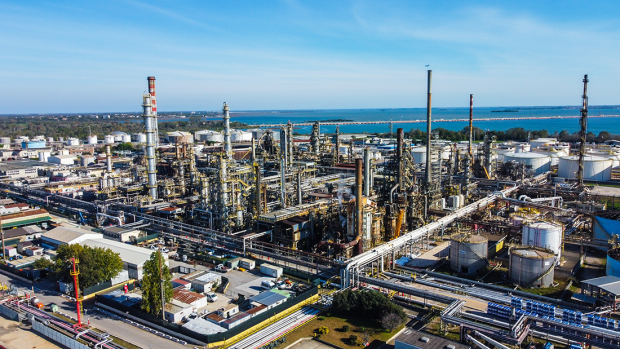
Hydrogen processing plant failures mostly linked to design flaws, not hydrogen itself, study finds
Hydrogen is often touted as a clean, carbon-free energy carrier that could help decarbonize industry and transportation. Yet the very properties that make it efficient and lightweight also make it uniquely tricky to handle safely. A new study published in the International Journal of Hydrogen Energy by researchers at NYU Tandon and University College London takes a systematic look at what truly makes hydrogen accidents different from conventional industrial failures, and what that means for safety and regulation.
By analyzing more than 700 incidents in the Hydrogen Incidents and Accidents Database (HIAD 2.0), the team found that 59 percent of mishaps involving hydrogen stem from the same sorts of issues that plague other energy systems: design flaws, mechanical failures, and human error. Only 15 percent can be directly traced to the intrinsic properties of hydrogen itself, such as its high diffusivity, low ignition energy, or ability to degrade metals from within. The remaining cases lacked enough detail to tell one way or another.
“Of course, in the case of hydrogen, the consequences of a fire or an explosion can be a lot more severe due to the unique combustion properties of this gas. But when looking at the root cause of an incident, hydrogen is not inherently more dangerous than other flammable gases used in industry,” says lead author Augustin Guibaud, Assistant Professor of Mechanical and Aerospace Engineering. “However, the way it interacts with materials and the environment is fundamentally different. The danger comes from misunderstanding those differences.”
Those differences arise from hydrogen’s atomic scale. Its extremely small molecules slip through metal lattices where larger gases like methane cannot, leading to subtle but serious material failures. The study details several such mechanisms: hydrogen embrittlement, which weakens metals by disrupting atomic bonds; hydrogen-induced cracking, in which pressurized gas accumulates inside tiny voids until the material bursts; and high-temperature hydrogen attack, where hydrogen reacts with carbon in steel to form methane, eroding its structure. Other hazards include hydrogen-assisted corrosion and the effects of storing the gas at pressures up to 700 bar — dozens of times higher than those used for natural gas.
These microscopic processes have huge consequences. The 2019 explosion at a hydrogen refueling station in Sandvika, Norway, for example, stemmed from a faulty high-pressure component rather than combustion chemistry, but it underscored how even small mechanical flaws can escalate quickly under hydrogen service conditions.
Guibaud, who is also a member of the Center for Urban Science + Progress, notes that the goal of the research is not to minimize hydrogen’s risks but to clarify them. “Our findings also highlight where traditional safety practices fail to capture hydrogen’s unique behavior,” Guibaud says. “If we can distinguish between what is general and what is hydrogen-specific, we can focus regulation and design standards on the right problems.”
That distinction, the authors argue, is essential as hydrogen infrastructure expands beyond controlled industrial sites into urban fueling stations, residential heating, and renewable power storage. Current regulations, they point out, often apply “one-size-fits-all” safety distances or design codes that lack a strong scientific basis. Overly cautious rules can slow deployment and raise costs, while overly permissive ones can leave gaps in protection.
Instead, the researchers advocate for risk-informed, evidence-based safety standards grounded in hydrogen’s particular chemistry and physics. They also call for improved data collection and international coordination, noting that the hydrogen industry today lacks the tools to improve systematic data collection and transparency.
“The challenge,” says Guibaud, “isn’t just preventing accidents — it’s learning from them fast enough to guide a rapidly changing energy landscape.” As hydrogen moves from the lab to the mainstream, knowing which failures are truly “hydrogen failures” may prove as vital as the technology itself.
Li, Yutao, et al. “Differentiating hydrogen-driven hazards from conventional failure modes in hydrogen infrastructure.” International Journal of Hydrogen Energy, vol. 183, Oct. 2025, p. 151155, https://doi.org/10.1016/j.ijhydene.2025.151155.
Research Centers, Labs, and Groups