
UN Sustainability Goals
- Good Health And Well-Being
- Quality Education
- Reduced Inequalities
Areas of Impact
- Engineering & Culture
- Engineering Health
Global Challenge: To engineer affordable, life-saving medical solutions for marginalized communities (racial minorities and low-income families) while empowering the next generation of engineers to lead with empathy and technical excellence.
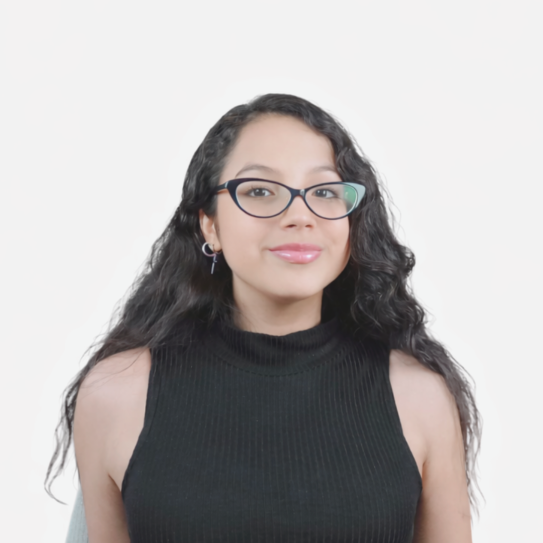
Nyahna Sanchez is a Biomolecular Science major. She chose this field because it combines three subjects she like the most—biology, chemistry, and engineering—and allows her to pursue her goal of developing innovative medical solutions that can improve access to healthcare. She is an international student from Lima, Peru, where she became aware of the social and geographic disparities that limit access to education, healthcare, and other essential services for many vulnerable communities. Coming from a lower-middle-class family, she learned early on the importance of perseverance. She pursued every opportunity, earning a full scholarship for school, a scholarship to attend a summer program at UC Berkeley, and a full ride to NYU.
In a commitment to expand opportunities for others, she led a community service initiative that partnered with orphanages to provide English, science, art, and physical education lessons for children. Also, as part of SNHS she organized the donation of Foldscopes—portable, low-cost microscopes—to a public school. Outside of academics and community service, she is passionate about dance and has been dancing since she was three years old.
Nyahna's involvement with NYU’s iGEM VIP team is especially meaningful to her because it builds on a passion she has pursued since high school. She competed in the International Genetically Engineered Machine (iGEM) Competition throughout high school, earning bronze medals in 2021 and 2022 and silver in 2023 while serving as the Synthetic Biology Team Leader. Now, as part of the team representing NYU, she contributes to a plastic biodegradation project by reviewing scientific literature, identifying knowledge gaps, and proposing strategies to strengthen the project for the Grand Jamboree in Paris. This summer, she is conducting research with Professor Vikrant Jayant on a review paper examining the medicinal applications of carbazole derivatives. Through this experience, she developed skills in scientific writing, literature analysis, and the use of molecular modeling software to visualize and analyze chemical structures. Beyond academics and research, she mentors students in Peru who aspire to pursue higher education abroad.
She provides feedback on application components and recommends programs, research opportunities, and competitions that can help them achieve their goals. Students from her first cohort will be attending Yale, NYU, and Purdue. This year, her goal is to become more involved in laboratory research and gain hands-on experience. While she spent significant time in the lab in high school, she is eager to continue developing technical laboratory skills in a college environment and contribute to projects that address real-world challenges through biotechnology.
Nyahna wanted to join the GLASS program because it offers a unique opportunity to learn alongside a community of ambitious, globally minded students who are committed to creating meaningful change. She is excited to have conversations with people from diverse backgrounds, exchange perspectives, and develop a deeper understanding of how local challenges connect to global issues. During her time in Shanghai, she hopes to broaden her worldview and learn how innovation can be implemented across cultural, economic, and healthcare systems. Ultimately, she wants to use these insights to help design medical solutions that are not only scientifically viable but also accessible to the communities that need them most. The UN Sustainable Development Goals that resonate most with her are SDG 3: Good Health and Well-Being, SDG 4: Quality Education, and SDG 10: Reduced Inequalities.
These goals are closely tied to her experiences growing up in Peru. She believes that no one should be denied quality medical care because of where they live or their financial circumstances. This issue matters to her because her long-term goal is to develop medical technologies that improve health outcomes while remaining accessible to vulnerable populations. At the same time, she recognize that progress in healthcare depends on education. By empowering the next generation with scientific knowledge and opportunities, we can cultivate future innovators who will continue addressing health disparities and reducing inequalities around the world.