
Pioneering Alumnus Erol Gelenbe Returns to NYU Tandon to Share Vision for AI-Driven Cybersecurity

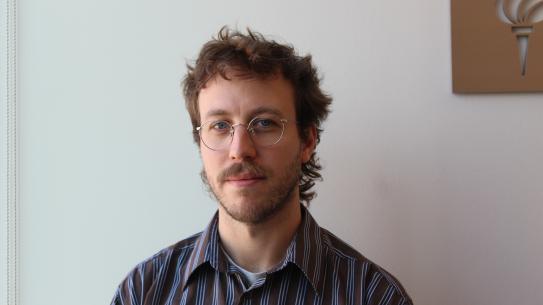
When Dr. Erol Gelenbe (MSEE ’68, Ph.D.’70) took the stage for the 2025 Dean's Lecture at the NYU Tandon School of Engineering in November, he returned not just as a distinguished alumnus but as a global scientific leader whose inventions revolutionized how the world communicates.
The Brooklyn venue held special significance for Gelenbe, who studied at the Polytechnic Institute, which is now NYU Tandon, before embarking on a career that would span continents and reshape telecommunications. His lecture, "The Random Neural Network and Its Applications to Image Processing, Network Routing, and Cyberattack Detection," addressed one of the most pressing challenges of our connected age: how to enable and streamline communications with the increasingly smart devices that surround us — from autonomous vehicles to medical monitors — and protect them from ever-evolving cyber threats.
A Prescient Inventor
Throughout Gelenbe's career, he has exhibited remarkable prescience. Two decades before Zoom or Skype became household names, he designed and patented the world's first many-to-many packet-voice telephone switch. Years before Ethernet became ubiquitous, he built the first random-access Local Area Network using fiber-optic connections.
"Dr. Gelenbe is known the world over for transforming the way we interact with each other," noted Robert V. Jones, Immediate Past President of the NYU Tandon Polytechnic Alumni Association. "By paving the way for revolutionary telecommunications platforms like Zoom and Skype, he played a major role in helping humanity navigate the COVID-19 pandemic, and he stands as a true pioneer in his field."
The Random Neural Network — Mathematics Meets Biology
At the heart of Gelenbe's Dean’s Lecture was the Random Neural Network (RNN), a mathematical model he invented to mimic biological neurons while improving the learning capabilities required for artificial intelligence. Unlike traditional approaches, the RNN is a continuous-time, discrete state-space Markov chain — a recurrent model that can incorporate feedback loops while maintaining a well-defined, unique solution despite its inherently non-linear structure.
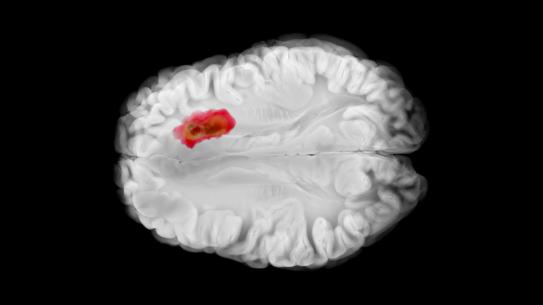
The elegance of the model lies in its product form solution and exact non-linear mean-field equations, which enable an efficient gradient-based deep learning algorithm. This theoretical foundation has yielded remarkably practical applications: patented tumor-detection algorithms for MRI scans, innovative approaches to color texture generation, reinforcement learning for network packet routing, and crucially, the detection of Botnets and other cyberattacks.
A Global Scientific Ambassador
Born in Istanbul, Turkey, and a polyglot fluent in several languages, Gelenbe's credentials span continents and cultures. France has honored him with both the rank of Commander of the National Order of Merit (2019) and the title of Knight of the Legion of Honor (2014). Italy named him Commander of Merit (2005) and Knight Commander of the Order of the Star of Italy (2007), the King of Belgium named him Commander in the Order of the Crown (2022), while Poland honored him with the Officer’s Cross of the Order of Merit (2024). He holds fellowships in the academies of sciences in Belgium, Hungary, Poland, and Turkey, and in the French National Academy of Engineering, and currently Chairs the Informatics Section of Academia Europaea, the Europe-wide science and engineering academy. This year, he added another distinction: election as a foreign fellow of the Indian National Science Academy.
His professional journey has been equally international — from founding a research group at France's prestigious INRIA, teaching and Ecole Polytechnique in Paris and holding Chairs in Belgium at the University of Liège, and in France at the University of Paris-Saclay, to chairing Duke University's Electrical and Computer Engineering Department, directing the School of EECS at the University of Central Florida, holding the Dennis Gabor Chair at Imperial College London, and serving as a professor at the Institute of Theoretical & Applied Informatics in Poland.
Pride and Inspiration
For NYU Tandon, Gelenbe's return carried deep meaning. Senior Vice Dean Eray Aydil captured the sentiment: "It was a great honor to welcome back Dr. Erol Gelenbe, one of our most distinguished alumni. It was fantastic to hear about the history and applications of his pioneering work on Random Neural Networks and G-Networks. His journey from NYU Tandon graduate to world-renowned scientific leader is an incredible source of pride and inspiration for our entire community."
At the event, Frank Namad, Chair of the Polytechnic Association Alumni Awards Committee, reflected on presenting Gelenbe with the 2010 Distinguished Alumnus Award: "The annual award goes to alumni who have used their engineering education to make world-changing technological advances, and he was a very natural choice. I'm pleased that he has agreed to be a presenter in our Dean's Lecture Series, which seeks to bring the most eminent thought leaders to our school."
As cyberattacks grow more sophisticated and our dependence on connected devices deepens, Gelenbe's work on AI-driven detection and mitigation offers both hope and a roadmap. The students, faculty, and fellow alumni who filled the room to hear him witnessed not just a presentation on cutting-edge technology, but a testament to how far one can travel from Brooklyn — and how meaningful the journey home can be.