
NYU Tandon integrates responsible AI and robotics into graduate education
NSF grant supports curriculum transformation for future engineers
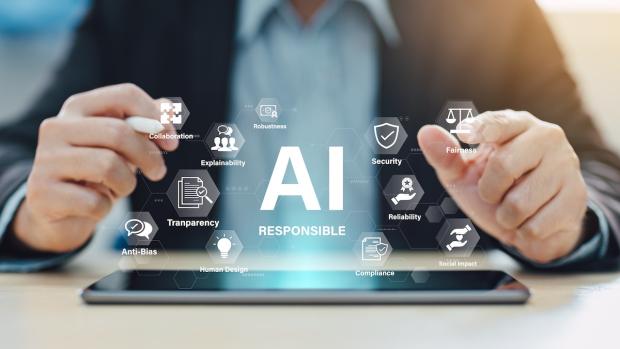
Addressing what researchers leading the initiative call a critical gap in engineering education, NYU Tandon School of Engineering will integrate responsible AI and robotics training into its graduate curricula to prepare future engineers to design technology with awareness of its societal impact.
The three-year project, funded by the National Science Foundation’s Ethical and Responsible Research program, will introduce dedicated courses as core requirements for graduate students in AI- and robotics-related fields. Responsibility-focused content will also be integrated into existing technical courses at NYU Tandon and its partner institutions.
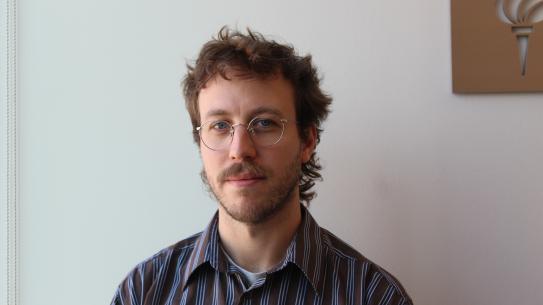
"The typical engineering curriculum treats issues of responsibility as something separate from technical training, but we're talking about helping engineers understand the social and institutional impact of their work," said Julia Stoyanovich, the project’s principal investigator (PI).
Stoyanovich is an Institute Associate Professor of Computer Science & Engineering at Tandon and an Associate Professor of Data Science at the NYU Center for Data Science. She is also the founding director of NYU’s Center for Responsible AI (R/AI), established in 2020 to conduct interdisciplinary research, and educate current and future technologists, as well as the public at large, about responsible AI.
"As AI and robotics systems become increasingly central to a range of services and industries, we need engineers who see responsibility and technical proficiency as equally central to their role,” Stoyanovich added.
The initiative comes amid growing international concern about artificial intelligence systems that can perpetuate bias, autonomous weapons, and other technologies whose misuse has sparked global alarm. Both Stoyanovich and co-principal investigator Ludovic Righetti — an NYU Tandon associate professor with appointments in the Electrical and Computer Engineering Department and the Mechanical and Aerospace Engineering Department — serve on the advisory board for the United Nations Office for Disarmament Affairs and Stockholm International Peace Research Institute's initiative on responsible AI for peace and security.
The urgency of these educational changes is underscored by the "dual-use and misuse" potential of robotics and AI technologies, which Righetti said can be repurposed for military use or harmful purposes. Recent conflicts have demonstrated how civilian drone technology can be rapidly adapted for military applications using accessible components and open-source software.
Righetti, who is the director of NYU Tandon’s new Center for Robotics and Embodied Intelligence and is a member of R/AI, notes that "most robotics technology can be repurposed for military use or harmful purposes," yet "dual-use risks in robotics and AI and approaches to mitigate those risks are not taught in most universities, despite being an issue that students will likely face in their careers."
Stoyanovich and Righetti will pursue the project with partners at the Technical University of Munich, Ukrainian Catholic University, and the Stockholm International Peace Research Institute. The initiative includes "train-the-trainer" workshops for faculty at these partner institutions to multiply the impact beyond NYU's campus.
The engagement with Ukrainian Catholic University builds on Stoyanovich's existing "RAI for Ukraine" program, which has educated students from multiple Ukrainian universities on responsible AI research since launching four months after Russia's invasion in 2022.
"Working with our Ukrainian partners has shown us firsthand how critical it is for engineers to understand the societal implications of their work," said Stoyanovich, who also served on NYC's Automated Decision Systems Task Force, which helped lead to a pioneering New York City law regulating AI use in hiring decisions. "When technology can have life-and-death consequences, responsible innovation isn't just an academic exercise, it's essential."
The curriculum updates will follow a "stakeholder-first" approach, using case studies to help students analyze how their technical decisions affect different groups.
The project includes rigorous evaluation to measure how the new curricula affect student learning and research culture, ensuring the educational reforms produce measurable improvements in how future engineers approach their work.