
Buffalo's Deadly Blizzard Revealed When Travel Bans Lose Their Power Over Time
Researchers at NYU Tandon's C2SMART Center create predictive tool to help authorities anticipate short-term operational policy and design more effective travel restrictions during emergencies
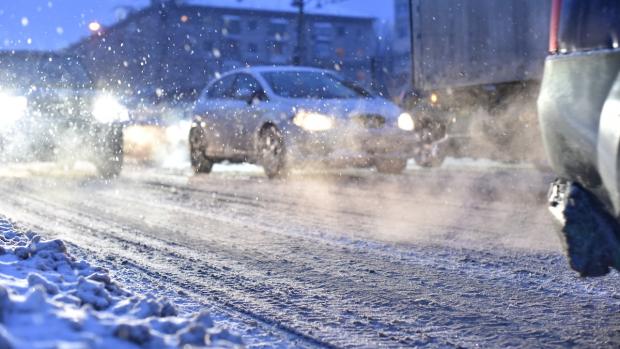
When Buffalo, New York’s devastating December 2022 blizzard claimed more than 30 lives, it exposed a hard reality: even life-saving travel bans can lose their force over time, especially when residents face situations where compliance becomes difficult. The disruption stretched on for days, straining households' ability to stay supplied without venturing out.
Researchers at NYU Tandon School of Engineering and Rochester Institute of Technology (RIT) have now developed a way to help authorities anticipate when these breakdowns may begin.
Published in Transport Policy, the study introduces a predictive framework using weather indicators — snowfall, temperature, and snow depth — to estimate how quickly a travel ban may start to lose effectiveness.
"Agencies have the option to implement travel bans during life-threatening storms," said Professor Kaan Ozbay, the paper's senior author and founding Director of NYU Tandon's C2SMART transportation research center. "But a ban that works for a 24-hour storm may not hold for a week-long event. This framework helps officials understand those differences and plan accordingly."
The research compared two Buffalo storms weeks apart in late 2022. Both involved travel restrictions, but travel patterns diverged sharply. Analyzing travel-time and speed estimates from vehicles and navigation systems, researchers tracked how movement changed around the period restrictions were in effect, identifying statistical "turning points" when travel began shifting back toward normal.
During December 2022's blizzard, travel patterns rebounded before officials lifted the ban. November 2022's storm, with more frequent updates and neighborhood-specific adjustments for South Buffalo, showed stronger sustained travel suppression. The contrast suggests policy durability is shaped not only by storm conditions, but also by how long restrictions must be maintained and how well responses adapt to local realities.
“Location-specific modifications, including those made for South Buffalo during the November event, may be associated with improved compliance of the policy compared to the December storm,” explained Eren Kaval, a C2SMART Ph.D. candidate and the paper's first author.
The framework introduces a metric called "Loss of Resilience of Policy" quantifying how a policy's ability to limit travel deteriorates over time. Regression modeling indicates weather forecast information can help anticipate that trajectory. Harsher conditions — heavier snowfall and greater snow depth — are associated with larger losses of policy resilience, information officials could use during planning.
"If forecasts predict heavy snow over five days, officials can anticipate a blanket ban may not hold," Kaval said. "They might design a different approach from the start, such as targeted restrictions for hardest-hit areas, planned food distribution, or phased restrictions acknowledging people will need to venture out."
The researchers found that the breakdown varied across the city. Some neighborhoods exhibited larger shifts than others, with patterns discussed alongside socioeconomic factors like income and education.
"Some communities had fewer options," Kaval said. "If you can't stockpile a week's supplies, staying home that long becomes impossible." This helps explain why blanket bans can falter. They implicitly assume equal capacity to comply when that capacity varies. The framework can help identify where compliance may be hardest to sustain and inform targeted interventions before storms hit.
"The aim isn't to blame residents or agencies," Ozbay said. "It's to help officials design realistic policies from the beginning. If forecasts show a storm will push beyond what most can prepare for, you can build that into your emergency plan by arranging food deliveries, opening warming centers strategically, or implementing rolling restrictions rather than week-long bans."
The alternative — maintaining restrictions residents cannot realistically follow — can erode trust and weaken future emergency orders. Understanding these dynamics could help preserve emergency measures' legitimacy while keeping people safer.
The approach could apply to other prolonged emergencies like hurricanes or floods, where officials must balance safety with what people can sustain.
The Transport Policy paper was inspired by initial findings from a C2SMART joint research project with NYU Wagner led by Sarah Kaufman, Director of the NYU Rudin Center for Transportation & Assistant Clinical Professor of Public Service, examining lessons learned from the 2022 Buffalo blizzard. It also builds on Professor Ozbay's previous work with Zilin Bian, a co-author of the current paper and NYU Tandon Ph.D. graduate, now an assistant professor at RIT, and Jingqin (Jannie) Gao, Assistant Research Director of C2SMART, on using AI and Big Data to quantify the time lag effect in transportation systems when authorities took action in response to the COVID-19 pandemic.
Eren Kaval, Zilin Bian, Kaan Ozbay, Data-driven quantification of the resilience of enforcement policies under emergency conditions: A comparative study of two major winter storms in Buffalo, New York, Transport Policy, Volume 176, 2026, https://doi.org/10.1016/j.tranpol.2025.103893.