

Research in Civil, Urban, and Environmental Engineering
Discover cutting-edge research areas, state-of-the-art labs, and expert faculty driving innovation in civil, urban, and environmental engineering.
Research at a glance
research-active faculty across four areas: construction automation, robotics, and smart buildings; environmental engineering; geo-structural engineering and remote sensing; and transportation systems. Meet them below.
CUE faculty in the 2026 Stanford/Elsevier list of the world’s top 2% most-cited scientists: Samer Madanat, Chen Feng, Joseph Chow, Magued Iskander, Kaan Özbay and Debra Laefer. Stanford/Elsevier dataset.
in Transportation Science & Technology among U.S. universities (ShanghaiRanking 2026). Also:
- Civil Engineering (graduate): tied 48th in the U.S., U.S. News & World Report 2026
- Environmental Science & Engineering: tied 43rd in the U.S., ShanghaiRanking 2026
- Civil Engineering: tied 46th in the U.S., ShanghaiRanking 2026
in grants awarded to CUE faculty in FY22–FY26, 16% of NYU Tandon’s total. The National Science Foundation accounts for about 26% of the award dollars.
Faculty research directory
What each of our tenure-track faculty studies and why it matters, grouped by research area. Select a name for the full faculty profile.
Construction Automation, Robotics, and Smart Buildings
Semiha Ergan
Professor; Associate Dean of Curriculum Innovation
Develops building information models, digital twins, and data-driven methods for automating construction and for reducing the energy use and embodied carbon of buildings.
- BIM and digital twins
- Construction automation
- Building energy
- Embodied carbon
Recent: Named NYU Tandon’s first Associate Dean of Curriculum Innovation (2026).
Chen Feng
Institute Associate Professor; Co-Director, NYU Center for Robotics and Embodied Intelligence (CREO)
Develops robotics, computer vision, and machine learning that let machines perceive and work in the built environment, for construction and manufacturing automation and infrastructure inspection.
- Robotics
- Computer vision
- Machine learning
- Construction automation
Recent: Named among the world’s top 2% of scientists (Stanford/Elsevier, 2026); Schmidt Sciences grant to build AI that reassembles broken archaeological finds.
Mohamad Awada
Assistant Professor
Combines sensing systems, immersive technologies, and AI to design and operate buildings and cities around the people who live and work in them.
- Smart buildings
- Sensing
- Immersive technology
- Human-centered AI
Environmental Engineering
Andrea Silverman
Institute Associate Professor; Associate Department Chair; Co-Director, FloodNet
Conducts research on the detection and disinfection of waterborne pathogens, related to drinking water quality, wastewater treatment, and natural systems.
- Waterborne pathogens
- Wastewater treatment
- Wastewater-based epidemiology
- Urban flooding
- Resilience
Bridger Ruyle
Assistant Professor
Tracks how contaminants such as PFAS (“forever chemicals”) move and change in water, combining analytical chemistry with mechanistic and statistical models to understand how climate change affects water quality.
- Contaminant biogeochemistry
- PFAS
- Climate and water quality
- Analytical chemistry
Omar Wani
Assistant Professor
Quantifies flood and other hydroclimatic risks with statistical hydrology and river science, so cities and water managers can plan for a changing climate.
- Hydroclimatic risk
- Statistical hydrology
- Urban water
- River processes
Geo-Structural Engineering and Remote Sensing
Masoud Ghandehari
Professor
Uses remote sensing and data analytics to measure urban heat, human exposure, and infrastructure condition, and to understand how infrastructure systems depend on each other.
- Infrastructure resilience
- Remote sensing
- Urban heat
- Human exposure
Magued Iskander
Professor; Senior Director of Strategic Initiatives
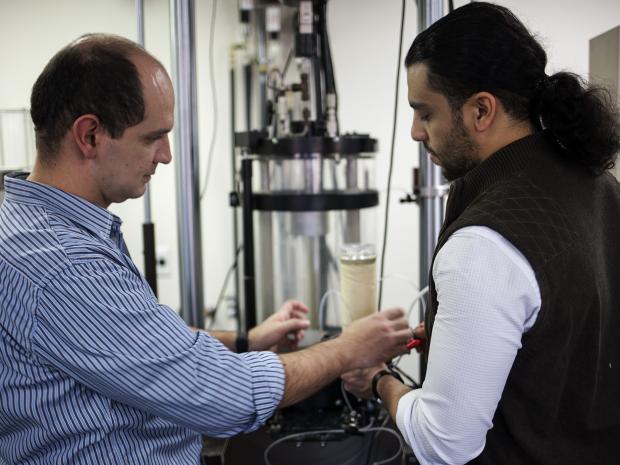
Advances foundation and geotechnical engineering, using transparent soils to see how soil and structures interact, recycled-plastic piles, field instrumentation, and tests of soil under impact, for safer and more sustainable foundations on land and offshore.
- Foundation engineering
- Transparent soils
- Recycled-plastic piles
- Soils under impact
- Offshore geotechnics
Recent: Named among the world’s top 2% of scientists (Stanford/Elsevier, 2026).
Debra Laefer
Professor
Uses remote sensing such as aerial laser scanning, and large geospatial datasets, to model cities and protect buildings and infrastructure, including historic structures, from hazards.
- Remote sensing
- Geospatial data
- Disaster mitigation
- Historic structures
Recent: Named among the world’s top 2% of scientists (Stanford/Elsevier, 2026); quoted by CNN on remote sensing for Venice’s historic buildings (2026).
Eleonora Maria Tronci
Assistant Professor
Applies machine learning and transfer learning to detect damage and track the performance of structures, including offshore wind structures.
- Structural health monitoring
- Machine learning
- Transfer learning
- Offshore wind
Transportation Systems
Joseph Chow
Professor; Interim Department Chair; Deputy Director, C2SMART
Models how travelers and mobility operators make decisions, and uses that to design transit, shared mobility, and logistics systems that are efficient, equitable, and sustainable.
- Travel behavior
- Urban mobility systems
- Operations research
- Logistics
Recent: Named among the world’s top 2% of scientists (Stanford/Elsevier, 2026).
Kaan Ozbay
Professor; Director, C2SMART
Develops simulation models, sensing applications, and real-time traffic control methods that make transportation networks safer and more resilient, including during incidents and emergencies.
- Traffic simulation
- Sensing and real-time control
- Incident and emergency management
- Transportation economics
Recent: Named among the world’s top 2% of scientists (Stanford/Elsevier, 2026).
Daniel Vignon
Assistant Professor
Uses economics and operations research to analyze and regulate emerging mobility services and smart infrastructure, from ride-hailing and automated vehicles to usage-based insurance and infrastructure funding.
- Transportation economics
- Emerging mobility
- Regulation and policy
- Smart infrastructure
Recent: NSF CAREER Award (2026) to study how connected-vehicle driving data can improve road safety and insurance pricing while protecting privacy.
Eugene Vinitsky
Assistant Professor
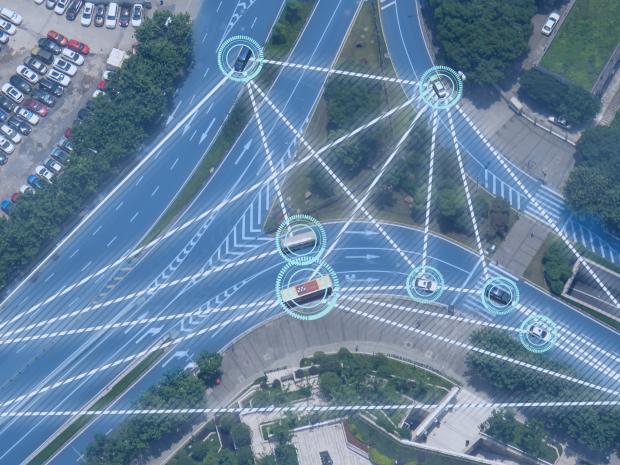
Builds reinforcement-learning and multi-agent AI for autonomous vehicles and traffic control, aiming for automated systems that are safe and work well alongside people.
- Reinforcement learning
- Autonomous vehicles
- Multi-agent AI
- Traffic control
Recent: NYU Goddard Junior Faculty Fellowship (2026); co-developed Ataraxos, the AI that beat the world Stratego champion (Nature, 2026).
Linda Ng Boyle
Professor; Vice Dean for Research
Studies how drivers behave and interact with vehicle technology, using statistical models of crash and safety data to design countermeasures that prevent crashes.
- Driver behavior
- Human factors
- Crash countermeasures
- Safety statistics
Samer Madanat
Xenel Distinguished Professor of Engineering; Program Head of Urbanization, NYU Abu Dhabi
Develops methods for deciding when and how to inspect, maintain, and renew roads, bridges, and other transportation infrastructure, and for analyzing transportation systems.
- Infrastructure management
- Transportation systems analysis
Recent: Named among the world’s top 2% of scientists (Stanford/Elsevier, 2026).
Research Centers, Groups and Laboratories


Vertically Integrated Projects
Vertically Integrated Projects (VIP) are multi-year, multidisciplinary projects that emphasize innovative and research-active education.
*(GY) indicates that the VIP team accepts graduate students.

Construction Management & Engineering
EERI (Earthquake Engineering Research Institute)
NYU Concrete Canoe
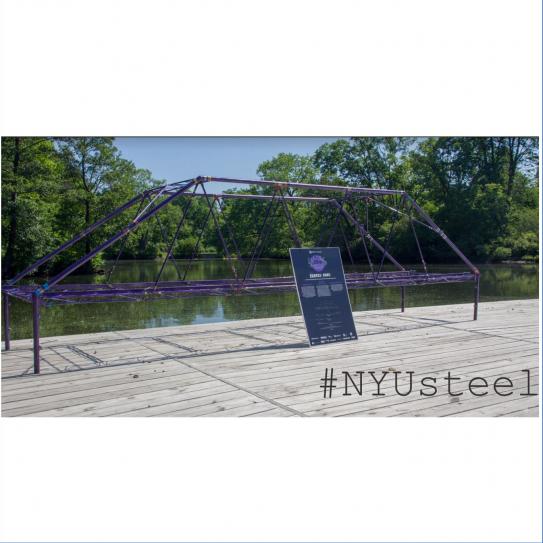
NYU Steel Bridge

Offshore Wind Platforms & Research (GY)
