

CUE Research Centers and Groups

AI4CE Lab
The AI4CE Lab aims to advance Robotics and AI in areas such as localization, mapping, navigation, mobile manipulation, and scene understanding to address infrastructure challenges on Earth and beyond, including construction robotics, manufacturing automation, and autonomous vehicles.

Behavioral Urban Informatics, Logistics, and Transport Laboratory (BUILT)
BUILT @ NYU conducts research in the area of transportation systems design and modeling.
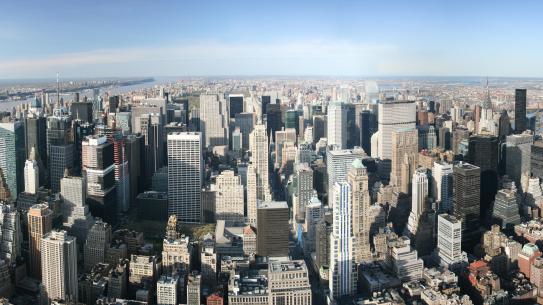
Building Informatics and Visualization Lab (BiLab)
The biLAB focuses on understanding the operational challenges associated with construction and operation of facilities and infrastructure systems in urban settings.
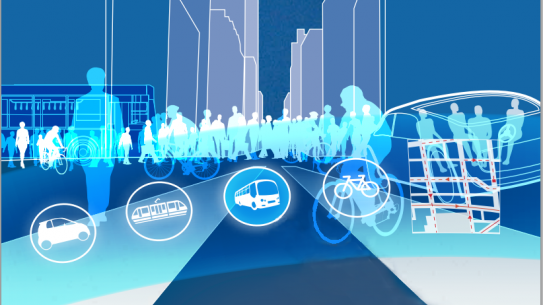
C2SMART
Connected Cities with Smart Mobility Transportation (C2SMART) uses cities as living laboratories to study challenging transportation problems and find solutions from the unprecedented recent advances in communication and smart technologies.
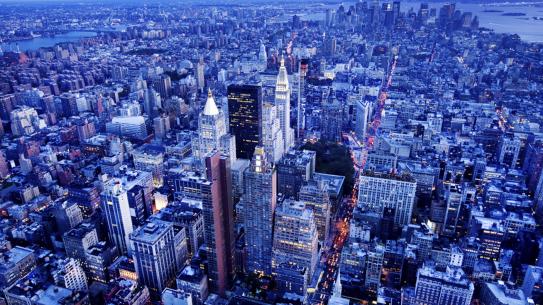
Center for Urban Science + Progress (CUSP)
The Center for Urban Science and Progress (CUSP) is an interdisciplinary research center dedicated to the application of science, technology, engineering, and mathematics in the service of urban communities across the globe. Using New York City as our laboratory and classroom, we strive to develop novel data- and technology-driven solutions for complex urban problems.
Composite Materials and Mechanics Laboratory
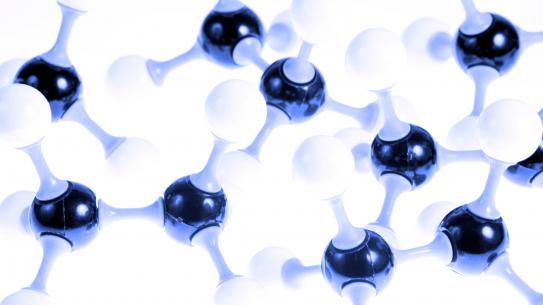
CMML focuses on research related to lightweight highly damage tolerant materials and aims at understanding the fundamental role of porosity in materials. The specialty of the lab is in the area of hollow particle filled composites called syntactic foams and in dynamic characterization of materials.

Emerge Lab
The mission of the EMERGE lab is to make it easy and efficient to develop capable, safe, and intelligent multi-agent systems through learning, simulation, and data. We emphasive use-inspired basic research where we draw inspiration as to what research is needed from specific problems in multi-agent autonomy and transportation.

FEATS: Lab For the Economic Analysis of Transportation Systems
Led by Assistant Professor Daniel A. Vignon, the lab aims to inform the design, regulation, and operations of emerging mobility services. Research looks at infrastructure systems, ride-hailing services, and dynamics of transportation systems.

Geotechnical Impact Engineering Laboratories
Our focus is on the application of engineering mechanics to understand the origin of penetration resistance of natural condensed matter. Our program interests are currently focused on the burial of unexploded ordnance in water-over-soil environments, but past work has included terrestrial earth penetrators, anchor embedment, and tunneling.
Human FUEL
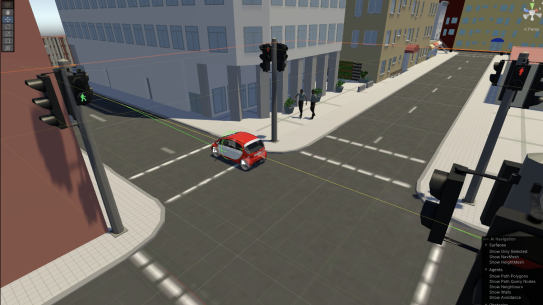
The Human Factors and Urban Ergonomics Lab (Human FUEL) conducts research primarily on transportation systems focusing on understanding and enhancing human behavior as they interact with complex systems, with the ultimate goal of improving operator safety and reducing injuries and fatalities.

Hydrologic Systems Group
We combine statistical and computational methods to study the dynamics of water in various built and natural environments. These hydrologic systems can be as diverse as natural watersheds, meandering rivers, urban stormwater infrastructures, mesoscale rainfall fields, and flooded geographies. .

IDC Innovation Hub
The Institute of Design and Construction (IDC) Innovation Hub serves as a catalyst among technology, business, and academia to join forces and ignite our imaginations while seeking solutions to our most pressing needs.

Ruyle Lab
The Ruyle lab examines how human activity, the biosphere, and climate change impact water quality. Our lab uses controlled experiments and environmental measurements to build models describing the severity and impacts of chemical contamination. Our goal is to protect safe water and ensure healthy ecosystems and communities.

Silverman Laboratory
The Silverman Laboratory conducts research to understand and design sustainable and appropriate wastewater treatment process, in an effort to protect public health and environmental quality.

Smart Innovations in Built Environment Research (SiBER) Lab
Smart Innovations in Built Environment Research (SiBER) Lab, led by Mohamad Awada, explores the integration of AI, machine learning, and digital technologies to enhance the performance, resilience, and sustainability of civil infrastructure. The lab focuses on digital twins, smart monitoring, and data-driven solutions for structural assessment and urban systems.
Urban Flooding Group
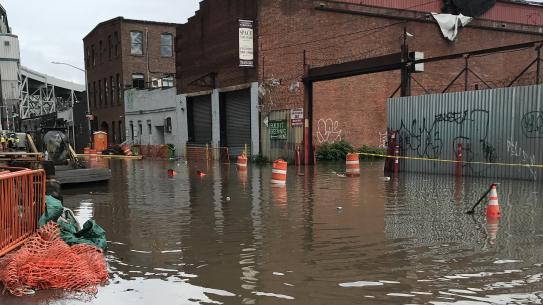
In a climate-changed world, flooding is expected to have an outsized influence on public health and infrastructure in urban areas. We are looking to develop a publicly- accessible platform that provides real-time flood information and to investigate changes to the microbiome.
Urban Intelligence Lab
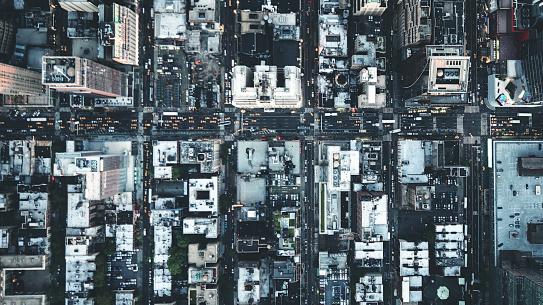
We are focused on creating new data-driven methodologies to observe, model, and analyze the urban environment. Our work is grounded in solving real-world problems and providing decision-makers with a comprehensive understanding of the relationships between physical infrastructure systems, natural systems, and human systems.
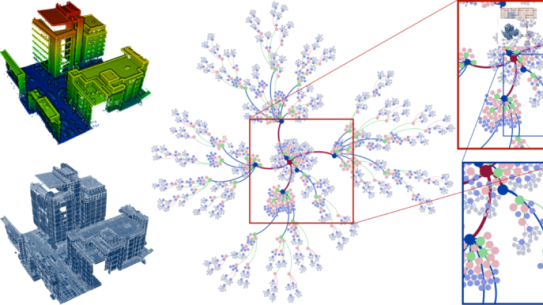
Urban Modeling Group
The mission of the Urban Modeling Lab is to transform urban engineering by bridging the gap between civil engineering and computer science. Directed by Professor Debra Laefer, the Lab focuses on developing tools to better understand the urbanbuilt environment through pioneering new methods to optimize and synthesize multi-modal data collection, storage, and processing.