
Robert Krueger Receives NSF CAREER Award to Advance Human-Guided Analysis of Complex Biomedical Data

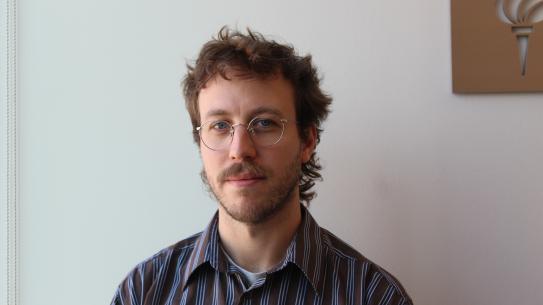
Assistant Professor of Computer Science and Engineering Robert Krueger has been awarded a National Science Foundation (NSF) CAREER Award. The five-year grant is the NSF’s most competitive award for early-career faculty, designed to support junior professors who effectively integrate outstanding research with excellence in education. His specific project, “Human-in-the-Loop Visual Analytics for Biomedical Spatial Profiling,” aims to improve the clinical use of massive datasets by placing human expertise back at the center of the analytical loop to decode next-generation tissue biopsies.
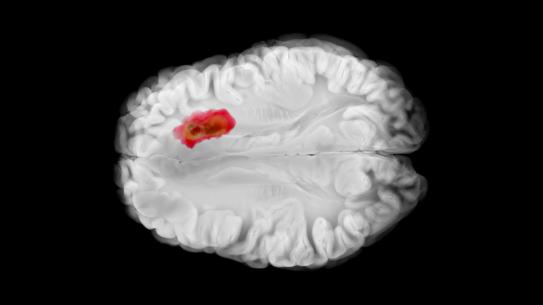
Krueger’s research focuses on analysis methods for spatial profiling and multi-omics data — fields that are advancing cancer research and precision medicine. This work represents a shift away from traditional "bulk analysis," which grinds up tissue samples and destroys all physical context. Spatial profiling captures high-resolution physical tissue architecture, maps millions of individual cells, and overlays dozens of distinct molecular layers (such as specific proteins, biomarkers, and gene transcripts) simultaneously. By preserving these precise spatial relationships, pathologists can see how abnormal cells arrange themselves into distinct cellular neighborhoods, interact with their microenvironment, and form structural boundaries that impede drug delivery.
However, analyzing this data is challenging due to its size and complexity. Because the data is scientifically novel, the lack of ground truth renders the entire analysis process highly exploratory. Krueger’s human-in-the-loop framework directly tackles this by moving away from purely automated algorithms towards collaborative and human-AI interfaces, providing doctors with the intuitive, visual tools needed to make sense of this complexity.
“Vision is our strongest sense, and it is the best interface for us to understand complex data,” says Krueger, who is a core member of the Visualization Imaging and Data Analysis Center (VIDA). “We are bringing in vast data sets to create tools to visualize crucial health and biological data that can be used directly by domain experts.”
Krueger's new work is rooted in his background in geography and spatial data systems. After earning his Ph.D. at the University of Stuttgart’s Institute for Visualization and Interactive Systems, he specialized in Geographic Information Sciences (GIS) and spatial-temporal visualization — fields dedicated to mapping, layering, and analyzing complex coordinate-based data. While at Harvard University, he transitioned to biomedical projects and found that the computational challenges of mapping human tissue are structurally parallel to those of mapping a physical landscape.
By translating the foundational concepts of GIS — such as multi-layered data rendering and spatial querying — to the cellular level, he develops new computational methods to visualize and analyze complex molecular data across precise spatial coordinates.
Krueger’s effort is made possible thanks to collaborations across NYU’s schools and institutions. Rather than developing software in an engineering vacuum, Krueger's lab works in deep partnerships with clinical researchers at NYU Langone Health and the Perlmutter Cancer Center. This collaboration allows engineering students to sit at the same table as medical professionals, stress-testing software directly on real-world patient tissue to solve the daily bottlenecks faced in the clinic.
“Robert Krueger’s work on data visualization for human health exemplifies how cross-domain collaborations are defining the future of engineering at NYU,” said Juan de Pablo, Anne and Joel Ehrenkranz Executive Vice President for Global Science and Technology at New York University and Executive Dean of NYU Tandon. “The tools this CAREER Award will support have the potential to help doctors and scientists unlock the secrets behind different disease states and help create a healthier society.”
Beyond oncology, the approaches Krueger aims to develop will benefit other fields relying on large-scale imaging, such as materials science, geography, and astronomy. The award will also fund an ambitious interdisciplinary education and workforce development program at NYU, bringing together students from computer science, machine learning, biology, and medicine to train a new generation of scientists equally fluent in computational code and human disease.