
Fiber Optics Could Become the Electric Grid's New Early Warning System
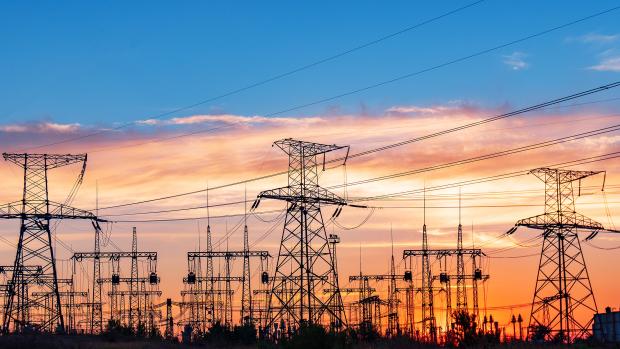
America's electric substations are under growing pressure. They face increasingly sophisticated physical threats, from vandalism to deliberate attacks, while also contending with aging equipment that can fail without warning. A newly funded U.S. Department of Energy project led by NYU aims to address both challenges with one technology: fiber-optic cables that can effectively serve as a distributed nervous system for the nation's power grid.
The project, led by NYU Tandon Professor Francisco de Leon in collaboration with NEC Laboratories America, Argonne National Laboratory and the New York Power Authority (NYPA), will develop a low-cost monitoring system capable of detecting security threats while simultaneously tracking the health of critical substation equipment. The technology will be demonstrated at a NYPA transmission substation in Marcy, New York.
Conventional substation security relies on surveillance cameras, motion detectors and perimeter fencing. Those tools are effective at spotting someone entering a facility but are less useful against attacks launched from outside the fence line. Long-range rifle attacks, for example, can damage transformers or switchgear without triggering traditional intrusion alarms. Even after an attack is detected, operators often have little immediate information about which pieces of equipment have been damaged or whether they remain safe to operate.
The NYU-led project takes a different approach by turning ordinary fiber-optic cables into thousands of distributed sensors. Using a technique known as Distributed Fiber Optic Sensing (DFOS), laser light sent through the fibers can detect minute changes in vibration, sound and temperature over long distances. Instead of serving only as communications cables, the fibers become continuous sensing devices capable of monitoring an entire substation in real time.
That capability opens the door to a much broader understanding of what is happening inside a facility. Acoustic signatures could identify the location of gunshots or vandalism. Vibrations could reveal whether equipment has been struck. Temperature measurements could expose overheating transformers before they fail. Together, the data provide a detailed picture of both security events and equipment health.
The project also incorporates machine learning to make sense of the enormous stream of information generated by the sensors. Algorithms will combine fiber-optic measurements with video from existing surveillance cameras, allowing the system to distinguish genuine threats from routine activity while reducing false alarms. If the system detects suspicious activity, operators would receive alerts identifying both the nature and location of the event.
Perhaps the most significant feature of the technology is that it remains useful even when nothing unusual is happening.
Substations rarely experience physical attacks, making it difficult for utilities to justify expensive security upgrades that may sit idle for years. The fiber-optic network, however, would continuously monitor the condition of transformers and other high-value equipment during everyday operations.
The system would also measure transformer temperatures continuously, allowing utilities to estimate how heavily equipment can safely be loaded under changing operating conditions. That information could prove especially valuable after storms or attacks, when damaged equipment forces utilities to reroute electricity across the remaining infrastructure.
"Our goal is to make the sensing system valuable every day, not only during a security incident," said Francisco de Leon. "By combining physical security with continuous equipment condition monitoring, utilities gain a tool that improves reliability, supports predictive maintenance, and helps protect critical infrastructure at the same time."
Researchers from NEC Labs have the expertise to install and operate the fiber-optics to detect the direction of gunshots from a distance. The novelty is that the optical fiber can be used as a conditioning monitoring tool.
Argonne National Laboratory researchers will develop predictive maintenance models that estimate the remaining useful life of transformers using continuous sensor data. Rather than relying on fixed inspection schedules, utilities could perform maintenance when equipment condition actually warrants it, potentially extending asset life while reducing unnecessary repairs.
After laboratory testing, the technology will be installed at a NYPA transmission substation, where researchers will evaluate its ability to detect simulated gunshots, vandalism and equipment abnormalities. The demonstration will also showcase how the system integrates with existing cameras, alarms and supervisory control systems already in use at modern substations.