
NYU Engineers Team Up to Revolutionize Glaucoma Treatment
Tandon-NYUAD collaboration wins fellowship to develop next-generation surgical device

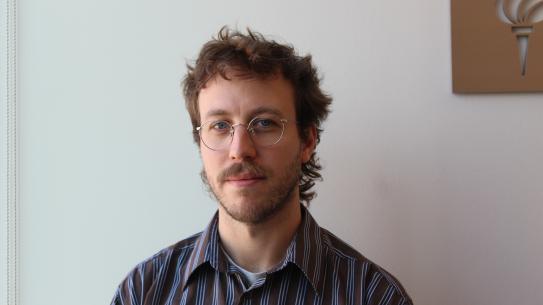
Yong-Ak (Rafael) Song (left) and Iskender Sahin (right)
A collaborative research project between NYU Tandon School of Engineering and NYU Abu Dhabi aimed at improving treatment for glaucoma — the leading cause of irreversible blindness worldwide — has been awarded a 2025-26 Faculty Fellowship from 19 Washington Square North, which serves as NYU Abu Dhabi's base in New York.
Iskender Sahin, Professor of Mechanical Engineering at NYU Tandon, and Yong-Ak (Rafael) Song, Professor in NYUAD's Division of Engineering and the Director of the Research Center for Translational Medical Devices (CENTMED) at NYU Abu Dhabi, are working to redesign the Ahmed Glaucoma Valve, a widely used medical device that helps regulate pressure in the eyes of glaucoma patients. While the current device has been considered the gold standard for glaucoma surgery, it fails to function properly in up to almost one-third of all cases, leading to complications that can threaten patients' vision and prolong recovery.
"The Ahmed Glaucoma Valve sometimes allows continuous fluid leakage instead of maintaining controlled flow," Sahin explains. "This can cause intraocular pressure to drop dangerously low shortly after surgery — a complication called early hypotony that significantly impacts patient outcomes."
A Global Health Challenge
Glaucoma affects an estimated 70 million people globally, a number expected to rise to 111 million by 2040. The disease damages the optic nerve due to elevated intraocular pressure (IOP), which normally ranges between 11 and 21 mmHg. When medication and laser treatments prove insufficient, surgeons turn to implanted drainage devices like the Ahmed Glaucoma Valve to control pressure and prevent vision loss.
The current device uses a double-membrane valve that opens and closes based on pressure differences, but this design is prone to failure. Patients can experience not only early fluid leakage but also late-stage complications when the valve becomes clogged by scar tissue and protein buildup.
Innovative Designs
The research team is pursuing two promising alternatives, both designed to improve effectiveness in preventing fluid leaks:
The first is a micropillar-based passive valve that uses surface tension rather than moving parts to control fluid flow. Tiny pillars arranged in specific patterns create resistance that keeps the valve closed until pressure exceeds the normal range. "The significant advantage of this design is that there are no moving parts, which makes the device simpler to manufacture and more reliable in operation," Song noted. The team is testing different micropillar heights and arrangements — including checkerboard and column patterns — to optimize performance.
The second design features a single-membrane micro check valve that responds to pressure changes. Unlike the current double-membrane system, this simpler design uses just one thin, flexible membrane that deflects to allow fluid through when pressure rises. "By reducing complexity from two membranes to one, we can minimize potential points of failure," Sahin said.
Combining Computational and Experimental Expertise
The collaboration capitalizes on complementary strengths: Sahin's team specializes in computational fluid dynamics (CFD) modeling, while Song's group excels in experimental microfluidics. Using sophisticated software like COMSOL Multiphysics and ANSYS, the New York team will simulate various valve configurations to predict how they'll perform under different pressure conditions. The Abu Dhabi team will then fabricate prototypes using 3D printing and microfabrication techniques, testing them in customized laboratory setups that mimic conditions inside the human eye.
"The simulations tell us what should work in theory," Song explained. "But we need to validate those predictions with physical prototypes to ensure the devices will perform reliably in real patients."
The new valve designs must maintain IOP within the critical range of 8-12 mmHg — essential for preventing optic nerve damage in advanced glaucoma — while also controlling the accumulation rate of aqueous humor.
Building Bridges Between Engineering and Medicine
The 19 Washington Square North fellowship will support regular virtual collaboration between the teams, plus reciprocal visits between New York and Abu Dhabi. The project will culminate in a workshop on medical devices and implants at 19 Washington Square North on March 18, 2026, bringing together physicians from NYU Langone Health and engineers from NYU Tandon and NYUAD specializing in translational medical devices. The event will be co-sponsored by CENTMED.
"This workshop will expand beyond glaucoma to cover a wide range of medical implants, from gastrointestinal to neurological applications," Sahin says. "We want to foster stronger connections between our engineering and medical schools to accelerate the development of life-changing devices."
The collaboration builds on the groundwork laid by NYUAD engineering student Nurbergen Aitmukhanbetov, who spent spring 2024 working with Sahin in New York and chose glaucoma implants as his senior capstone project. (He is currently working on the glaucoma implant as a research assistant at CENTMED.)
Looking ahead, the team plans to file a patent on the micropillar-based valve design, publish their findings in peer-reviewed journals, and continue the partnership through NYUAD's newly established Center for Translational Medical Devices (CENTMED), culminating, it is hoped, in clinical trials.
The work holds particular relevance for the UAE and Gulf region, where glaucoma is one of the leading causes of blindness. "Once the implant device is fully developed, we envision deploying it in collaboration with institutions like Cleveland Clinic Abu Dhabi," Song says. "This research has the potential to improve outcomes for glaucoma patients around the world."
Learn more and register for the March 18 workshop.