
In Memoriam: Rudolph Marcus, Nobel-prize winning chemist (1923–2026)
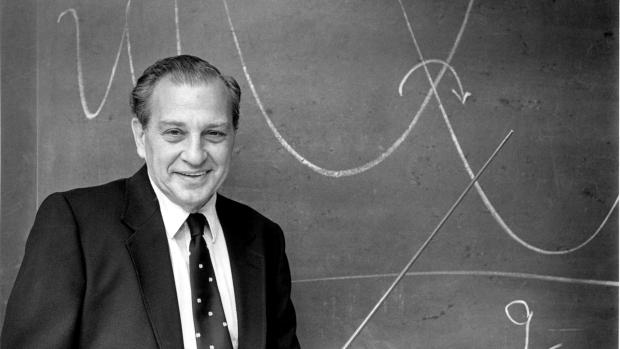
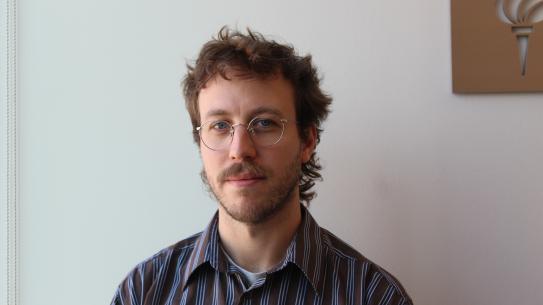
Photo courtesy of the U.S. Department of Energy.
The NYU Tandon community is saddened to learn of the passing of Rudolph Marcus, Nobel-prize winning chemist and a former faculty member of Brooklyn Polytechnic, the school that would become NYU Tandon. Marcus’ work fundamentally changed how we understand the chemical processes behind photosynthesis, respiration, oxidation and much more. He was 102.
Marcus was born in Montreal, Quebec, Canada, on July 21, 1923. He attended McGill University, earning a bachelor's degree in chemistry in 1943, and earned his doctorate in 1946 for research in which he measured reaction rates of ions in solution. Following a role as a postdoctoral fellow at the National Research Council in Ottawa, Ontario, and a fellow at the University of North Carolina at Chapel Hill, Marcus arrived in Brooklyn in 1951 to take on the role of Assistant Professor at Brooklyn Polytechnic.
At the Polytechnic Institute, Marcus developed what came to be known as the Marcus theory of electron transfer. Marcus theory describes how electrons transfer between molecules during chemical reactions by accounting for changes in the positions of atoms and the surrounding environment. Before an electron can move from a donor molecule to an acceptor, both molecules and nearby solvent molecules must reorganize into a configuration where the electron has nearly the same energy in both locations. The energy required for this structural and environmental rearrangement, known as the reorganization energy, plays a central role in determining how quickly electron transfer occurs. Marcus theory became a cornerstone for understanding processes ranging from photosynthesis and cellular respiration to solar cells.
"As a foundational breakthrough, Dr. Marcus's description of electron transfer crossed boundaries in its impact, being rooted in physical principles, used to understand chemical and biological processes, and with lasting applications to energy conversion, catalysis, and many modern technologies,” says Rastislav Levicky, Interim Chair of the Chemical and Biomolecular Engineering department.
In 1964, Marcus moved to the University of Illinois, and then moved to Caltech as the Arthur Amos Noyes Professor in 1978. He would spend the rest of his career at Caltech, which continued until his passing. He received The Nobel Prize in Chemistry in 1992 "for his contributions to the theory of electron transfer reactions in chemical systems," according to the award citation.
"Like generations of students here, I first encountered Marcus Theory in the classroom, never fully grasping at the time that the fundamental science of electron transfer behind our textbooks was actually developed right here in our own halls,” says Eray Aydil, Senior Vice Dean of NYU Tandon and the Alstadt Lord Mark Professor of Chemical and Biomolecular Engineering. “Rudolph Marcus’s legacy at Brooklyn Poly and NYU Tandon is a reminder to our current students that the work done in our labs today can reshape the scientific world tomorrow."
To learn more about the work and life of Marcus, read Caltech’s memorial.