

In Memoriam: Professor Emeritus Robert J. Flynn
The NYU Tandon School of Engineering pays tribute to Robert J. Flynn, Emeritus Faculty in the Department of Computer Science and Engineering, who died on July 24, 2021, in Salisbury, Connecticut. He was 78 years old.
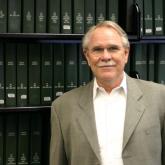
Robert Joseph Flynn was born on April 14, 1943. He first came to what was then known as Polytechnic Institute of Brooklyn as a student and never truly left. He began teaching in 1966, while still pursuing his own graduate studies—a path that says much about both the institution's faith in him and his early commitment to the classroom. He earned his Doctor of Philosophy in Computer Science here in 1973, completing a degree at the school where he had already spent seven years as an instructor. It was an unusual arc, and a revealing one: from the start, teaching and learning were inseparable for him.
That dual identity, as scholar and educator, would define a career spanning more than five decades. His research interests centered on computer architecture and operating systems, fields that sit at the structural heart of computing, governing how machines organize their operations and allocate their resources. In the classroom, he brought the same rigorous, architecture-minded thinking to bear on generations of engineers and computer scientists.
In 1979, the school recognized what his students already knew: Flynn was awarded the Polytechnic Distinguished Teacher Award in Mathematics, one of the earliest honorees in what would become a long tradition of recognizing teaching excellence here. The award was a formal acknowledgment of qualities that students described in more personal terms across the years: his willingness to stay long past the end of class to make sure a concept had landed, his ability to convey the big picture of a field without losing the thread of rigor that ran through it, and above all, his genuine investment in the futures of the people he taught. One nominator recalled that Flynn had helped him secure his first job in 1973. A later mentee remembered a systems architecture class from 1996 with the kind of specificity reserved for formative experiences.
Flynn was particularly associated with Polytechnic's Westchester graduate center, where he became one of the most influential figures in building the campus into a serious academic destination. Students who studied there credited him, by name, with making the Westchester program what it was—a testament to the degree to which one dedicated faculty member can shape an entire academic community. He was, as more than one person put it, a leader whom everyone respected.
Flynn's connection to the institution went beyond the daily work of teaching and advising. He served as a contributing editor and source for Polytechnic University: Changing the World, The First 150 Years, the 2005 institutional history that documented the school's century and a half of contributions to science and engineering. His recollections and guidance helped shape the record of a place he had dedicated his professional life to, and that had shaped him in turn.

