

The NYU Tandon School of Engineering pays tribute to Professor Emeritus Henry Ruston, who died in late 2025 after dedicating three decades of his life to educating generations of electrical engineers and computer scientists at our school.
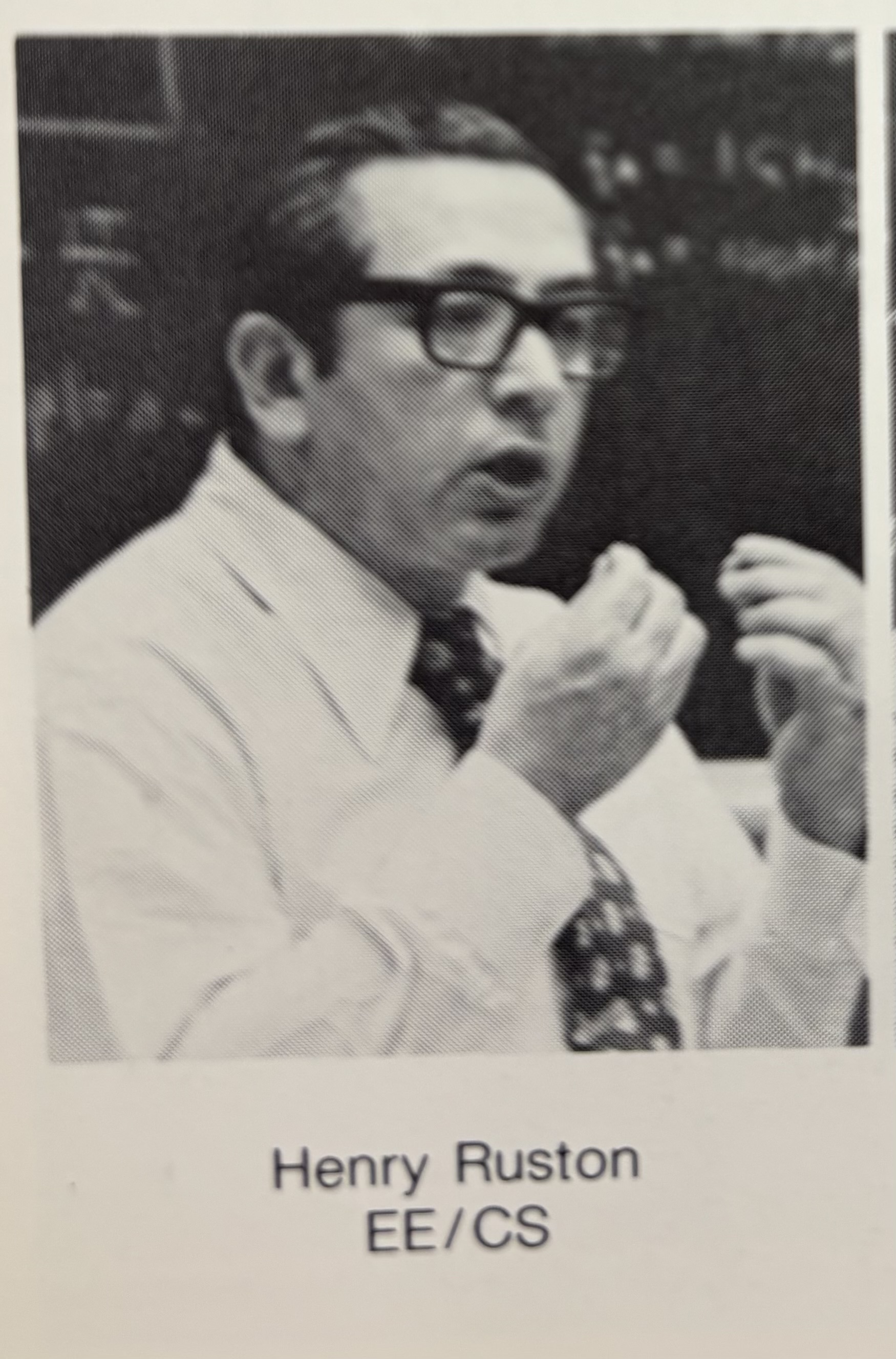 Henry Ruston was born on July 23, 1929, in Łódź, Poland. He was ten years old when Nazi Germany invaded his country. At twelve, he was forced into the Łódź ghetto. In August 1944, as the ghetto was liquidated, Henry and his family were deported to Auschwitz, where they survived the infamous selection process. He remained with his father and uncle; together, they were transferred to the Gross-Rosen concentration camp. Henry was liberated on May 8, 1945—at age 16—from Wolfsberg, a subcamp of Gross-Rosen.
Even under those conditions of almost unimaginable hardship, mathematics sustained him. Pressed into slave labor at the camps, his ability to assist his overseers with numerical tasks earned him occasional scraps of food—a small advantage that helped him survive.
After liberation, Henry and his father reunited with his mother, and the family settled in Germany, where he received a high school–level education. He then emigrated to the United States, settling in the Bronx, where he worked in the garment industry before enrolling at the University of Michigan in 1950. From there, his path led steadily toward the career in engineering and teaching that would define the rest of his life.
Ruston earned two bachelor’s degrees from Michigan—a B.S.E. in Mathematics and a B.S.E. in Electrical Engineering—before completing his M.S. in Electrical Engineering at Columbia University and returning to Michigan for his Ph.D. in Electrical Engineering.
His faculty career at what was then known as Polytechnic spanned approximately three decades, from the mid-1960s through the mid-1990s. He was promoted to full Professor in the early 1980s and became Professor Emeritus in 1996. His research interests encompassed software engineering, programming, and circuit theory—a range that reflected both his foundational training in electrical engineering and his prescient engagement with the emerging field of computer science. That breadth also made him an exceptionally versatile classroom presence. In 1991, he was honored with the Polytechnic University Distinguished Teaching Award in Computer Science, a recognition of his status as a beloved and respected educator.
Ruston’s scholarly contributions extended beyond the classroom. He was the co-author of Electric Networks: Functions, Filters, Analysis (1966, with Joseph Bordogna) and the author of Programming with PL/I (1978)—works that captured his twin interests in circuit theory and programming at a formative moment in the history of both fields.
Outside the university, Ruston was an avid duplicate bridge player, bringing to the card table the same analytical rigor he applied to his scholarship.
Ruston’s curiosity about how things work—including electrical circuits and the systems that undergird modern technology—never dimmed. He leaves behind a lasting legacy in the many engineers and computer scientists he helped to shape, and in the reminder that education can be, as it was for him, both a refuge and a calling.

