
Hundreds of New York City Students Will Access Free Engineering and Research Programs This Summer Through NYU Tandon's Center for K12 STEM Education
A growing catalog of tuition-based courses in cryptocurrency, humanoid robotics, game production, and other digital technology fields will educate hundreds more from across the country and around the world
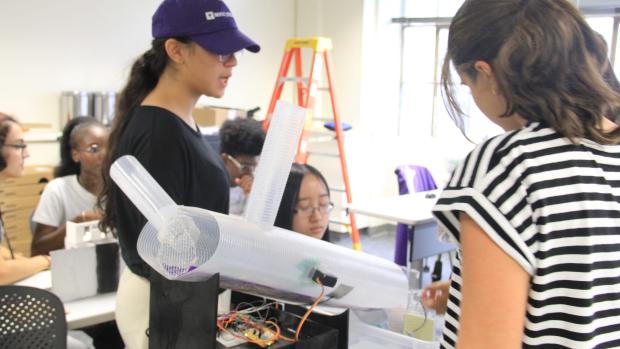
Students working on an engineering project in a summer program offered by NYU Tandon’s Center for K12 STEM Education
Hundreds of New York City middle and high school students will spend this summer conducting university-level research, engineering smart city technologies, and building cybersecurity skills through free programs offered by NYU Tandon School of Engineering’s Center for K12 STEM Education in Brooklyn.
Those students will join hundreds more from across the country and around the world in the Center's tuition-based programs. These courses cover digital technology and computing topics from cryptocurrency and humanoid robotics to game production and beyond.
The Center's flagship no-cost program, Applied Research Innovations in Science and Engineering (ARISE), will embed 75 rising NYC juniors and seniors into more than 30 scientific labs on NYU's Brooklyn and Manhattan campuses, where they will contribute to ongoing advanced research. Participants receive a stipend upon successful completion.
Past ARISE students have studied ancient stone tools in Africa, investigated links between cerebral spinal fluid and depression, analyzed data-driven cyberattacks, and developed proteins to deliver cancer drugs more precisely. In some cases, they co-authored peer-reviewed academic papers alongside NYU graduate students and faculty.
The 10-week ARISE program — which debuted in 2013 — concludes with students showcasing their work alongside hundreds of peers at the NYC Science Research Mentoring Consortium Student Research Symposium at the American Museum of Natural History on August 13, followed by an internal research colloquium in Brooklyn on August 14. ARISE is supported by The Pinkerton Foundation.
“Every summer we watch students walk in uncertain of themselves and walk out having contributed to real research, built real technologies, and stood in front of an audience to defend their work,” said Elizabeth Waters, Director of NYU Tandon’s Center for K12 STEM Education. “That transformation is what this Center is for.”
In addition to ARISE, the Center for K12 STEM Education will provide free summer education to NYC students via the following programs:
Innovation, Entrepreneurship and the Science of Smart Cities (ieSoSC)
38 NYC high school students ages 15 and older will use coding, microcontrollers, circuitry, and sensor integration to invent smart city technologies that solve problems like urban flooding or emergency response. Held on NYU Tandon’s Brooklyn campus, the program covers product development, economics, project management, and marketing. ieSoSC runs in two tracks: ieSoSC I (July 6 through August 7) and ieSoSC II (July 13 through August 7). Both tracks present at an August 7 expo. ieSoSC is supported by the Winston Foundation.
Science of Smart Cities (SoSC)
SoSC brings the same focus on engineering for urban challenges to younger students. Eighty NYC students completing 6th or 7th grade work in teams to design new technologies at Andries Hudde Magnet School of STEAM in Midwood, Brooklyn, beginning July 6. Students present their work at a final July 31 expo. SoSC is also supported by the Winston Foundation.
Sounds of New York City (SONYC)
Twenty-four NYC students completing 6th or 7th grade will study noise pollution by sampling sounds in their communities, studying sound waves, and building devices that monitor sound. The program runs concurrently to SoSC at Andries Hudde Magnet School of STEAM, with students presenting at the July 31 expo.
Computer Science for Cyber Security (CS4CS)
Seventy students completing 10th or 11th grade from NYC and select NY metro area counties will learn cybersecurity through hands-on ethical hacking competitions, scripting, cryptography, digital forensics, and security automation. The program at NYU Tandon’s campus runs July 13 through its final showcase on August 7, with a two-day research conference on August 5 and 6. CS4CS is supported by DTCC, the premier post-trade market infrastructure for the global financial services industry.
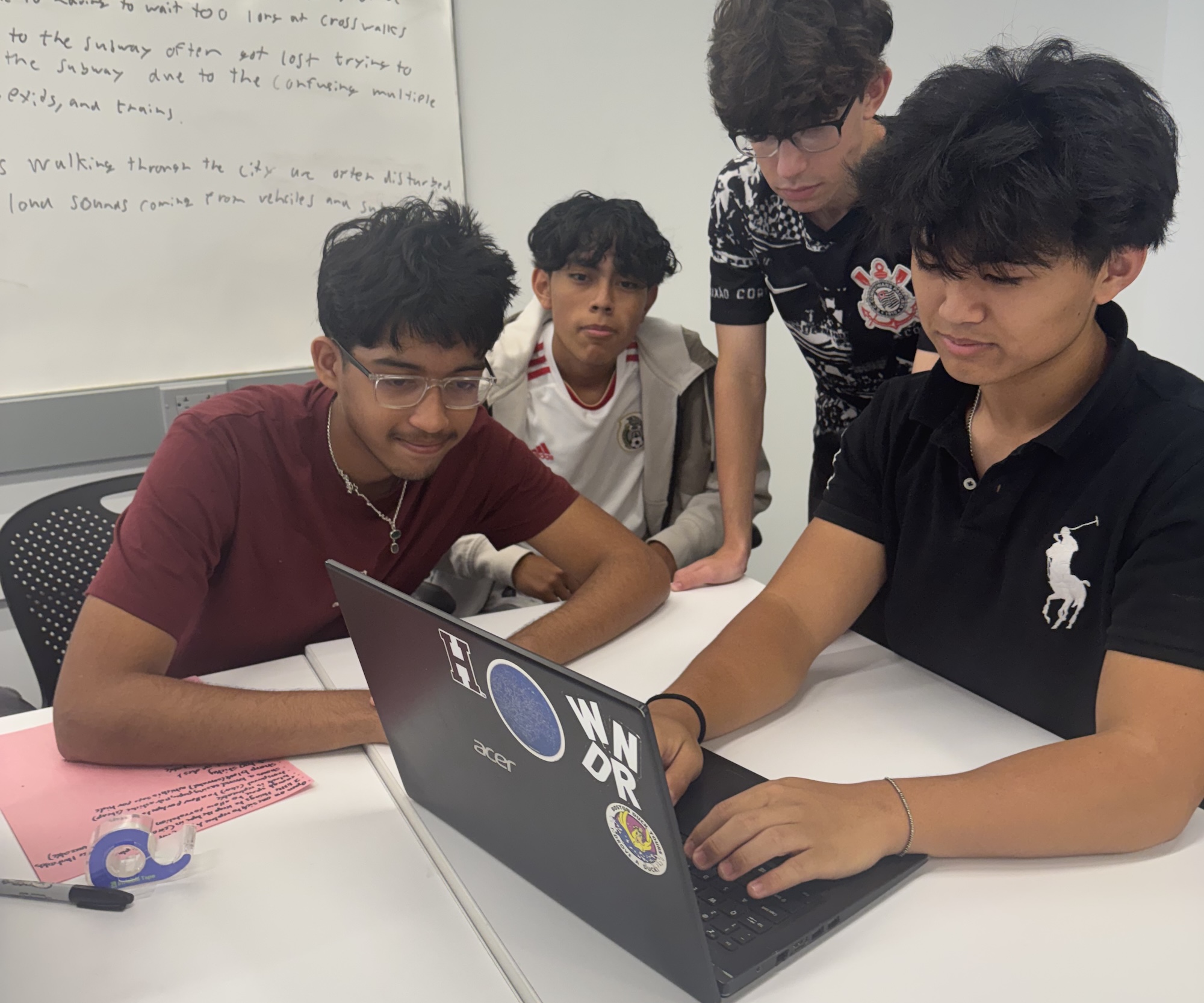
The Center’s tuition-based programs expanded this year with three new course offerings for high school students, who are enrolling from all over the country and internationally.
Cryptocurrency
This course, running from July 6 until its final showcase on July 17, introduces students to blockchain, smart contracts, decentralized finance, NFTs, and cryptographic security.
mBODY: Embodied Intelligence for Humanoid Robotics
In this advanced course running June 29 to its final showcase on July 24, students design and build functional humanoid robot prototypes, working under the guidance of leaders from NYU’s Project STEP, a student team that builds low-cost, open-source humanoid robots from scratch.
Game Production
Created by professors from NYU Tandon’s Integrated Design and Media program, this course – running July 20 through its final showcase on July 31 – takes students through game design fundamentals, narrative design, 2D development, and playtesting. Students finish with a prototype ready for their professional portfolio.
In addition to the new courses, the Center offers five returning tuition-based courses this summer: Machine Learning (Session 1: June 15-27; Session 2: July 6-17; Session 3: July 20-31); Design, Invent & Innovate (June 15-27); Computer Engineering for Good (Session 1: June 15-July 2; Session 2: July 6-24 ); Digital Design and User Experience (Session 1: July 6-17; Session 2: July 20-31 ); and Extending Reality Through Virtual Worlds (Session 1: July 6-17; Session 2: July 20-31).
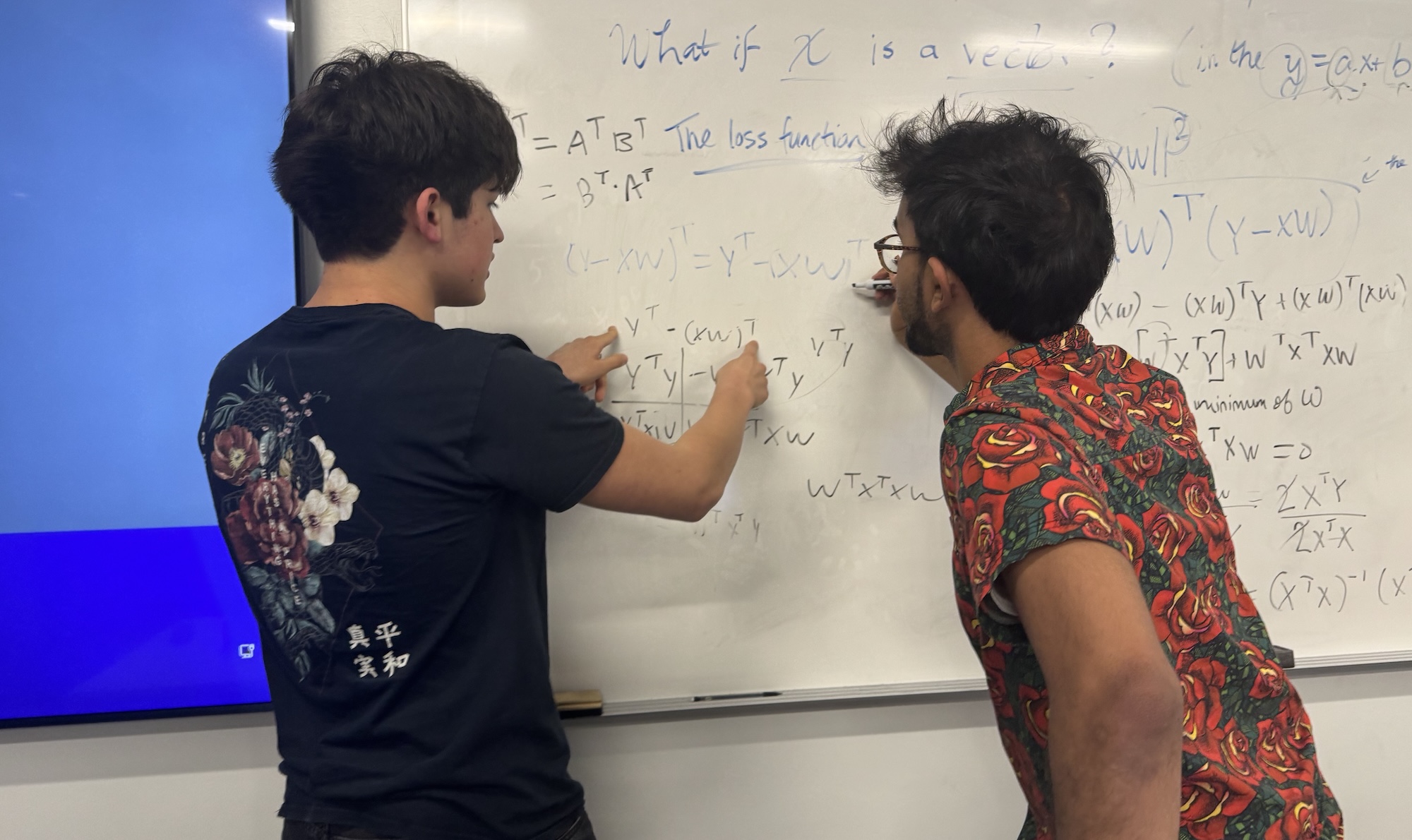
NYU Tandon's Center for K12 STEM Education has been building pathways for young people to see themselves as future engineers, researchers, and innovators since 2011. The Center focuses on expanding access to high-quality STEM experiences for students regardless of financial background. Since its founding, thousands of students ages 12 to 17 from all five boroughs and from around the globe have completed its programs, many of whom have gone on to pursue STEM fields in higher education and careers.