
Engineer, Businessman, Public Servant — and Alum: Calvin Young (‘10)
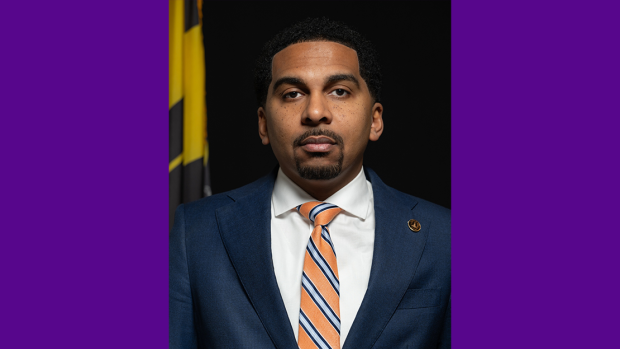
Calvin Allen Young III stood in the hallway of the West Wing, hurriedly stowing a case of sodas out of sight, his heart racing. It was just another task during his White House internship, the kind of mundane errand that filled the days between meetings and policy briefings. But then, emerging from an office, President Barack Obama appeared.
Their eyes locked — or so Young remembers it.
For a moment that seemed to stretch and contract simultaneously, the president and the young intern seemingly shared a wordless connection. Obama moved past, and Young stood frozen, so starstruck that he barely noticed Secretary of Defense Chuck Hagel emerging from the same room moments later. "I could have given him a soda," Young would later reflect with a laugh. But in that instant, something crystallized for the young mechanical engineer from Baltimore: the real power of leadership wasn't just in the equations he'd learned to solve or the machines he'd learned to design. It was in the ability to move people, inspire change, and fix systems far more complex than any he'd encountered in his textbooks.
Finding His Foundation
Young's path to that White House hallway began in Baltimore, where he was raised by a single mother alongside three siblings. Money was tight, but ambition ran deep. In high school, he excelled in JROTC, rising to Cadet Commander in the Air Force program, learning early lessons about leadership and discipline that would serve him throughout his life.
When it came time for college, Young faced a choice that confronts many talented young people from modest backgrounds: follow your passion or follow the paycheck? He loved political science, was fascinated by how systems of governance worked and evolved, but he was pragmatic. "I wanted to earn money," he would later explain simply. So in 2005, he enrolled at Polytechnic University (later to become NYU Tandon) as a mechanical engineering student.
What he found there changed everything.
The NSBE Brotherhood and the Power of Belonging
For a Black engineering student, the classroom could sometimes feel isolating. The faces around him didn't always reflect his own, and the culture of engineering schools wasn't always welcoming to students who looked like him. But Poly was different, he recalls. The school had made diversity a mission, and Young felt that commitment from the start.
It was in the National Society of Black Engineers that Young found his true home. "It was good to be in those rooms," he would later say. "There were other students who looked like me, who shared my struggles and ambitions, who understood what it meant to be proving yourself in spaces where you were still sometimes seen as an exception rather than the rule.”
Young didn't just join NSBE: he threw himself into it. By 2007, he was president of the student chapter. The leadership experience was transformative, teaching him how to mobilize people, manage budgets, and advocate for his community. These weren't skills typically associated with mechanical engineering, but Young was beginning to understand that the best engineers weren't just technical experts: they were problem solvers who understood human systems as well as mechanical ones.
He later went on to hold office in the national group, an undertaking akin to running a medium-sized company. There were budgets in the millions, conferences with thousands of attendees, partnerships with Fortune 500 companies, and the responsibility of serving as the face and voice of Black engineers across the country. For Young, it was an MBA before he had an MBA, a crash course in strategic leadership that complemented everything he was learning in his engineering coursework.
Angels Along the Way
Young would be the first to say he didn't make it through engineering school alone. There were angels along the way — people who saw his potential and refused to let him fall through the cracks.
Associate Dean of Admissions Beverly Johnson became his anchor. "She kept me on track and took care of me," Young recalls. When the coursework felt overwhelming, when money was tight, when he wondered if he belonged, she was there, offering everything from academic advice to emotional support. Later, Associate Dean of Student Affairs Anita Farrington would also become a strong champion.
Money was always a challenge. Young worked as a residential assistant at Othmer Hall, a job that covered his room and board but demanded hours of availability, responsibility for other students, and a maturity beyond his years. It was tiring, but it was also training in how to manage a crisis, mediate conflicts, and create community.
Then there was Jerry Hultin, the school’s president, who took an interest in the talented young student and made sure Young had the financial support he needed to stay in school. It was an act of institutional care that Young would never forget — and one that proved to him that when people in power use that power to lift up others, extraordinary things become possible.
The MechE Mind: Learning to Think Like an Engineer
The technical content of Young's engineering education — the calculus, the thermodynamics, the fluid mechanics — was important. But what proved even more valuable was the way engineering school taught him to think and solve problems.
Every engineering conundrum followed a pattern: define the problem, identify constraints, generate potential solutions, analyze trade-offs, implement, iterate. Young learned to break down overwhelming complexity into manageable components. He learned that failure wasn't the opposite of success; it was merely part of the process. He learned to trust data over intuition, but also to know when human factors mattered more than the numbers suggested.
These weren't just skills for designing machines. They were skills for redesigning systems, including the systems of governance that shaped people's lives.
The Corporate Revelation
After graduating in 2010 with his B.S. in Mechanical Engineering, Young entered the corporate world, joining United Technologies Corporation's Operations Leadership Program. He moved through positions at Pratt & Whitney, Sikorsky Aircraft, and Milton Roy, getting his hands dirty with real engineering challenges in manufacturing and operations.
But he noticed something: the people making the big decisions, the ones shaping strategy and determining the direction of these massive companies, weren't always the best engineers. They were the ones with MBAs. "I wanted one too," Young realized. If he was going to have maximum impact, he needed to add business strategy to his engineering foundation.
When he was accepted into Harvard Business School, the die was cast, and in 2015, he earned his MBA from one of the world's most prestigious programs.
The White House and the Calling
It was during this period that Young secured an internship at the White House — a chance to see governance from the inside. He approached it with the same enthusiasm he'd brought to NSBE leadership, volunteering for any task, no matter how small. Which is how he found himself delivering sodas that day when President Obama emerged from a meeting.
That moment — standing in the hallway, having just locked eyes with the president, realizing he'd been too starstruck to notice the Secretary of Defense — crystallized something for Young. He'd spent years learning how to make machines work better. He'd learned how to make businesses more efficient and profitable. But what he really wanted was to make systems work better for people. Especially for people like those he'd grown up with in Baltimore, who deserved better schools, safer neighborhoods, more economic opportunity, and leaders who understood how to engineer solutions to complex social problems.
"Take the chance to do things you might never get another chance at," became Young's motto. The White House internship was that kind of chance. So was what came next.
Coming Home: The Mayoral Campaign
In August 2015, at just 27 years old, Young declared his candidacy for mayor of Baltimore. He was running as a Democrat, hoping to become the city's 50th mayor in an election that would take place in 2016.
To some, the path from mechanical engineering to business school to politics seemed inexplicable. But to Young, the connections were natural and obvious. "MechE is all about making things move in ways they would not without our intelligent intervention," he explained. "The MBA teaches how to be strategic and economic to meet a need. That combination is exactly what we need in political leadership today."
The campaign was ambitious: he was, after all, a young candidate with no prior elected experience, taking on established politicians in a crowded primary. Ultimately, Young didn't win. But he gained something invaluable: experience, name recognition, and relationships with civic leaders across Baltimore.
More importantly, he had signaled his commitment to public service. He wasn't going to be the kind of engineer who designed systems from a comfortable distance. He was going to get his hands dirty in the messy, complicated work of governance.
"Put Me on the Hard Stuff"
After the campaign — and after a stint in the financial sector that included co-founding his own investment firm focused on impact-driven education companies — Young found his way into Baltimore city government. When he met with Mayor Brandon Scott about potential roles, his message was clear: "Put me on the hard stuff."
He meant it, and Scott, who happened to be an old friend, knew well that Young was up for the challenge. Young's current portfolio as Deputy Mayor of Community and Economic Development for the City of Baltimore has grown to include tourism, neighborhood revitalization, and small business, among other initiatives, a sprawling set of responsibilities that would overwhelm many others. "It sounds like a lot," Young acknowledged, "but it takes much more to run a city, so there are many of us pitching in." He stresses the importance of collaboration and teamwork not just to running a city but to almost any endeavor. “I got lucky to work in a lot of really good teams over my career, starting in NSBE,” he recalls.
Now, every day brings new problems: a neighborhood facing gentrification and displacement, a business corridor struggling with vacant storefronts, an infrastructure project falling behind schedule, a community organization seeking support. Each one requires the same skills Young learned in those first-year engineering courses: define the problem, analyze constraints, generate solutions, evaluate trade-offs, implement, iterate.
The difference is that now, the stakes aren't grades on a problem set. They are people's lives, communities' futures, and a city's trajectory.
The Through Line
Looking back on his journey — from high school JROTC commander to engineering student to NSBE leader to corporate engineer to business school student to White House intern to mayoral candidate to city official — Young sees a clear through line.
Engineering didn't just give him technical skills. It gave him a framework for understanding and solving problems. It taught him humility and the recognition that complex systems don't yield to simple solutions. It taught him persistence and the willingness to iterate until you get it right. And it taught him that with intelligent intervention, things that seem immovable can be made to move.
The people who supported him along the way taught him something equally important: that no one succeeds alone, and that those who do succeed have an obligation to reach back and help others climb.
And that moment in the White House hallway, face to face with President Obama, taught him that leadership isn't about credentials or titles. It's about presence, connection, and the courage to believe you belong in spaces where people like you haven't always been welcome.
Today, when he walks into a meeting about neighborhood revitalization or business development, he brings all of it with him: the problem-solving frameworks from mechanical engineering, the strategic thinking from business school, the leadership experience from NSBE, the understanding of government from his White House internship, the political savvy from his mayoral campaign, and the deep love for Baltimore that brought him home.
He's still making things move in ways they wouldn't without intelligent intervention. It's just that now, the things he's moving are policies and possibilities.