

Graduate Research Symposium for the Department of Chemical and Biomolecular Engineering

Welcome to the CBE Graduate Research Symposium 2026!
Our inaugural Graduate Research Symposium for the Department of Chemical and Biomolecular Engineering (CBE) will be held on Friday, June 5, 2026 at the NYU Tandon School of Engineering. For updates regarding schedule, location, and the keynote speaker, please register for the event and keep an eye out for communications via this website.
GRS is organized by the CBE Graduate Student Council. It aims to connect current graduate students with industry professionals from the Greater New York metropolitan area. The event includes oral and poster presentations showcasing the research conducted by the students in the fields of sustainable engineering, materials, and bioengineering.
If you are interested in co-sponsoring the event, or have any questions, please reach out to:
Ali Malli (am8992@nyu.edu)
Alexia Kaloudis (ank459@nyu.edu)
Schedule
|
Time |
Description |
|---|---|
|
9:00 - 10:00 AM |
Check In and Refreshments |
|
10:00 - 10:15 AM |
Opening Remarks by CBE Department Chair: Rastislav Levicky |
|
10:15 - 11:30 AM |
Session 1: |
|
11:30 AM - 12:30 PM |
Keynote Speaker and Q&A Session |
|
12:30 - 1:30 PM |
Lunch and Networking Session |
|
1:30 - 2:30 PM |
Session 2: |
|
2:30 - 4:00 PM |
Poster Session and Refreshments |
|
4:00 - 4:10 PM |
Closing Remarks |
Speaker
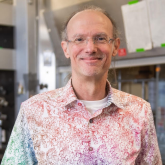
Mark W. Grinstaff
William Fairfield Warren Distinguished Professor, College of Engineering
Boston University
Abstract
Karikó and Weissman discovery of the role of modified nucleotides in RNA catalyzed the advancement of messenger ribonucleic acid (mRNA) to the forefront of modern medicine. Unfortunately, the inherent short half-life of mRNA necessitates a large dose to be effective, which increases the risk of adverse side effects, limits global accessibility, and restricts applications. More recently developed RNA technologies, such as self-amplifying RNA (saRNA) offers the potential of potent vaccines and in situ therapeutics by enabling protein expression for longer duration at lower doses. However, a major barrier to saRNA efficacy is the potent early interferon response triggered upon cellular entry, resulting in saRNA degradation and translational inhibition. Substitution of mRNA with the modified nucleotide - N1-methylpseudouridine (N1mΨ) - reduces the interferon response and enhances protein expression. Multiple attempts to use modified nucleoside triphosphates (modNTPs) in saRNA have been unsuccessful, leading to the decades’ long dogma that modNTPs are incompatible with saRNA. We unexpectedly discovered several modNTPs (e.g., 5-methylcytidine triphosphate, m5C) that, when incorporated into saRNA at 100% substitution, confer immune evasion and enhance protein expression potency and duration (Nature Biotechnology, 2025. https://doi.org/10.1038/s41587-024-02306-z). Transfection of m5C saRNA, encoding for mCherry protein, significantly enhances protein expression in mouse muscle myoblast C2C12 cells as well as human immortalized HEK293-T and Jurkat cells, and primary foreskin fibroblasts (HFF) and CD3+ T cells. A single intra-muscular injection of m5C saRNA, encoding for luciferase, results in 30+ day protein expression and significantly greater performance than N1mΨ mRNA. Further, the type I interferon response is less in transfected human PBMCs in vitro and after intra-muscular administration in vivo compared to wild-type saRNA. As a first case study, we created a m5C saRNA COVID vaccine, and observed significant in vitro expression of viral antigen and in vivo protection against a lethal challenge with a mouse-adapted SARS-CoV-2 strain. At a 10 ng dose, the m5C saRNA vaccine confers statistically improved survival with increased antibody titers compared to unmodified saRNA or N1mΨ mRNA. This discovery considerably broadens the potential scope of saRNA, enabling vaccines with increased potency, entry into previously impossible cell types, as well as the potential to apply saRNA technology to non-vaccine modalities such as cell therapy and protein replacement.
Bio
Mark W. Grinstaff is the William Fairfield Warren Distinguished Professor, and a Professor of Biomedical Engineering, Chemistry, Materials Science and Engineering, and Medicine at Boston University. He is also the Director of BU’s Nanotechnology Innovation Center and the Director of the NIH T32 Biomaterials Program. Mark's awards include the ACS Nobel Laureate Signature Award, NSF Career Award, Pew Scholar in the Biomedical Sciences, Camille Dreyfus Teacher-Scholar, Alfred P. Sloan Research Fellowship, the Edward M. Kennedy Award for Health Care Innovation, the Clemson Award for Applied Research, the ACS Award in Applied Polymer Science, the RSC Centenary Prize, and the National Science Foundation Trailblazer Engineering Impact Award. He is a Fellow of the American Institute of Medical and Biological Engineering, the American Academy of Nanomedicine, the American Institute of Chemists, the Biomedical Engineering Society, the Royal Chemical Society, the Royal Society of Medicine, the International Academy of Medical and Biological Engineering, the American Association for the Advancement of Science, the Controlled Release Society, and a Founding Fellow of the National Academy of Inventors. Over the course of his tenure, Grinstaff’s groundbreaking research has yielded more than 440 peer-reviewed publications, more than 200 patents and patent applications, and more than 425 oral presentations. His work has been cited more than 55,000 times (h-index = 105). He is a co-founder of several companies, and his innovative ideas and efforts have led to new regulatory products including a pharmaceutical product (Abraxane TM ), adhesive products (OcuSeal ® and Adherus Surgical Sealants ® ), and biopsy markers (Trilogy™ Breast Tissue Markers) that are now the standard of care and helping millions of patients.
