

Directed Nanomaterials Assembly for Post-AI Era
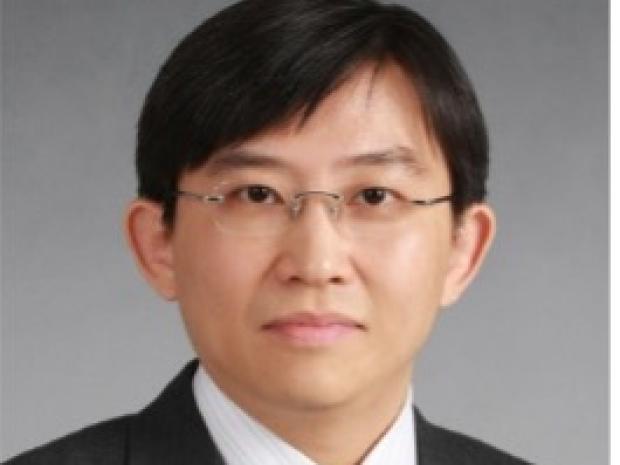
Speaker
Sang Ouk Kim
Chair Professor, Department of Materials Science and Engineering
Director, KAIST Institute for Nanocentury & Center for Ethics and Human Rights, KAIST, Republic of Korea
President, Korean Graphene Society
Chair, 2025 MRS Spring Meeting & 2025 E-MRS Fall Conference
Abstract
Directed Nanomaterials Assembly for Post-AI Era
Molecular self-assembly is an intriguing nanofabrication principle widespread in natural living system. My research group has been working on the directed nanoscale assembly of block copolymers (BCPs) and low-dimensional materials, such as carbon nanotubes (CNTs) and graphene over the past two decades. BCP self-assembly can generate dense, periodic nanopatterns with sub-10-nm scale pattern precision, particularly interested in semiconductor nanolithography. We have contributed to this research field from the early days, such as the original works for directed self-assembly (DSA) principle by nanoscale epitaxy. Recently, we have reported an interesting IoT application of BCP defective fingerprint nanopatterns for physically unclonable function (PUF) label for information security. Low-dimensional carbon materials, including CNTs and graphene, have attracted a great deal of attention in the era of nanotechnology, whose potential for real-world application can be greatly boosted by nanoscale assembly into functional architectures. In this regard, our invention of graphene oxide liquid crystal (GOLC) triggered a big advance in the solution processing of graphene-based structures, such as 1D graphene fibers, 2D graphene membranes/films, and 3D nanoporous graphene assembly. Besides, our early day discovery of Fe-N4 complex structure in graphene plane is one of the first reports for single atom catalyst, highlighting the significance of chemical modification of graphene-based materials for real-world applications. Recently, we demonstrated human muscle like strong artificial muscles composed of graphene based composite structures for the reversible high power biomimetic movements by light driven remote control.
Bio
Prof. Kim is the KAIST Chair Professor in the Department of Materials Science and Engineering at KAIST and serving as the directors for the KAIST Institute for Nanocentury, KAIST Center for Ethics and Human Rights and LG InnoTech-KAIST Research Innovation Center. His main research interest is the directed nanoscale assembly of soft materials towards novel materials discovery, including block copolymers and low-dimensional materials for advanced applications, such as energy/environmental, IoT and soft robotics. His scientific contribution has been widely recognized by prestigious honors, including the Highly Cited Researcher from Clarivate Analytics, the KAIST Grand Prize for Academic Excellence and Presidential Young Scientist Award. He is currently serving as an associate editor of Energy Storage Materials (Elsevier) as well as editorial advisors or board members for ACS Accounts of Materials Research (ACS), Small (Wiley), Molecular Systems Design & Engineering (RSC) and so on. For the domestic and international academic societies, he is currently serving as the President of Korean Graphene Society and appointed as meeting & conference chair for 2025 MRS Spring Meeting (Seattle) as well as 2025 E-MRS Fall Conference Meeting (Warsaw, Poland). To date, He has published more than 310 SCI Journal papers and 100 patens relevant to the nanomaterials science & technology. Based on the Google Scholar statistics, Prof. Kim’s H-index is 97 and the total citation number is more than 32,000. Prof. Kim established KAIST start-up company named ‘Materials Creation’ in 2021 and actively collaborating with industrial partners for the commercial product development based on high quality graphene oxide.