

Leveraging natural silk biopolymers, and the insects that make them, for applications in biotechnology
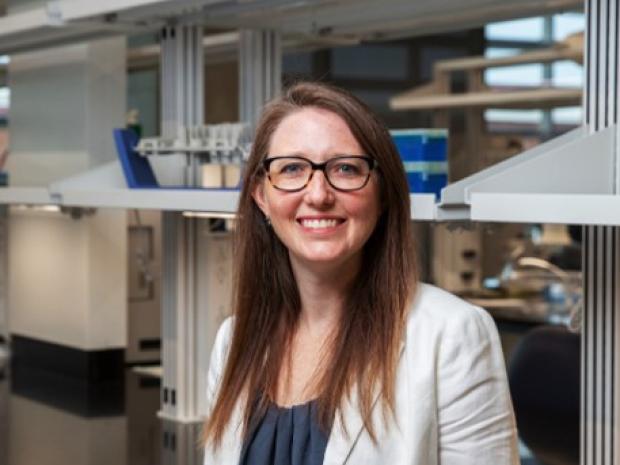
Speaker
Whitney Stoppel
Department of Chemical Engineering
University of Florida
Abstract
Leveraging natural silk biopolymers, and the insects that make them, for applications in biotechnology
The quest to develop new, efficient ways to produce and deliver bioactive cargo to meet the needs of the drug and protein delivery community never ends. Bioactive cargos, such as proteins or enzymes, can be challenging to deliver as each molecule comes with its own requirements, and thus the delivery and packaging strategy necessitates adjustments and optimization. In our work, we are interested in leveraging the nanostructures formed by the silk fibroin protein to stabilize bioactive cargos, creating another strategy to meet the needs of delivery systems. Silk fibroin, often isolated from domesticated Bombyx mori silkworms, is a protein with a high propensity to form secondary β-sheet structures. As engineers, we can leverage or control the formation of these nanoscale structures to kinetically trap bioactive cargos, such as extracellular matrix proteins, growth factors, and most recently, hemoglobin. For example, we have leveraged the phase separation of the silk fibroin protein under sonication conditions to entrap the hemoglobin, creating shelf-stable nano- and microparticles that can serve as hemoglobin based oxygen carriers. Furthermore, we can control the formation and organization of these structures to alter mechanical behavior of materials formed through modulation of the rate of β-sheet formation, ultimately impacting crystal size or organization. The influence of these nanoscale protein domains on material properties allows for a wide range of material formats capable of entrapping bioactive cargo, including sponges, nanoparticles, and hydrogels.
However, Bombyx mori is not the only source of silk proteins. In the Stoppel lab, we also leverage Plodia interpunctella, the pantry moth, as a source of silk fibroin and as an insect-based bioreactor for production of fusion proteins. We use gene editing strategies, like CRISPR/Cas9 and PiggyBac, to modify insect cells and insects themselves followed by development of protein purification methods to use these materials for biomaterial-based applications. This talk will highlight both the fundamentals of protein crystallization as it relates to material formulations and kinetic entrapment of bioactive cargos alongside some of the exciting adventures we have in collaboration with entomologists as we expand on silk fibroin’s use in biomedical applications.
Bio
Whitney Stoppel is an Associate Professor in the Department of Chemical Engineering and an affiliate faculty member of the J. Crayton Pruitt Family Department of Biomedical Engineering and the Department Molecular Genetics and Microbiology at the University of Florida. She received her B.S. in Chemical and Biomolecular Engineering from Tulane University, a Ph.D. in Chemical Engineering and a graduate certificate in Cellular Engineering from the University of Massachusetts Amherst, and completed an NIH IRACDA postdoctoral fellowship in Biomedical Engineering at Tufts University. Her current research centers on the development of all natural biomaterial platforms for in vitro and in vivo biomedical applications. The research group spans efforts from delivering bioactive molecules to mammalian cells to delivering genetic materials into silkworms for engineered silk fibroin protein production. The Stoppel lab exploits the highly tunable mechanical and structural properites of silk fibroin proteins to address pressing clinical problems and lead to fundamental investigation of disease mechanisms in vitro. Dr. Stoppel is a recipient of a Department of Defense Congressionally Directed Medical Research fund Discovery Award and a recent recipient of the NIH NIGMS Maximizing Investigators' Research Award (MIRA). The Stoppel Lab also enjoys collaborations with the UF Florida Museum of Natural History and the McGuire Center for Lepidoptera and Biodiversity, expanding the group’s ability to explore silk materials from a vartiety of insect species through an NSF IntBio Award. Since joining UF in 2018, Dr. Stoppel has enjoyed teaching Elementary Transport and Bioprocess Engineering, serving as a chair of the Graduate Recruiting Committee, as well as currently mentoring 7 PhD students, 3 MS students, and over 20 undergraduates, who together make this research possible.