

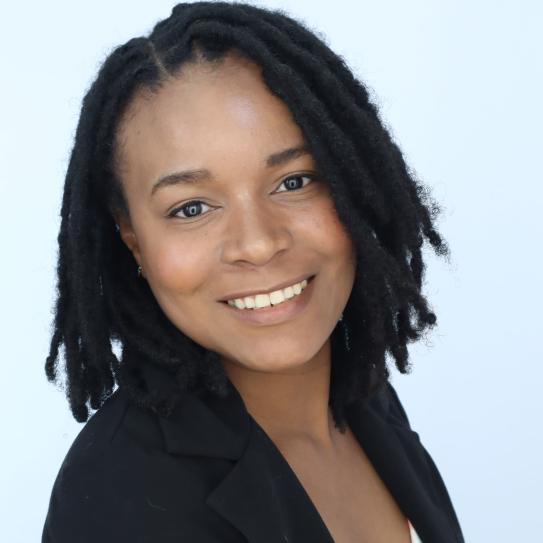
Upcycling Rarity: How an NYU Tandon Master’s Student Is Redefining Sustainable Luxury
For many in academia, the boundary of discovery stops at the laboratory bench. Data is collected, papers are published, and the knowledge remains safely contained within the ivory tower. But Kutura Bailey, a student in NYU Tandon’s Master of Science in Bioinformatics online program, has always belonged at the intersection of multiple worlds. Balancing a demanding career as a government employee with rigorous graduate studies, Kutura recently proved the power of an interdisciplinary mindset by winning the prestigious L'Oréal and GSA/GCA Early Talent Competition.
Armed with a diverse background in biology and public relations, Kutura stepped up to the challenge, using her unique toolkit to bridge the gap between complex science and high-end consumer marketing.
The Tandon Trajectory: Merging Computational Focus with Global Competition
When looking for a graduate program, Kutura specifically chose NYU Tandon because its curriculum offered a much stronger, computationally focused curriculum than other online programs. That specialized training, combined with core biological principles, gave her the exact foundation she needed when she decided to enter the L'Oréal contest.
The innovation she designed focused on oud, one of the most expensive, rare, and coveted raw ingredients in perfumery, which is currently facing severe depletion due to over-harvesting. Drawing on her biotechnology background, Kutura proposed a revolutionary sustainable alternative: isolate the specific microorganisms responsible for producing the incense resin in Aquilaria trees, genetically modify them, and use precision fermentation to extract a molecularly identical synthetic oud, leaving the endangered trees entirely undisturbed.
To construct this hypothetical framework, Kutura relied directly on the fundamental molecular biology reinforced through her bioinformatics studies, specifically the central dogma of biology. She mapped out how DNA is transcribed into RNA, which is then translated into the specific proteins responsible for performing these complex biological functions. By understanding how these domains of life operate at a cellular level, she was able to confidently outline how to genetically modify the host organisms, track transcriptional changes, and ensure the desired genetic adjustments were successfully integrated into the genome.
To pitch the concept to a non-scientific panel, Kutura leaned on the unique ecosystem of NYU. She attended a strategic workshop hosted by the NYU Entrepreneurial Institute, an experience that completely shifted how she approached her final presentation copy.
"The workshop taught me that developing products is not enough, you have to know your customers and their motivation to buy," Kutura explains. "I didn't want it to sound like a scientific publication because that wouldn't translate easily to people without a science background."
Channeling both her Tandon training and her PR background, she branded her campaign with the tagline "Upcycle Rarity." Her ability to look at genetic modifications through a consumer lens captivated the judges, securing her the top spot in the global competition and an exclusive, virtual pitch meeting with L'Oréal executives.
Overcoming Hurdles with NYU Support
Despite the massive achievement, navigating a high-level competition within a strict four-day deadline brought significant hurdles. Managing full-time work alongside graduate school can be isolating, and Kutura frequently fought against a persistent "imposter voice", the echo of a former mentor from a previous university who had once told her she didn't have what it took to run her own experiments.
Winning the competition was a profound moment of personal validation, but finding her footing required a strong support system. Because online programs demand immense stamina, Kutura found critical anchors right within the NYU community to help her navigate both academic pressure and personal health challenges.
Her Tandon academic advisor, Jai-La, was the catalyst for the entire experience, sending out the opportunity and immediately stepping in to provide encouragement when the workload felt overwhelming.
Beyond the Lab Bench
Now in the final stretch of her Bioinformatics degree, with just two classes and a capstone remaining, Kutura looks back at the experience as a turning point. The global win didn't just dampen her imposter syndrome, it reaffirmed the real-world value of her ideas.
When asked what advice she would give to fellow STEM students who feel their skills belong exclusively in a classroom or a lab, Kutura points to a larger, shared responsibility.
"There’s a kind of unspoken dogma in academia where the purpose is to just gather data for the sake of contributing to the field, and then we’re done," Kutura reflects. "But what we learn shouldn’t just be for enrichment, it should be for the benefit of the world. The issues we see go way beyond our lab benches."

Bioinformatics, M.S.