

Labs and Groups
We are home to dozens of research labs and groups, where engineering researchers are bridging disciplines in state-of-the-art facilities.
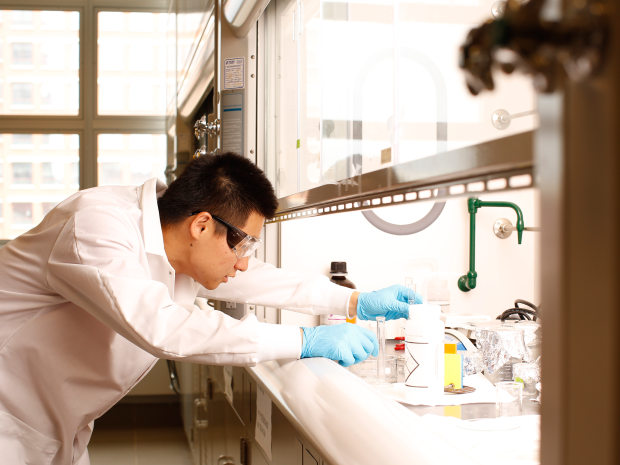

Behavioral Urban Informatics, Logistics, and Transport Laboratory (BUILT)
BUILT @ NYU conducts research in the area of transportation systems design and modeling.
Bui Lab
The Bui Lab's research centers on the development of electrochemical technologies for decarbonizing chemical manufacturing and recovering value from waste. Our team combines high-throughput experimentation, flow chemistry, continuum physics modeling, and machine learning to rapidly optimize and scale new electrochemical systems while developing a fundamental understanding of the physics and chemistry that govern their operation.
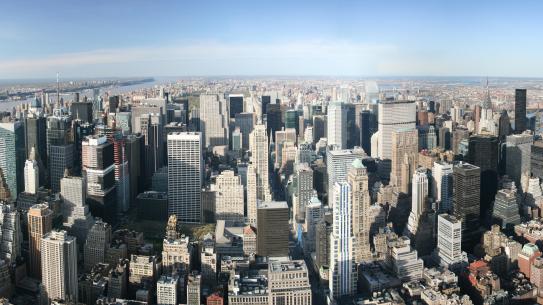
Building Informatics and Visualization Lab (BiLab)
The biLAB focuses on understanding the operational challenges associated with construction and operation of facilities and infrastructure systems in urban settings.
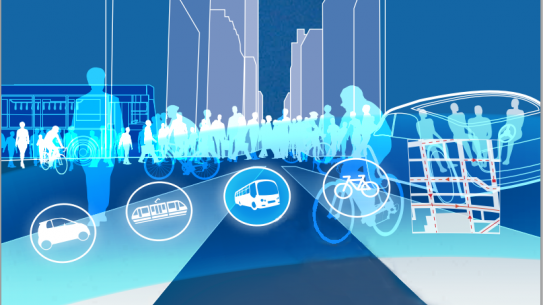
C2SMART
Connected Cities with Smart Mobility Transportation (C2SMART) uses cities as living laboratories to study challenging transportation problems and find solutions from the unprecedented recent advances in communication and smart technologies.

Center for Urban Science + Progress (CUSP)
The Center for Urban Science and Progress (CUSP) is an interdisciplinary research center dedicated to the application of science, technology, engineering, and mathematics in the service of urban communities across the globe. Using New York City as our laboratory and classroom, we strive to develop novel data- and technology-driven solutions for complex urban problems.

Circularity in Energy Materials (CEM)
Our lab addresses the critical challenge of energy material sustainability by focusing on closing their lifecycle through fundamental research and maintaining zero-waste experimental practices.

Climate, Energy, and Risk Analytics Lab
The CERA Lab, directed by Assistant Professor Yuki Miura, advances solutions for climate and hazard related risks through data-driven research. By identifying, quantifying, and mitigating risks, it supports building resilient communities, protecting assets, and supporting institutions and communities, working closely with stakeholders.
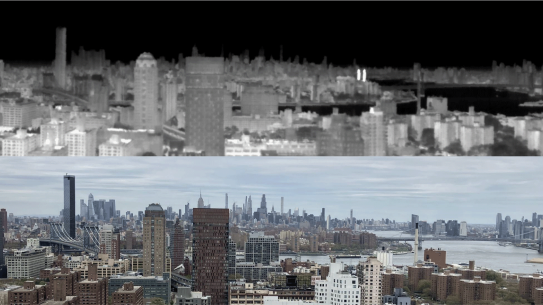
CUSP Urban Observatory
Through the novel use of observational and analytical techniques, the Urban Observatory studies the complex interactions between the built, natural, and human components of the city as a coherent, definable system with the goal of enhancing public well-being, city operations, and future urban plans.

Emerge Lab
The mission of the EMERGE lab is to make it easy and efficient to develop capable, safe, and intelligent multi-agent systems through learning, simulation, and data. We emphasive use-inspired basic research where we draw inspiration as to what research is needed from specific problems in multi-agent autonomy and transportation.

FEATS: Lab For the Economic Analysis of Transportation Systems
Led by Assistant Professor Daniel A. Vignon, the lab aims to inform the design, regulation, and operations of emerging mobility services. Research looks at infrastructure systems, ride-hailing services, and dynamics of transportation systems.
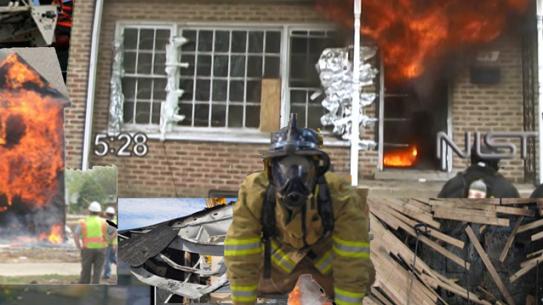
Fire Research Group
Researchers at the Fire Research Group work on an online, scenario-based simulation training program for firefighters. ALIVE (Advanced Learning through Integrated Visual Environments) is a decades-long effort to bridge the information gap between research and real-life firefighting.
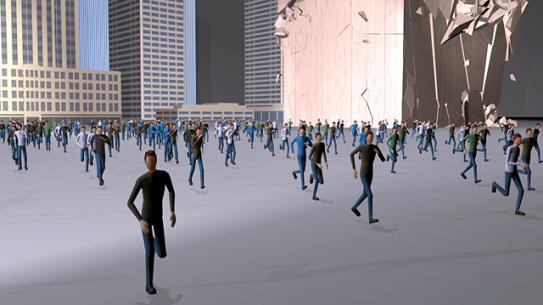
Geosimulation
Geosimulation is a catch-all phrase that can be used to represent a new wave of spatial simulation modeling that has come to the fore in very recent years.
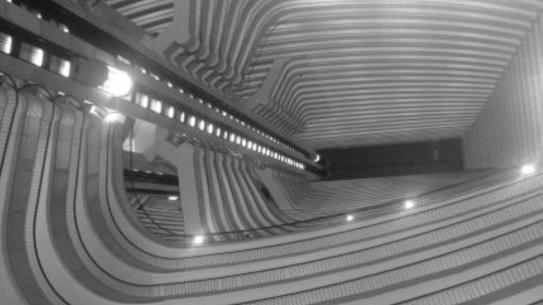
Hartman Research Lab
The Hartman Research Laboratory investigates the kinetics of chemical reactions and the design of the reactors in which they take place. Catalysis and reaction engineering is at the heart of virtually every process or system in which a chemical transformation occurs.

Human FUEL
The Human Factors and Urban Ergonomics Lab (Human FUEL) conducts research primarily on transportation systems focusing on understanding and enhancing human behavior as they interact with complex systems, with the ultimate goal of improving operator safety and reducing injuries and fatalities.

Hydrologic Systems Group
We combine statistical and computational methods to study the dynamics of water in various built and natural environments. These hydrologic systems can be as diverse as natural watersheds, meandering rivers, urban stormwater infrastructures, mesoscale rainfall fields, and flooded geographies. .

igNYte Lab
The igNYte Lab is a cutting-edge fire research laboratory dedicated to advancing fire safety through science and technology. The lab develops advanced diagnostics to enhance firefighting strategies and emergency responses, supporting the long-term efforts of the FDNY.
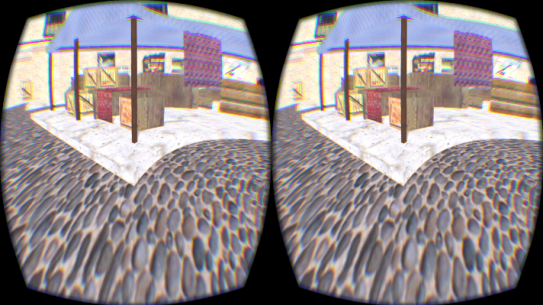
Immersive Computing Lab
The ICL, directed by Assistant Professor Qi Sun, conducts cutting-edge research that spans the fields of computer graphics, physics, and computational cognition, with the goal of creating unprecedented virtual and augmented reality systems to revolutionize urban life.
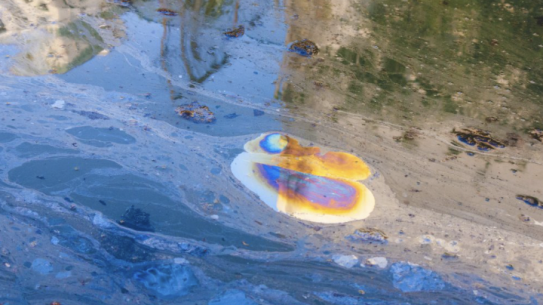
Laboratory for Living Interfaces
At the Laboratory for Living Interfaces we study the interaction of organisms and their environment through scientific and design enquiries. Through experimental practice, we aim to understand how the design decisions of architects, city planners, and material scientists affect the ubiquitous living component of the spaces we inhabit: the environmental microbiome.

Low Pwr Lab
Low Pwr Lab is a research lab focused on climate-resilient, rugged and low-power computing for community-owned solutions, infrastructure & services. Our research focuses on demystifying ubiquitous technologies such as web hosting services and online multimedia platforms and investigating their environmental footprint.
Multifunctional Material Systems Laboratory
Our research lies at the interface of multifunctional material development and electrochemical engineering. Electrochemical devices are ubiquitous to a broad range of energy conversion technologies and chemical processes.
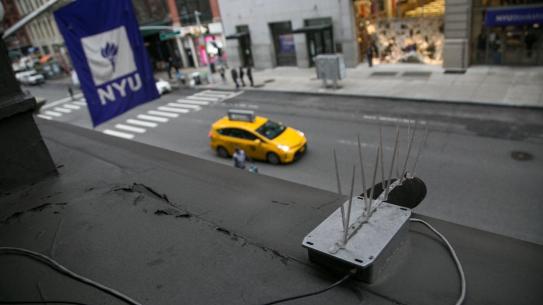
Music and Audio Research Lab (MARL)
MARL, directed by Professor Juan Pablo Bello, is an interdisciplinary center at the intersection of science, technology, music, and sound, with research connecting a wide range of fields ranging from computing and artificial intelligence, immersive and interactive technologies, to the latest advances in neuroimaging of the human brain.
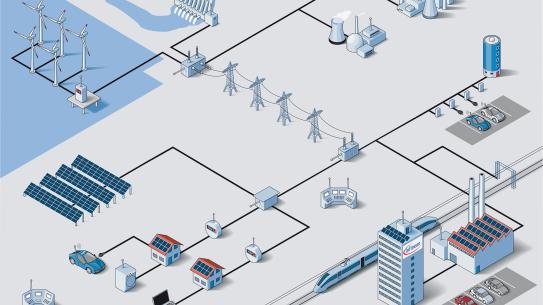
Power Lab
Unique in New York City, the Department of Electrical and Computer Engineering offers a complete program in electrical power systems. Research areas include: Power Generation, Transmission and Distribution, Electric Machines, Electric Drives, Power Electronics, Electromagnetic Propulsion and Design, Distributed Generation, and Smart Grid.

Resilient Urban Networks Lab
The mission of the Resilient Urban Networks (RUN) Lab is to develop computational tools and data-driven models that help us better understand the complex interplay between collective human behavior and the built environment exposed to such drastic changes.

Ruyle Lab
The Ruyle lab examines how human activity, the biosphere, and climate change impact water quality. Our lab uses controlled experiments and environmental measurements to build models describing the severity and impacts of chemical contamination. Our goal is to protect safe water and ensure healthy ecosystems and communities.

Silverman Laboratory
The Silverman Laboratory conducts research to understand and design sustainable and appropriate wastewater treatment process, in an effort to protect public health and environmental quality.

Smart Innovations in Built Environment Research (SiBER) Lab
Smart Innovations in Built Environment Research (SiBER) Lab, led by Mohamad Awada, explores the integration of AI, machine learning, and digital technologies to enhance the performance, resilience, and sustainability of civil infrastructure. The lab focuses on digital twins, smart monitoring, and data-driven solutions for structural assessment and urban systems.
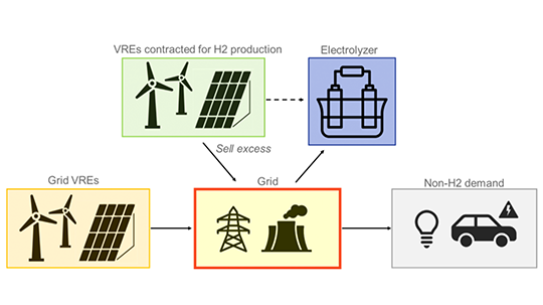
Sustainable Energy Transitions Group
The Sustainable energy Transitions (SET) group is interested in developing mathematical modeling approaches to analyze design, optimization and scale-up of low-carbon technologies and their energy system integration under different policy and geographical contexts.
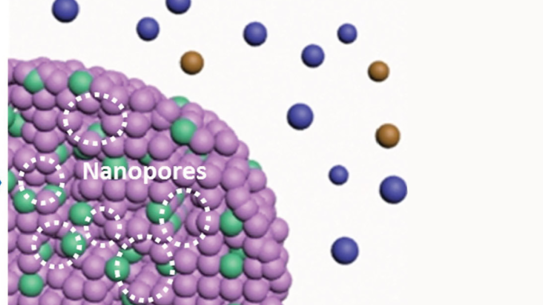
Transformative Materials and Devices Lab
Our group focuses on the development of novel materials and devices for energy conversion and storage. True to our name, we design and study transformative technologies that have the ability to change the status quo and promote the adoption of sustainable energy generation and use.
Urban Complexity Lab (UCOMP)
Urban Complexity Lab is unfolding complexity of urban systems for research, innovation and applications. We leverage big urban data and cutting-edge machine learning and network analysis techniques to make our cities more smart, efficient, sustainable, and resilient – better places to live in.
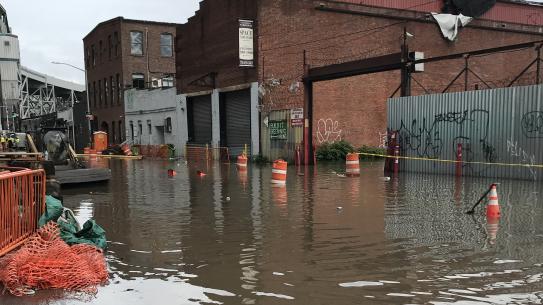
Urban Flooding Group
In a climate-changed world, flooding is expected to have an outsized influence on public health and infrastructure in urban areas. We are looking to develop a publicly- accessible platform that provides real-time flood information and to investigate changes to the microbiome.

Urban Intelligence Lab
We are focused on creating new data-driven methodologies to observe, model, and analyze the urban environment. Our work is grounded in solving real-world problems and providing decision-makers with a comprehensive understanding of the relationships between physical infrastructure systems, natural systems, and human systems.
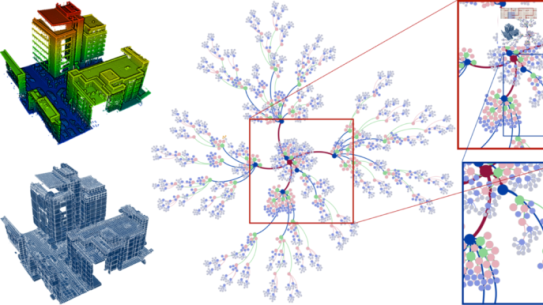
Urban Modeling Group
The mission of the Urban Modeling Lab is to transform urban engineering by bridging the gap between civil engineering and computer science. Directed by Professor Debra Laefer, the Lab focuses on developing tools to better understand the urbanbuilt environment through pioneering new methods to optimize and synthesize multi-modal data collection, storage, and processing.

Urban Planet Lab
Cities extend their influence far beyond their physical boundaries, affecting ecosystems, climate, and societies worldwide. The Urban Planet Lab, directed by Assistant Professor Anamika Shreevastava, studies the dynamics and impacts of urbanization at multiple scales—from local neighborhoods to global systems—to better understand and address the complex challenges of our increasingly urbanized world.
Visualization, Imaging and Data Analytics Center
ViDA consists of computer scientists who work closely with domain experts to apply the latest advances in computing to problems of critical societal importance, and simultaneously generate hypotheses and methods that new data demands.