
When all the windows align: Former ISRO Chairman shares how India engineered its successful moon mission
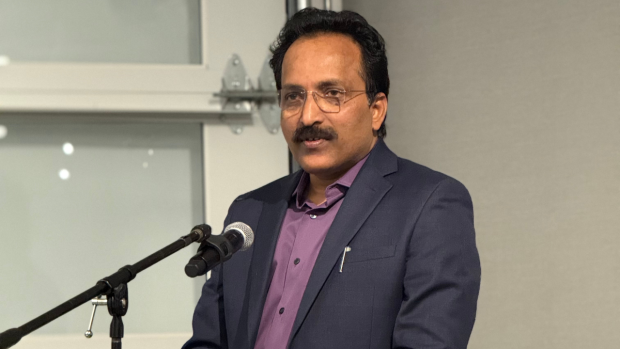
Dr. S. Somanath, former Chairman of the Indian Space Research Organisation (ISRO) and current Chancellor of Chanakya University
Complex engineering systems fail not from a single mistake, but from a cascade of small oversights aligning at the worst possible moment.
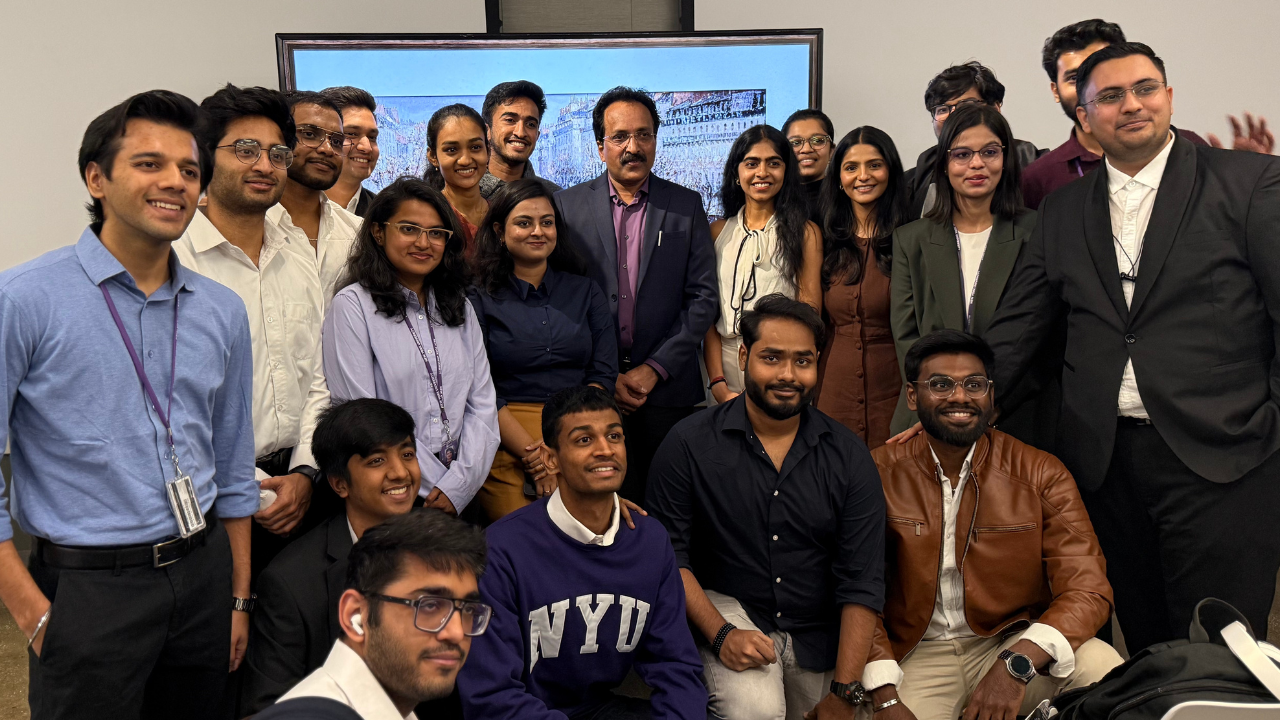
This was among the key insights shared by Dr. S. Somanath, former Chairman of the Indian Space Research Organisation (ISRO) and current Chancellor of Chanakya University, during his October 2, 2025 presentation at NYU Tandon.
Dr. Somanath led India's most celebrated space missions, including Chandrayaan-3, which in August 2023 made India the first nation to achieve a soft landing near the moon's south pole.
But his talk focused less on triumph and more on transformation, specifically, how India converted the challenges of Chandrayaan-2 into the success of Chandrayaan-3, and what those lessons mean for engineers across all disciplines.
The presentation offered a rare glimpse into the systematic approach that defines modern space exploration.
When Windows Align: Understanding Cascading Failures
Dr. Somanath illustrated failure mechanics using a vivid metaphor: imagine multiple rooms, each with windows that aren't aligned. Normally, even if all windows are open, you can't see through because the misalignment creates barriers that prohibit that view. But when multiple vulnerabilities align at once, like windows suddenly lining up, a problem can pass straight through all defenses. That's when catastrophic failure occurs.
Failure is never an event of [one cause]. It is a series of things that will go wrong that will ultimately end up in ... failure."
— Dr. S. Somanath
In Chandrayaan-2's case, seemingly minor issues compounded during descent: software constraints on rotation rates, stepper motors that couldn't respond quickly enough to commands, and differential thrust between multiple engines. None alone would have doomed the mission. Together, they triggered a tumble the control system couldn't correct.
"We understood all of this not by going to [the] moon [and] picking up ... debris, but [through] all simulations that went into it for years together," Dr. Somanath noted.
Key Engineering Lessons
Among the insights Dr. Somanath emphasized:
- Embrace experimental courage: After Chandrayaan-3's successful landing, engineers reprogrammed the lander to perform a brief "hop" off the surface, demonstrating autonomous capabilities for future missions. "We should ... have no hesitation [to] do experiments ... even in those situations [where] we can actually face failures..."
- Design for resilience, not just success: Systems should identify errors through comprehensive testing that explores edge cases and parameter perturbations.
- Leverage constraints as innovation: India's limited budgets drove creative solutions, like using existing rockets with efficient orbital maneuvering rather than building more powerful launch vehicles.
Dr. Somanath's emphasis on multi-sensor fusion, algorithm robustness, and handling uncertainty resonates beyond aerospace, applying equally to autonomous vehicles, robotics, and AI systems making decisions with incomplete information.
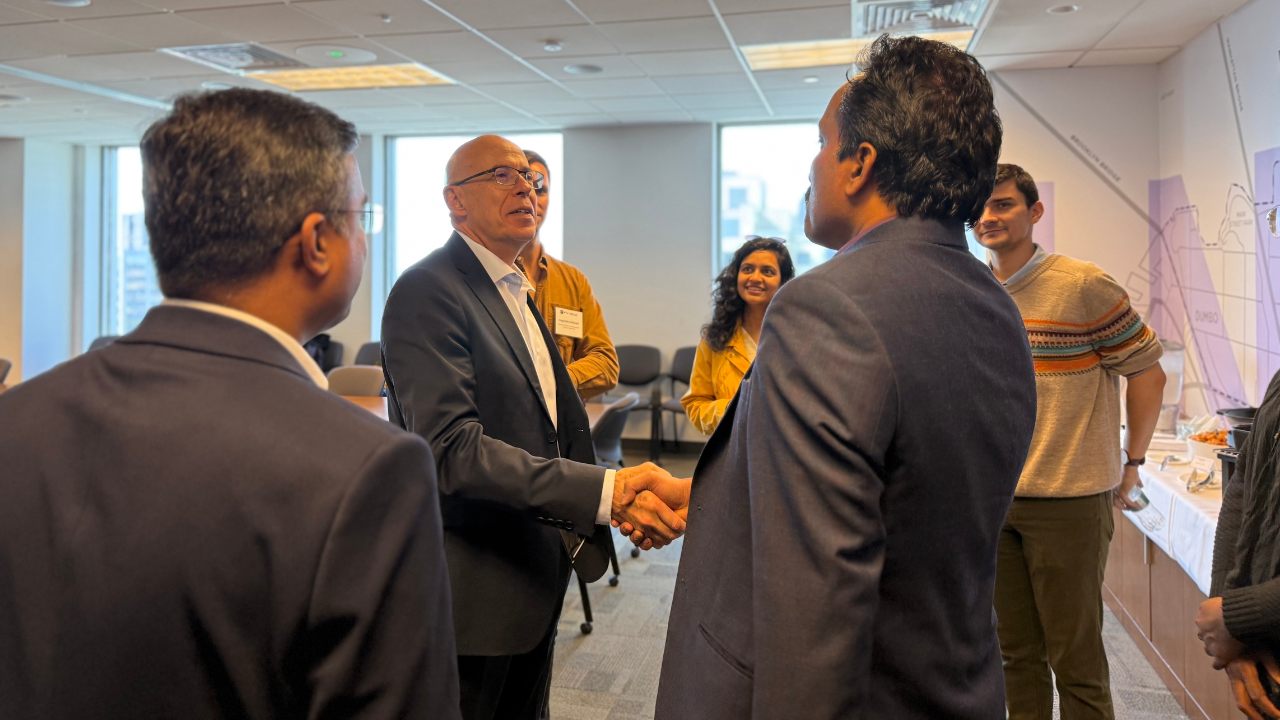
Following his presentation, Dr. Somanath met with NYU leadership including Juan de Pablo, NYU's Anne and Joel Ehrenkranz Executive Vice President for Global Science & Technology and Executive Dean of NYU Tandon, and faculty from mechanical engineering, aerospace, and robotics to explore research collaborations between NYU Tandon and Chanakya University.
Dr. Somanath highlighted that as the Chancellor of Chanakya University, his vision is to integrate innovation, scientific research and global collaboration at every level of higher education.
Dr. Somanath explained the vision of Chanakya University to create future-ready leaders through multidisciplinary learning, research-driven education, and global partnerships, aligns with his own academic philosophy. The visits to US universities is in line with his mission to actively build international academic collaborations across the globe.
The potential partnership with NYU Tandon, discussed during the interaction aligns with Chanakya’s focus on knowledge exchange, joint research, and experiential learning opportunities for students and faculty.
It needs a lot of skills to understand ... how to mitigate [failure]. ... This is something that all of you should learn when you go through lessons in engineering and planning."
— Dr. S. Somanath
For students across engineering disciplines, the message was clear: mastering your craft means understanding not just how systems succeed, but comprehensively analyzing how they might fail, and building resilience into every layer of design.