
Returning with Purpose: Two Alumni Bring Their Experience Back to NYU Tandon's K–12 Program
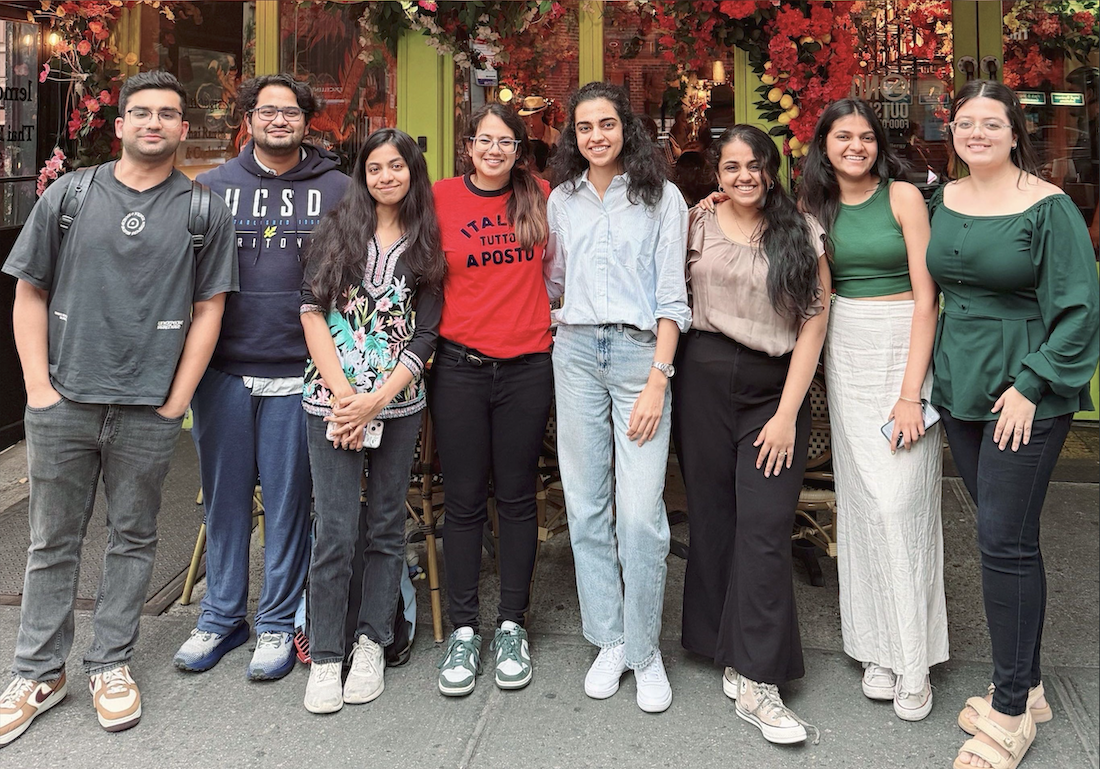
Recent Master’s Graduates, Divya Divya and Gitika Babbar, return as course assistants for a summer cybersecurity program

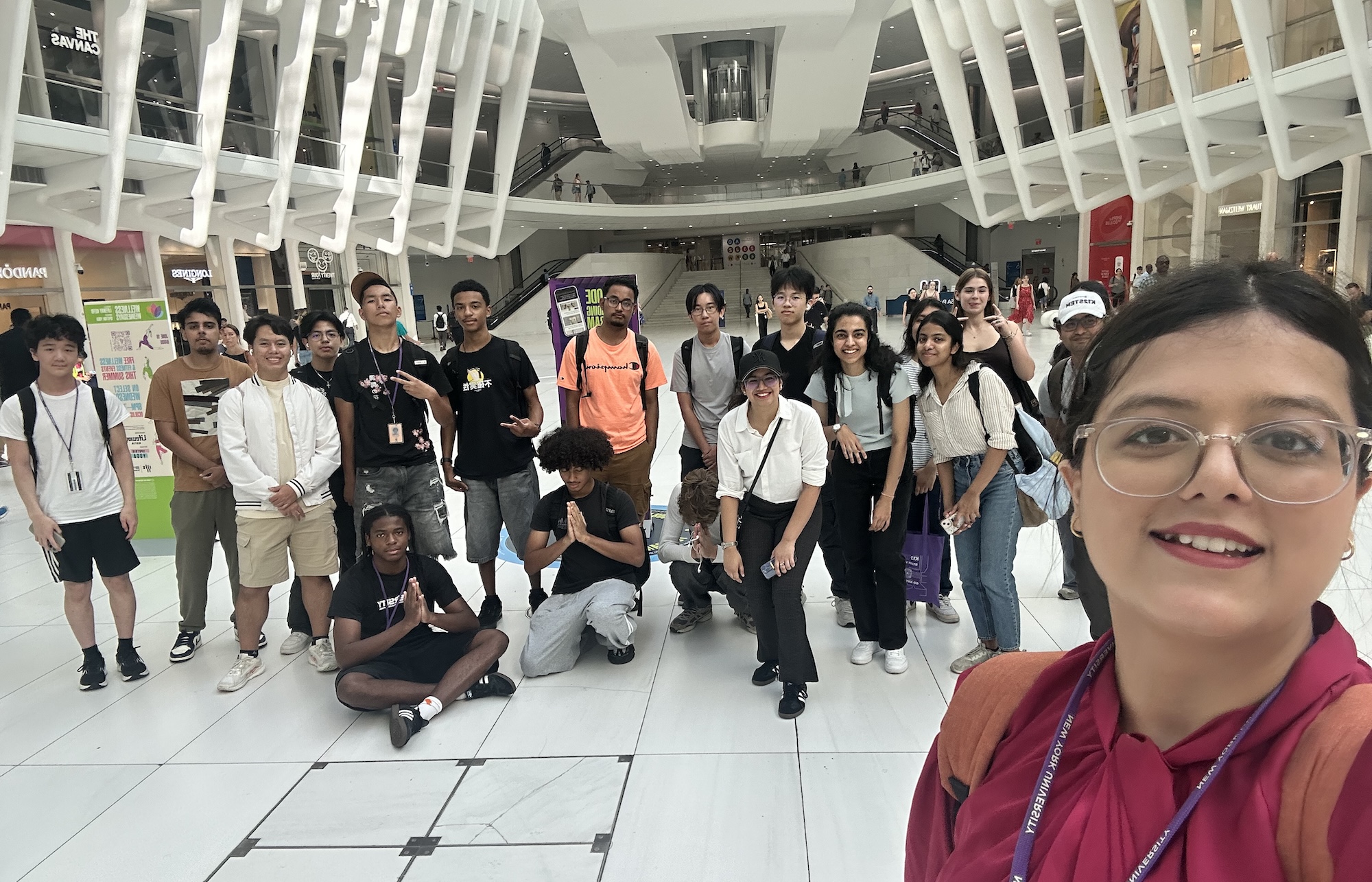
CS4CS students and staff, summer 2025
Each summer, NYU Tandon's Center for K12 STEM Education program brings high school students to campus for immersive, hands-on courses in fields ranging from robotics to cybersecurity.
The CS4CS (Computer Science for Cyber Security) program is one of its flagships — a free, four-week summer course, made possible through the support of the DTCC that introduces students completing 10th and 11th grade from the New York metro area to real cybersecurity tools and challenges.
This year, it benefits from the return of two graduate alumni who know it from the inside.
Divya Divya, who earned her master's in cybersecurity from NYU Tandon in December 2025, worked as a course instructor last year and is back at work as a course assistant for her second year.
Gitika Babbar, who also completed her master's in cybersecurity at Tandon and graduated earlier this year, returns as a course assistant.
Both spoke about what brought them to the program, what they learned from their jobs, and what they're bringing back this summer.
How did you first get involved with the K12 program?
Divya: A friend of mine had already been working in the program the summer before I applied. He told me how interesting it was — how he was teaching high school students, designing different activities. I was pretty excited about it, so I applied the following year.
Gitika: I found out about K12 during orientation in January 2025, when I was serving as an orientation leader and captain. Part of my job was telling new students about opportunities at Tandon, and K12 was one of them. When I looked into it more, CS4CS was directly aligned with what I was studying, so I applied right away. A few of my seniors had also done it before, and they were encouraging — they told me I was capable of teaching and mentoring students. That helped push me to go for it.
What was it like the first time you taught?
Divya: Before the program started, I tried to prepare content by putting myself in the students' shoes. But once you're actually in the room, you realize the range is much wider than you expected. Some students had real backgrounds in cybersecurity. Others had just heard the word and didn't know much beyond that. I found myself adapting on the fly — modifying content, building new activities mid-program based on how students were responding. It kept you on your toes, but in a good way.
Gitika: The training helped a lot, because this was my first time teaching high school students specifically. I had been a course assistant for undergrad and grad students before, but the difference was immediately obvious. High school students are incredibly enthusiastic — they wanted to learn everything, even things outside the scope of the course. They had this curiosity and openness that you don't always see in older students, who tend to be more self-directed. The high schoolers just wanted to keep asking questions. That energy was something I hadn't expected, and I loved it.
What were some of the most memorable classroom moments?
Divya: The hands-on activities were where students really came alive. I built a lab around SQL injection, a common web vulnerability where an attacker can trick a login form into granting access without valid credentials. I gave students an actual login page, showed them the weaknesses in the underlying code, and let them try logging in without a password to see exactly how it worked. They were thrilled. Immediately, some of them were asking, "Can we hack other websites?" I had to explain that was not the lesson.
Gitika: There was one activity I keep coming back to. We gave students colored sticky notes and asked each of them to write down one threat, one vulnerability, and one defense mechanism. At the end, everyone walked around the room to read what their classmates had written. One word that showed up in all three categories — from different students — was "human." A human as a threat, a human as a vulnerability, and a human as a defense mechanism. When I pointed that out to the class, it landed. Students started thinking about how the same actor can play completely different roles depending on context. That's a sophisticated idea, and they arrived at it themselves on day one or two of the course.
What's new this summer?
Divya: This year we're introducing AI. Everything right now is connected to AI in some way, and we want students to understand how it intersects with security — how you can use AI tools to protect systems, and also how AI introduces new risks. We're also running a Capture the Flag challenge for the first time. The whole scenario is framed as saving a digital city — students work through challenges in areas like web security and cryptography to defend against attacks. It's very hands-on, and I think it's going to be the highlight of the summer.
Gitika: The AI component is what I'm most excited about. Last year there wasn't dedicated time for it, and so much has changed in just twelve months. I want students to understand that tools like ChatGPT are not just for answering homework questions — they're being used in real security contexts, and understanding that is becoming genuinely important. The training this year was also more detailed and more interactive than last year, which I think reflects how much the program is growing.
What did teaching the program teach you?
Divya: It gave me a completely different perspective — on the subject and on how people learn. High school students think more creatively than you might expect. They're not yet locked into one way of seeing a problem. Some of the topics I thought would be the most interesting to them turned out to be the ones they found boring, and vice versa. That forced me to think constantly about how to make something engaging, not just accurate. And honestly, there were parts of cybersecurity — like digital forensics — where I had to learn alongside them.
Gitika: Being on the other side of the classroom changed how I think about being a student too. I started noticing things about how students engage — or disengage — and connecting that back to my own experience in lectures. It made me think more carefully about what makes a lesson actually stick. The training we received also shaped me in ways I didn't fully appreciate until later. There was a strong emphasis on treating every student with equal respect, including neurodivergent students and those who had never touched a computer before. That carries over into everything else I've done since — including mentoring incoming graduate students after the program ended.
Has the experience shaped what you want to do with your career?
Divya: Definitely. Teaching the program gave me a perspective I wouldn't have gotten from my master's alone. It showed me how to take something complex and make it understood by someone who has never encountered it before. That skill matters in any role in this field. Right now I'm looking for positions in cybersecurity or network security, and I'm focused on New York. But beyond the job search, K12 reminded me that how you communicate what you know is just as important as knowing it.
Gitika: It's opened a door I hadn't fully considered before. I came into the program thinking of myself primarily as a student of cybersecurity. I'm leaving it — twice now — thinking of myself as someone who can teach it. That's a real shift. I'm currently looking for full-time roles and fall internships in the field, but I'm also seriously considering a PhD down the road, because teaching at the university level is something I can now actually picture for myself. The K12 experience is a big part of why. When you see a high school student genuinely understand something difficult, and you know you helped make that happen, it changes what you think you're capable of.