

Animal Groups as Active Materials
Speaker
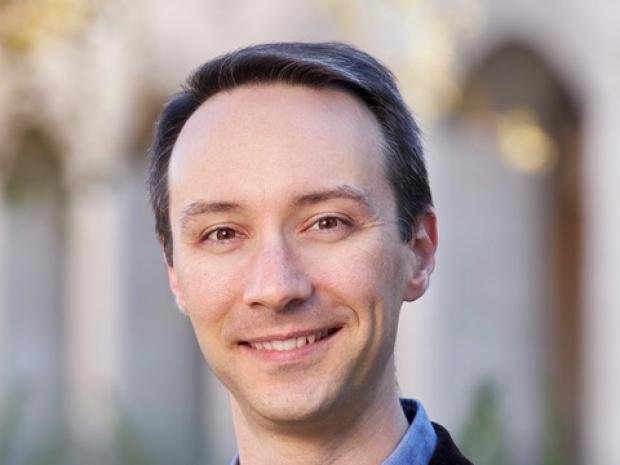
Nicholas Ouellette
Professor of Civil and Environmental Engineering
Stanford University
Abstract
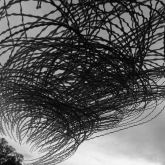
Aggregations of social animals are striking examples of self-organized behavior far from equilibrium. Such collectives have been the focus of a significant research effort, from many different perspectives. Biologists aim to understand the evolutionary benefits of acting together; physicists treat aggregations as examples of active matter; and engineers see them as potential templates for designing robust autonomous distributed systems. Understanding these systems, however, has proved to be quite challenging. Determining the rules of interaction from empirical measurements of animals is a difficult inverse problem. Thus, researchers tend to focus on the macroscopic behavior of the group instead. Because so many of these systems display large-scale ordered patterns, it has become the norm in modeling to focus on this order. Large-scale pattern alone, however, is not sufficient to characterize the dynamics of animal aggregations, and does not provide a stringent enough condition to validate models. Instead, I will argue that we should borrow ideas from materials characterization to describe the macroscopic state of an animal group in terms of its response to external stimuli. I will illustrate these ideas with experiments on swarms of the non-biting midge Chironomus riparius, where we have developed methods to apply controlled perturbations and measure the detailed swarm response. Our results allow us to begin to describe swarms in the language of state variables and response functions, bringing them into the purview of theories of active matter, and point towards new ways of characterizing and comparing collective behavior in animal groups.
Bio
Nicholas Ouellette is a Professor of Civil and Environmental Engineering at Stanford University. He is broadly interested in the behavior of complex systems far from equilibrium, and in particular the dynamical self-organization that is ubiquitous in such systems. Ouellette’s current research interests include turbulence; the transport of inertial, anisotropic, and active particles by fluid flows; the strength and failure of granular materials; collective behavior in insect swarms, bird flocks, and other animal groups; and interpretability in deep-learning physics models. Ouellette graduated from Swarthmore College in 2002 with majors in Physics and Computer Science, earned his Ph.D. in Physics from Cornell University in 2006, and did postdoctoral research at the Max Planck Institute for Dynamics and Self-Organization and in the Physics Department at Haverford College. Before coming to Stanford, he spent seven years on the faculty in Mechanical Engineering and Materials Science at Yale University. He is a Fellow of the American Physical Society, and has won teaching awards at both Stanford and Yale.