

Navigating the Physics of Virtual Power Plants — The Role of Controllers, Devices, and Grid
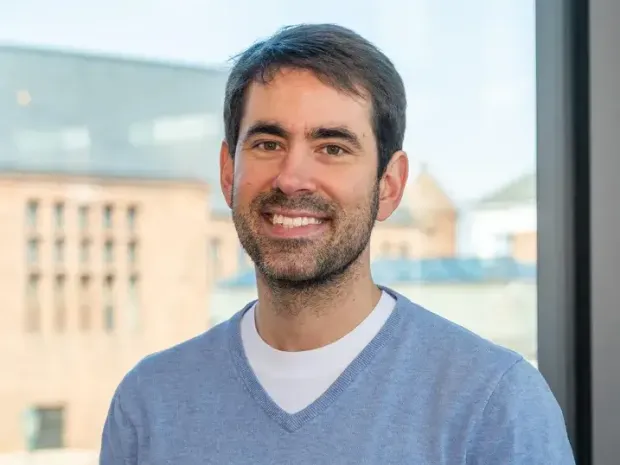
Speaker
Mads Almassalkhi
L. Richard Fisher Associate Professor of Electrical Engineering at the University of Vermont,
Title
"Navigating the Physics of Virtual Power Plants — The Role of Controllers, Devices, and Grid "
Abstract
Virtual power plants (VPPs) aggregate distributed energy resources (DERs), including batteries, solar PV, electric vehicles, and flexible loads, to deliver grid services across timescales ranging from second response to hours-long peak reduction. Grid reliability has historically depended on flexibility from thermal generation, but DERs now offer new opportunities to enhance reliability, if we can confront the fundamental physical constraints that shape their aggregate capabilities.
This talk examines three interconnected layers of VPP physics. First, we characterize the flexibility available from aggregated DERs such as thermostatically controlled loads and batteries, using reach-and-hold sets to quantify the power magnitudes and durations a VPP can sustain and how device dynamics, quality-of-service requirements, and ambient conditions impose inherent limits. Second, we explore how controller architecture, both top-down (broadcast-based) and bottom-up (device-driven) coordination, shapes a VPP's responsiveness and scalability, and how the choice of architecture determines what data and feedback signals are available to reflect real-time grid conditions in VPP dispatch. Third, we address how grid-DER architectures as explored in New York's Grid of the Future proceedings define the roles and information flows between utilities and VPP operators, and how mechanisms like dynamic operating envelopes enable grid-aware coordination of DERs that actively enhances reliability while potentially deferring costly infrastructure upgrades.
About Speaker
Mads R. Almassalkhi is the L. Richard Fisher Associate Professor of Electrical Engineering at the University of Vermont, where he co-directs the newly established center on energy and autonomy, CREATE. His research lies at the intersection of power and energy systems, mathematical optimization, and control theory, focusing on developing practical yet technically rigorous methods for improving the responsiveness and resilience of power systems. He currently serves as Grid Architect for New York's Grid of the Future proceeding, Associate Editor at IEEE Transactions on Power Systems, Chair of the IEEE CSS Technical Committee on Energy Systems, and co-organizer of the inaugural PowerUp Conference.
His work has been highlighted by IEEE Spectrum Magazine and recognized with an NSF CAREER award in 2021. He was Otto Mønsted Visiting Professor at DTU Wind & Energy Systems in Denmark in 2021-22 and has translated his research into commercial products via startup companies, most recently co-founding Packetized Energy, which was acquired by EnergyHub, the largest demand response provider in the U.S., in 2022.