
From Noise to Insight: Sparse Methods for Biomedical Signal Analysis
Speaker:
Ivan Selesnick, Ph.D.
Professor, Department of Electrical and Computer Engineering,
Department of Biomedical Engineering
New York University Tandon School of Engineering
Abstract:
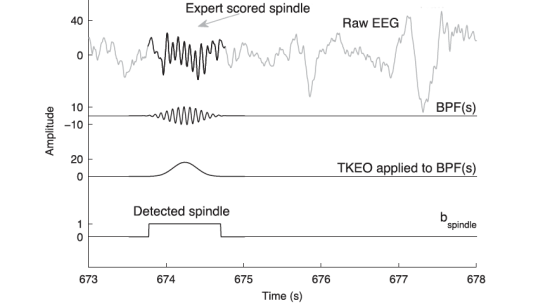
Biomedical signals are often noisy, complex, and difficult to interpret. For example, eye-movement recordings contain artifacts, sleep EEG signals contain subtle transient events, speech and ECG recordings are corrupted by background noise. Many physiological time series include overlapping components that are hard to separate using classical methods. This talk will show how sparse signal models can help address these challenges and lead to practical tools for biomedical time-series analysis. The central idea is that many signals of interest can be represented more simply than they first appear: important features such as transients, oscillations, and structured events are often sparse when expressed in an appropriate form. By exploiting this structure, it is possible to design nonlinear signal processing methods that outperform conventional linear filtering approaches. Examples will include detecting eye movements, removing artifacts from biomedical recordings, identifying sleep spindles in EEG, reducing background noise in speech and ECG, and separating signals into oscillatory and transient components. The talk will also introduce recent work on sparse regularization methods that improve on standard L1-based approaches. In particular, new non-convex penalty functions can provide more accurate signal estimates while preserving the reliability of convex optimization. Overall, the presentation will illustrate how modern ideas in sparsity and optimization can translate into powerful methods for biomedical signal processing.
Professor Selesnick received his BS, MEE, and Ph.D. degrees in Electrical Engineering from Rice University. In 1997, he joined Polytechnic University (now NYU Tandon), where he has since built a distinguished career in signal and image processing. His work has been recognized with several prestigious early-career awards, including an Alexander von Humboldt Fellowship and the National Science Foundation CAREER Award. He received the Jacobs Excellence in Education Award in 2003 in recognition of his teaching. In 2016, he was named an IEEE Fellow, one of the highest honors in electrical engineering. Reflecting his broad impact on the field Professor Selesnick has also served in editorial roles for several leading journals in signal processing and imaging, including IEEE Transactions on Image Processing, as well as Signal Processing, and IEEE Signal Processing Letters.