

Engineering Precision Medicine: From Metabolic Targeting in Cancer to Point-of-Care Cytokine Sensing in Eye Diseases
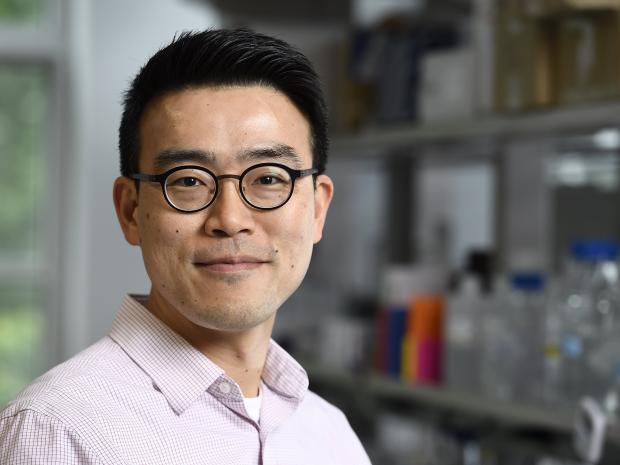
Speaker
Sangmoo Jeong
Assistant Professor, Johns Hopkins University
Abstract
Precision medicine requires both a deeper mechanistic understanding of disease and technologies that enable personalized intervention. In this talk, I will present how our lab approaches precision medicine in cancer and vascular eye disease.
A major focus of our work is how metabolic reprogramming drives cancer progression and therapy resistance. In metastatic breast cancer, we have uncovered an unexpected role for E- cadherin (E-cad) beyond its established function in epithelial cell adhesion. We found that E- cad-positive breast cancer cells upregulate the de novo serine synthesis pathway (SSP), a branch of glycolysis that supports redox homeostasis and anabolic metabolism. This metabolic reprograming enables E-cad-positive cancer cells to endure metastatic stress and proliferate after colonization. In parallel, we have identified serine metabolism as a therapeutic vulnerability in acute myeloid leukemia (AML). Venetoclax-based regimens have improved outcomes in AML,but resistance/relapse remain common. We found that venetoclax disrupts mitochondrial metabolism and reduces the SSP flux, increasing AML cells dependence on exogenous serine.
Therefore, AML cells were significantly more sensitive to venetoclax treatment under serine- deprived conditions. Consistent with this mechanism, dietary serine restriction synergized with venetoclax in AML mouse models to reduce leukemic burden and prolong survival. Together, these studies show that metabolic reprogramming is vital for cancer cell survival across distinct disease contexts and reveal actionable vulnerabilities for therapeutic intervention.
I will also describe a point-of-care cytokine sensing platform designed to enable personalized treatment of vascular eye diseases, such as diabetic retinopathy (DR) or wet age-related macular degeneration (AMD). These conditions are driven by abnormal retinal vascular remodeling and inflammation, yet clinicians currently lack a practical method to determine which molecular therapy is most appropriate for an individual patient. To address this unmet need, we have developed a sensitive, pocket-sized optical sensor, termed ORIAS (Oximeter-based Red/Infrared Absorbance Sensor), by repurposing the optical unit of a fingertip pulse oximeter. This compact (25 x 25 x 55 mm3), low-cost device (<$50) can quantify cytokines at concentrations as low as 2 pg/mL from just 20 μL of aqueous humor. This platform has the potential to enable molecularly guided treatment for DR and wet AMD in the outpatient setting.
Together, these efforts illustrate how engineering approaches can uncover disease mechanisms, identify therapeutic opportunities, and translate molecular insights into actionable strategies for precision medicine.
Bio
Dr. Sangmoo Jeong is an Assistant Professor in the Department of Chemical & Biomolecular Engineering at Johns Hopkins University and currently serves as the PhD Admissions Director. His lab is interested in applying engineering principles to investigate cancer and vascular diseases and develop novel analytical tools to address challenging questions. He received a Bachelor of Science degree in Electrical Engineering from the KAIST in Korea and a Master of Science and a Ph.D. in Electrical Engineering from Stanford University. He completed his postdoctoral research at Mass General Hospital, and later, Memorial Sloan Kettering Cancer Center. He has received multiple awards, including the NIH K99/R00 and MIRA awards, the CDMRP Idea Discovery Award, and the Emerging Junior Investigator Award from the Korean Institute of Chemical Engineers.